Fraud Trends: What Businesses Expect in 2026
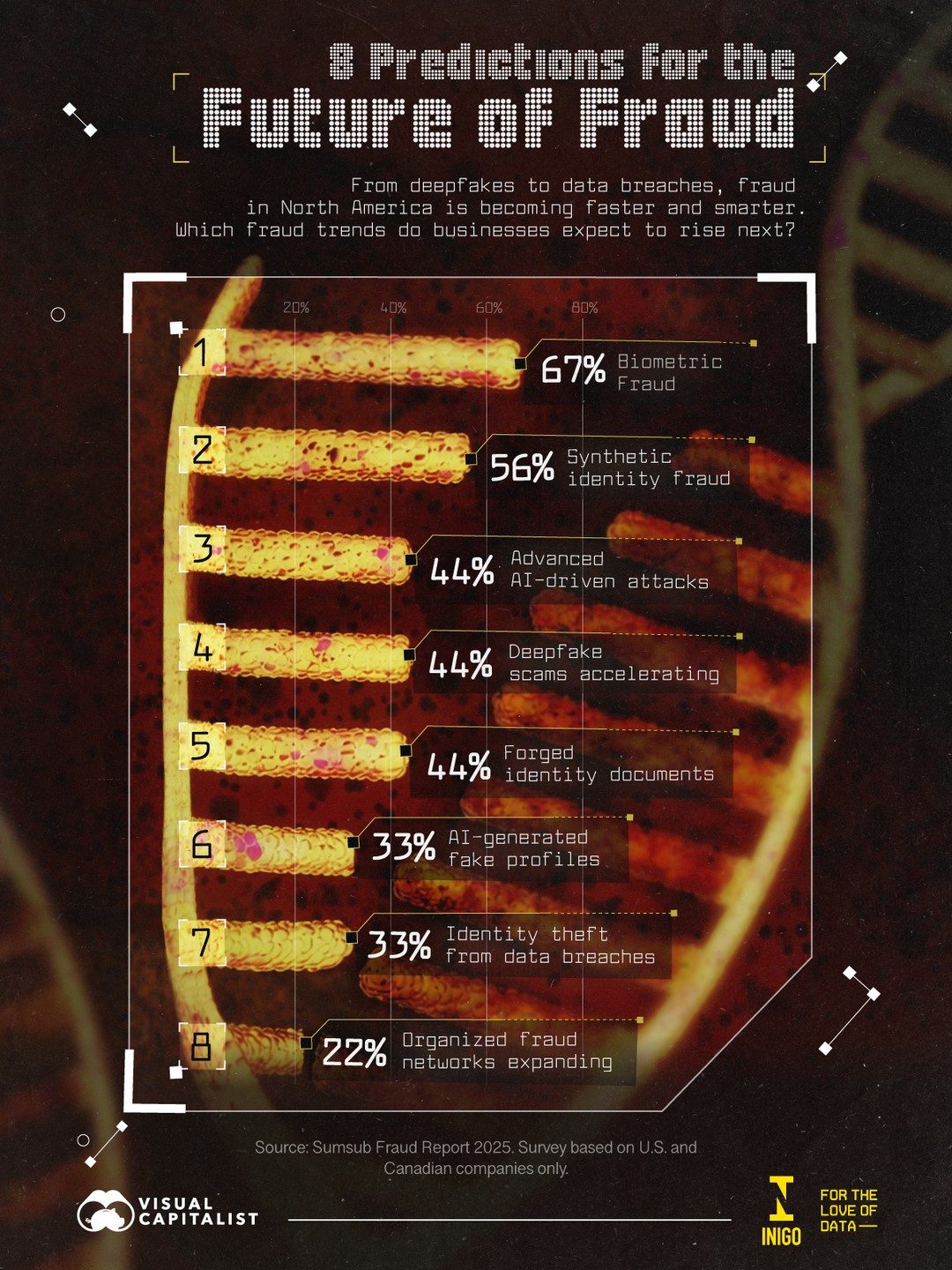
Fraudsters are always finding new ways to exploit vulnerabilities, and businesses across North America are preparing for a significant rise in various types of fraud by 2026. According to the Sumsub Fraud Report 2025, businesses are particularly concerned about biometric fraud, deepfake scams, and synthetic identity fraud.
Why This Matters
Understanding the trends in fraud is crucial for businesses to stay ahead of fraudsters. By anticipating the types of fraud that are likely to increase, companies can implement more effective preventative measures and protect their customers and assets.
The Rise of Biometric Fraud
Biometric fraud involves the use of falsified biometric data, such as fingerprints, facial recognition, or iris scans, to impersonate an individual. The Sumsub Fraud Report 2025 indicates that 67% of businesses expect biometric fraud to increase in the coming years. This trend is concerning because biometric data is often considered more secure than traditional password-based authentication methods. However, as biometric technology becomes more prevalent, so do the opportunities for fraudsters to exploit it.
Advanced AI-Driven Attacks
Advanced AI-driven attacks are also a significant concern for many businesses. The report indicates that 44% of businesses expect this type of fraud to increase. These attacks use sophisticated artificial intelligence to bypass security measures and access sensitive information. As AI technology continues to evolve, so too will the effectiveness of these attacks, making it essential for businesses to invest in robust security measures.
Deepfake Scams
Deepfake scams, where artificial intelligence is used to create convincing but fake audio or video, are another area of concern. The report shows that 44% of businesses expect deepfake scams to accelerate. These scams can be particularly damaging because they can be used to deceive customers, employees, or business partners into sharing sensitive information or making fraudulent transactions.
Synthetic Identity Fraud
Synthetic identity fraud involves creating fake identities using a mix of real and fake information. This type of fraud is particularly challenging to detect because the identities are not associated with any real person. According to the report, 56% of businesses expect synthetic identity fraud to rise in the coming years. This trend is alarming because it can lead to significant financial losses and damage to a company's reputation.
AI-Generated Fake Profiles
AI-generated fake profiles are another emerging threat. These profiles are created using artificial intelligence to mimic real user behavior, making them difficult to detect. The Sumsub Fraud Report 2025 indicates that 33% of businesses expect the prevalence of AI-generated fake profiles to increase. Fraudsters use these profiles to conduct scams, spread disinformation, and gain unauthorized access to sensitive information.
Identity Theft from Data Breaches
Data breaches are a well-known risk, and identity theft from these breaches is a significant concern for businesses. The report shows that 33% of businesses expect this type of fraud to increase. Data breaches can expose large amounts of personal and financial information, making individuals vulnerable to identity theft.
Organized Fraud Networks
Organized fraud networks are groups of fraudsters working together to carry out large-scale frauds. These networks are becoming more sophisticated and harder to detect. The report indicates that 22% of businesses expect these networks to expand, making it essential for companies to stay vigilant and invest in advanced fraud detection technologies.
Forged Identity Documents
The forging of identity documents, such as passports, driver's licenses, and identity cards, is another area of concern. The report shows that 44% of businesses expect the prevalence of forged identity documents to increase. These forged documents can be used to commit various types of fraud, including identity theft, financial fraud, and immigration fraud.
Practical Tips
Given these emerging threats, there are several practical steps businesses can take to mitigate their risk:
- Invest in Advanced Fraud Detection Technologies: Use AI and machine learning to detect and prevent fraud in real-time.
- Implement Strong Authentication Methods: Consider multi-factor authentication (MFA) and biometric verification to enhance security.
- Regularly Update Security Measures: Stay ahead of fraudsters by continuously updating and enhancing security protocols.
- Train Employees: Educate staff on the latest fraud tactics and how to recognize and respond to them.
- Monitor for Data Breaches: Regularly assess your systems for vulnerabilities and have a plan in place to respond to data breaches quickly.
- Collaborate with Industry Peers: Share information and best practices with other businesses to stay informed about emerging threats.
- Stay Ahead of Fraud Trends: Regularly review reports and studies on fraud trends to anticipate and prepare for new types of fraud.
Important Takeaways
Stay ahead of evolving fraud trends. Understand the types of fraud that are expected to rise and take proactive steps to protect your business and customers.
Conclusion
Businesses across North America are bracing for a surge in fraud across various fronts by 2026. From biometric fraud to deepfake scams and synthetic identity fraud, the landscape of digital risk is evolving rapidly. By staying informed and implementing robust security measures, businesses can better protect themselves and their customers from these emerging threats.
Watch the Reel
Questions readers ask
What is biometric fraud and why is it a concern for businesses by 2026?
Biometric fraud involves the use of falsified biometric data, such as fingerprints or facial recognition, to impersonate individuals. By 2026, businesses expect a rise in this type of fraud due to advancements in technology that make it easier for fraudsters to replicate biometric data. This trend is particularly concerning as it can compromise security measures that rely on biometric authentication.
How are deepfake scams expected to impact businesses in the coming years?
Deepfake technology allows for the creation of highly convincing but fake audio and video content. By 2026, businesses anticipate that deepfake scams will become more prevalent, potentially leading to significant financial losses and reputational damage. Companies should prepare for how these scams can manipulate visual data and impact public perception.
What role does AI play in the future of fraud, and how can businesses combat it?
AI-driven fraud involves the use of artificial intelligence to automate and scale fraudulent activities. By 2026, businesses expect to face more sophisticated AI-driven attacks. To combat this, companies should invest in advanced fraud detection systems that can identify and mitigate AI-driven threats in real-time. Additionally, AI can be leveraged to improve fraud detection measures.
What is synthetic identity fraud and why is it a growing concern?
Synthetic identity fraud occurs when fraudsters create fake identities using a mix of real and fabricated personal information. This type of fraud is a growing concern because it is difficult to detect and can result in significant financial losses. Businesses need to implement robust identity verification processes to combat synthetic identity fraud effectively.
What preventative measures can businesses take to stay ahead of fraud trends by 2026?
To stay ahead of fraud trends, businesses should focus on implementing advanced fraud detection systems, enhancing identity verification processes, and investing in employee training. Additionally, staying informed about emerging fraud trends and technologies will help companies adapt their strategies to combat new types of fraud effectively.
How can businesses protect themselves from visualization fraud?
Visualization fraud involves the manipulation of visual data, such as images and videos, to deceive individuals and systems. To protect themselves, businesses should implement robust visual authentication methods and train their employees to recognize potential signs of manipulated media. By staying vigilant and proactive, companies can minimize the risk of falling victim to visualization fraud.
Recent articles
Fresh deep dives from the latest Reels we unpacked.




Comments
Be the first to comment.