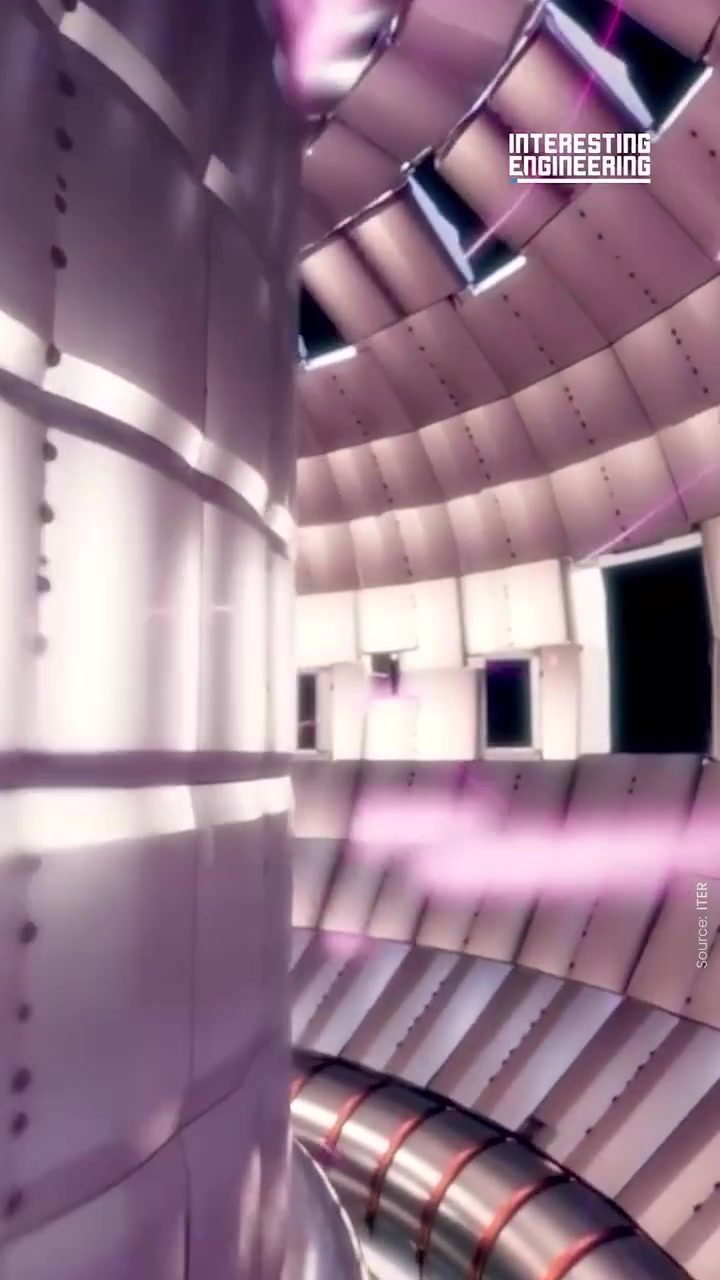
Fusion Reactors: A Revolutionary Power Source
Fusion reactors, a technology that could revolutionize power generation, have long been a subject of scientific inquiry and engineering innovation. These reactors harness the same process that powers the sun and stars, offering a potential solution to the world’s energy needs.
Why This Matters
Fusion energy has the potential to provide a virtually limitless and clean source of power. Unlike fossil fuels, fusion does not produce greenhouse gases or long-lived radioactive waste. Unlike fission, which splits heavy nuclei and carries the risk of runaway chain reactions, fusion is inherently self-limiting. This makes it a safer and more sustainable option for power generation.
The Scientific Basis of Fusion
At the core of a fusion reactor, temperatures exceed 150 million degrees Celsius, roughly 10 times hotter than the center of the sun. At these extreme temperatures, matter exists in a state known as plasma, where hydrogen nuclei move so fast that they overcome their mutual electromagnetic repulsion and collide, fusing into helium. This process releases extraordinary quantities of energy, the same process that powers every star in the observable universe.
Fusion Fuel and Energy Output
Deuterium, an isotope of hydrogen, is the primary fuel for fusion reactors. It can be extracted from seawater, making it a readily available resource. A single gram of fusion fuel contains the energy equivalent of approximately eight tons of crude oil. This means that fusion fuel has a much higher energy density than traditional fossil fuels, making it a more efficient energy source.
Safety and Containment
One of the key advantages of fusion energy is its safety. If containment fails, the plasma simply cools and the reaction stops. There is no risk of a meltdown scenario, as seen in nuclear fission reactors. This is because the plasma must be heated to temperatures exceeding 100 million degrees and held stable long enough for a meaningful number of fusion reactions to occur. If the containment fails, the plasma cools rapidly, and the reaction ceases.
Engineering Challenges
The biggest engineering challenge in fusion reactors is maintaining the plasma in a stable state. The sun achieves fusion through gravitational confinement, where the sheer mass of its outer layers creates immense pressure at the core. Replicating these conditions on Earth is impossible, so engineers use magnetic confinement in a device called a tokamak.
Current Projects and Developments
Several projects around the world are currently developing fusion technology. One of the most notable is the International Thermonuclear Experimental Reactor (ITER), a tokamak being constructed in the south of France. ITER is designed to demonstrate sustained net energy gain, meaning it will produce more energy than it consumes. Originally budgeted at 5 billion euros, the current estimation exceeds 20 billion, and the timeline has slipped; completion is not expected before the early 2030s.
Another significant project is the Joint European Torus (JET), which achieved the highest fusion power output to date, producing two-thirds as much energy as was required to heat the plasma. While this is not yet a net positive, it represents a significant step forward in fusion technology.
Comparing Fusion and Fission
It's essential to understand the difference between fusion and fission. Fission involves splitting a larger atom into two or more smaller atoms, releasing energy in the process. Fusion, on the other hand, involves combining atoms to form a heavier nucleus, also releasing energy. Fusion is inherently safer because it does not carry the risk of runaway chain reactions and produces no long-lived radioactive waste.
Practical Tips for Understanding Fusion
For those interested in understanding fusion technology, here are some practical tips:
- Learn the Basics: Start by understanding the fundamental principles of fusion, including the types of fuel used and the process of nuclear fusion.
- Follow Current Projects: Stay updated on the progress of major fusion projects like ITER and JET. These projects provide valuable insights into the challenges and advancements in fusion technology.
- Explore Visualizations: Visual representations of fusion energy can help grasp the complexity of the process. Look for diagrams and animations that show how fusion reactors work and the energy release process.
Important Takeaways
- Fusion reactors have the potential to provide a clean, safe, and virtually limitless source of energy.
- The primary fuel for fusion is deuterium, an isotope of hydrogen, which can be extracted from seawater.
- Fusion is inherently safer than fission because it does not carry the risk of runaway chain reactions and produces no long-lived radioactive waste.
- Engineering challenges in fusion technology include maintaining the plasma in a stable state and achieving sustained net energy gain.
- Major projects like ITER and JET are making significant progress in developing fusion technology.
Conclusion
Fusion reactors represent the future of power generation, offering a clean, safe, and virtually limitless source of energy. While there are significant engineering challenges to overcome, ongoing projects like ITER and JET are making steady progress. As research continues, fusion has the potential to revolutionize the way we power our world, providing a sustainable solution to our energy needs.
Watch the Reel
Questions readers ask
What is magnetic confinement and why is it important in fusion reactors?
Magnetic confinement is a method used to control and contain the hot plasma within a fusion reactor, preventing it from touching the reactor walls. This is crucial because the plasma in a fusion reactor can reach temperatures of over 100 million degrees Celsius, which would damage the reactor if not properly contained. By using magnetic fields, the reactor can safely harness the energy produced from the fusion process.
How does the magnetic confinement process work within a fusion reactor?
Magnetic confinement in a fusion reactor works by using powerful magnetic fields to create a stable, confined environment for the plasma. This is typically achieved using superconducting magnets arranged in specific configurations, such as a tokamak or stellarator. These magnetic fields guide and control the plasma, ensuring it remains away from the reactor walls and maintains the necessary conditions for fusion to occur.
What are the main differences between fusion power and nuclear fission in terms of safety and sustainability?
Fusion power is inherently safer than nuclear fission because it is self-limiting. If a fusion reaction becomes unstable, it simply stops, whereas fission reactions can lead to runaway chain reactions. Additionally, fusion produces no greenhouse gases or long-lived radioactive waste, making it a more sustainable and environmentally friendly option. The primary fuel for fusion, isotopes of hydrogen, is abundant and widely available.
What fuels are used in fusion reactors and how are they obtained?
The primary fuels used in fusion reactors are isotopes of hydrogen, specifically deuterium and tritium. Deuterium can be easily extracted from seawater, making it a virtually unlimited resource. Tritium, though less abundant, can be produced within the reactor itself through neutron reactions, ensuring a sustainable fuel supply.
What are the key engineering challenges in designing a fusion reactor with effective magnetic confinement?
Creating effective magnetic confinement in a fusion reactor involves several challenges. These include designing robust superconducting magnets to generate and maintain the necessary magnetic fields, ensuring stable plasma confinement, and managing the heat and particle exhaust to protect the reactor walls. Additionally, engineers must find materials that can withstand the extreme conditions inside the reactor.
Recent articles
Fresh deep dives from the latest Reels we unpacked.




Comments
Be the first to comment.