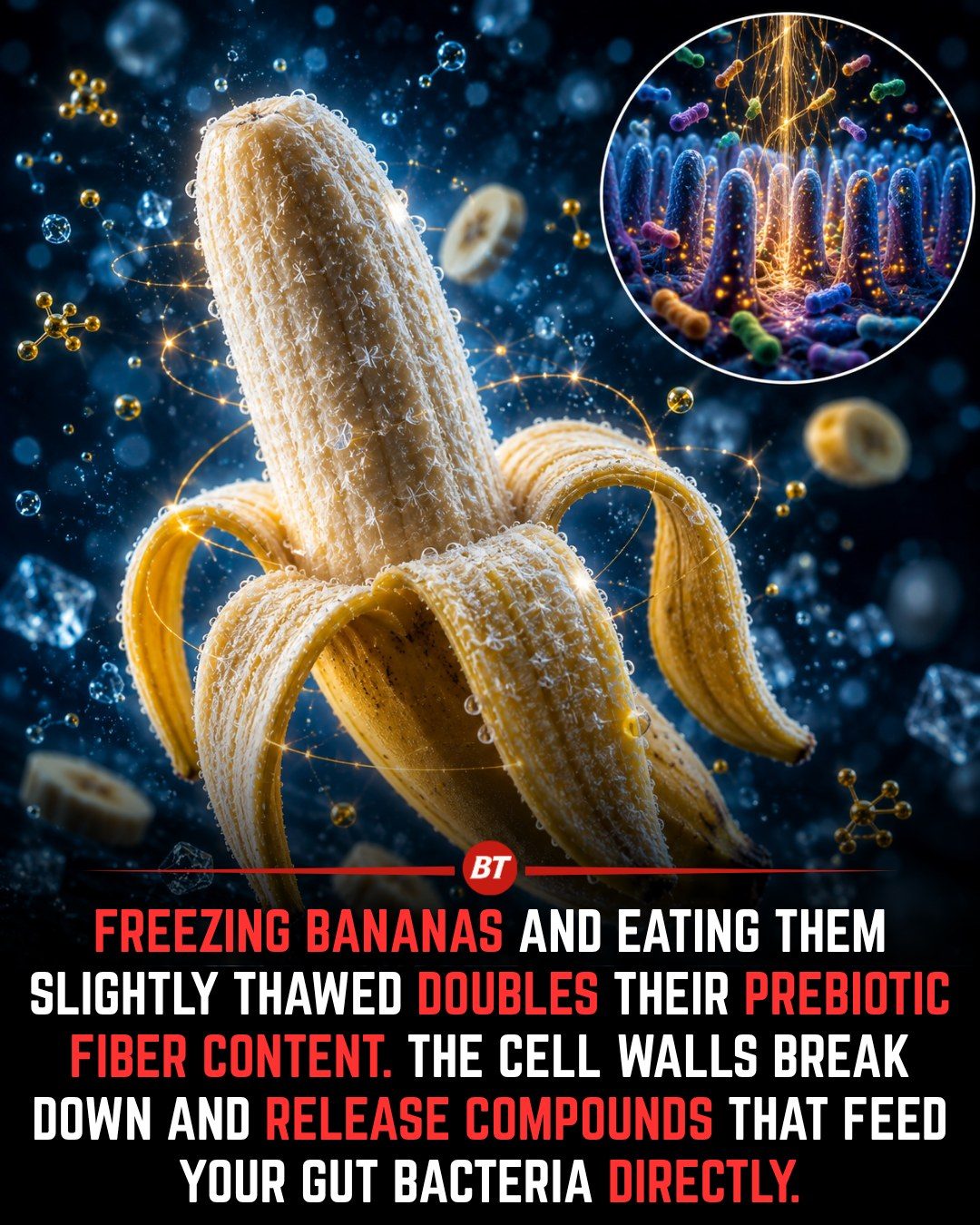
The Surprising Benefits of Freezing Bananas for Gut Health
Bananas are a popular and versatile fruit, often enjoyed for their natural sweetness and convenient portability. However, recent findings suggest that freezing bananas, particularly when they are slightly underripe, can significantly enhance their nutritional benefits. This is due to the unique properties of resistant starch, a type of fiber that supports a healthy gut microbiome. Freezing bananas when they are slightly green increases the prebiotic fiber content, making them an excellent choice for promoting digestive health.
Why This Matters
The gut microbiome plays a crucial role in overall health, influencing everything from digestion to immune function. The composition of gut bacteria can be influenced by diet, and certain types of fiber, such as resistant starch, have been shown to support a diverse and healthy gut microbiome. Understanding how to maximize the nutritional benefits of common foods like bananas can help individuals make more informed dietary choices that support gut health.
The Role of Resistant Starch in Bananas
When bananas ripen, their natural starch is gradually converted into simple sugars, making the fruit sweeter and softer. However, if bananas are frozen while they are still slightly underripe, they retain much more resistant starch. This type of carbohydrate resists digestion in the small intestine and travels intact to the colon, where it becomes a vital source of nourishment for beneficial gut bacteria.
How Resistant Starch Benefits the Gut
Once resistant starch reaches the large intestine, it is fermented by gut bacteria, producing short-chain fatty acids, particularly butyrate. Butyrate is the primary fuel for the cells lining the colon, and it plays a crucial role in maintaining digestive health. Research has shown that butyrate supports the intestinal barrier, promotes a healthy gut environment, and helps maintain overall digestive health.
The Impact of Freezing on Banana Cell Structure
Freezing breaks down the cell walls of bananas, releasing compounds that directly feed gut bacteria. This process not only enhances the prebiotic fiber content but also changes the banana's texture, creating a creamy consistency that many people enjoy. While freezing doesn't double the prebiotic fiber content, it preserves the naturally occurring resistant starch, making it more readily available for gut bacteria.
Practical Tips for Freezing and Using Bananas
Choosing the Right Bananas
To maximize the benefits of freezing bananas, select slightly underripe bananas that still have a hint of green. Peel the bananas and freeze them whole or in chunks, depending on your preference. This method ensures that the bananas retain more resistant starch, which is beneficial for gut health.
Thawing and Using Frozen Bananas
Frozen bananas can be thawed for a few minutes before eating, blended into smoothies, or used in recipes. The creamy texture of thawed bananas makes them an excellent addition to various dishes, from desserts to savory meals. Experiment with different ways to incorporate frozen bananas into your diet to enjoy their health benefits and delicious taste.
Recipes and Ideas
- Banana "Nice Cream": Blend frozen banana chunks until smooth for a creamy, dairy-free ice cream alternative. Add a teaspoon of cocoa powder for a chocolate version, or a tablespoon of peanut butter for a peanut butter banana flavor.
- Banana Smoothie: Combine frozen bananas with a liquid of your choice, such as almond milk or coconut water, and blend until smooth. Add other fruits or vegetables for a nutrient-boosted beverage.
- Banana Bread: Use frozen bananas in your favorite banana bread recipe for added moisture and flavor. The resistant starch in the frozen bananas will also contribute to the bread's nutritional value.
- Banana Oatmeal: Add frozen banana chunks to your morning oatmeal for a creamy texture and added fiber. Let the banana thaw slightly before adding to the oatmeal, or cook it directly in the oatmeal for a different texture.
Important Takeaways
Freezing slightly green bananas preserves their resistant starch content, making them a valuable addition to a gut-friendly diet. The process of freezing and slightly thawing bananas breaks down the cell walls, releasing compounds that directly nourish gut bacteria. This enhances the prebiotic fiber content, promoting a healthy gut microbiome and overall digestive health. Researchers often recommend including naturally resistant starch-rich foods in a fiber-rich diet, as they have been linked to improved gut microbiome diversity, greater feelings of fullness, healthier blood sugar responses, and increased production of beneficial short-chain fatty acids.
Conclusion
Bananas are a versatile and nutritious fruit, and freezing them while they are slightly underripe can significantly enhance their health benefits. By preserving the resistant starch content, frozen bananas become a valuable source of prebiotic fiber, supporting a healthy gut microbiome. Incorporating frozen bananas into your diet through smoothies, desserts, and other recipes can be an enjoyable way to promote digestive health and overall well-being.
Watch the Reel
Questions readers ask
What is resistant starch and why is it beneficial for gut health?
Resistant starch is a type of fiber that resists digestion in the small intestine and reaches the large intestine, where it feeds beneficial gut bacteria. This process supports a diverse and healthy gut microbiome, promoting better digestive health and overall well-being.
How does freezing green bananas increase their resistant starch content?
Freezing bananas before they fully ripen, when they are slightly green, enhances their resistant starch content. This is because the starch in the banana starts converting to resistant starch when the fruit is underripe. Freezing can help slow down the ripening process and preserve this beneficial starch.
What are the steps to freeze green bananas effectively?
To freeze green bananas, start by peeling them and slicing them into desired sizes. Place the slices in a single layer on a baking sheet and freeze for a few hours. Once frozen, transfer the slices to an airtight container or freezer bag, removing as much air as possible to prevent freezer burn. Store in the freezer until ready to use.
Can freezing bananas affect their taste and texture?
Freezing bananas can alter their texture, making them softer and easier to blend when thawed. However, it does not significantly affect the taste. The change in texture makes frozen bananas ideal for smoothies, baked goods, and other recipes where the texture is not a concern.
Are there any other benefits to freezing bananas besides increased resistant starch?
Yes, freezing bananas can also help extend their shelf life, reducing food waste. Additionally, frozen bananas are convenient to have on hand for smoothies, baking, and other recipes. They also offer a natural sweetener and a versatile ingredient for various dishes.
How can I incorporate more resistant starch into my diet besides freezing bananas?
Besides freezing green bananas, you can increase your intake of resistant starch by consuming other foods rich in this type of fiber. Examples include cooked and cooled potatoes, legumes, whole grains, and certain types of rice. Incorporating these foods into your diet can further support a healthy gut microbiome.
Related deep dives
Similar reads based on topic and creator.




Recent articles
Fresh deep dives from the latest Reels we unpacked.




Comments
Be the first to comment.