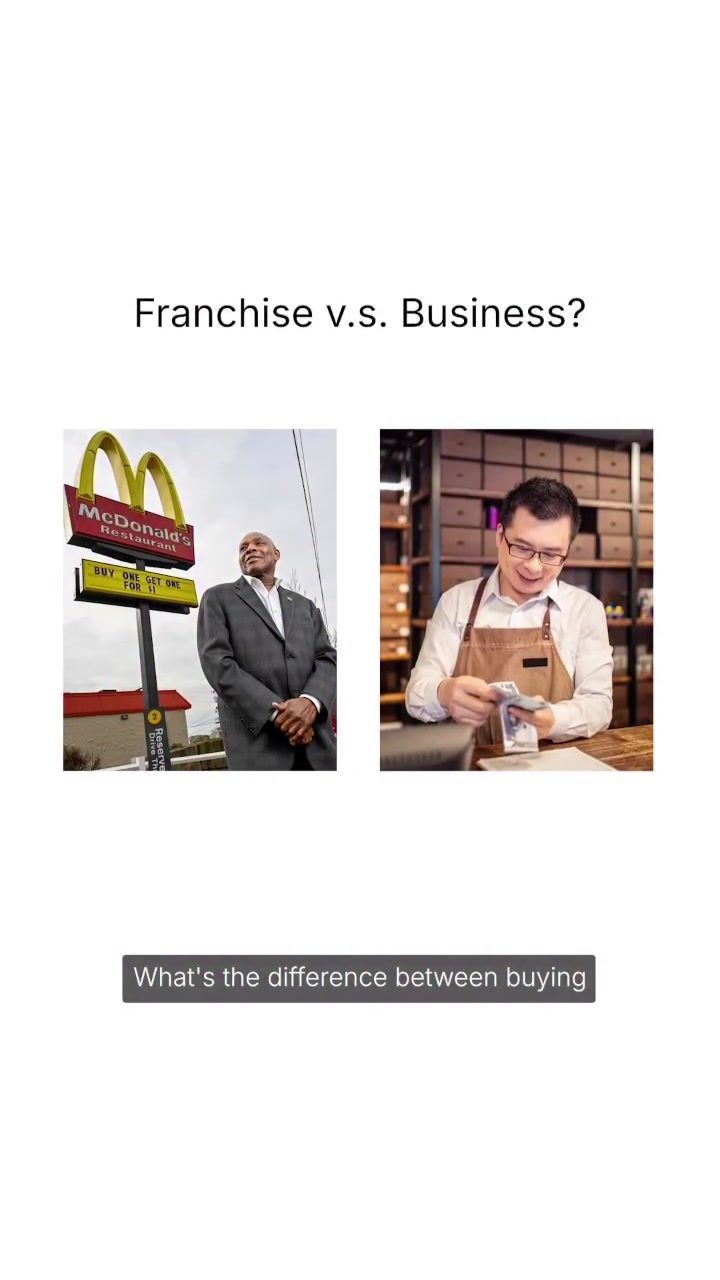
Franchising vs. Business Acquisition: A Deep Dive
Introduction
The decision between franchising and business acquisition is a pivotal one for entrepreneurs. Both paths offer unique financial structures, operational frameworks, and return profiles. This is particularly relevant when considering a well-known brand like McDonald's.
Why This Matters
Choosing between franchising and business acquisition can significantly impact an entrepreneur's investment outcomes. Franchises offer immediate access to proven business systems, brand recognition, and corporate support but come with substantial capital commitments and ongoing royalty obligations. In contrast, acquiring an existing business provides complete operational freedom and typically superior profit margins, though with less guidance and structure.
Franchising
What Comes with a Franchise
Franchising involves purchasing a proven business system, brand recognition, and operational protocols. When you acquire a franchise, you're buying into a well-established framework that includes:
- Brand equity: You leverage an already recognized name.
- Operational protocols: Detailed guidelines for running the business.
- Corporate support: Training, marketing, and ongoing assistance.
Franchises like McDonald's and Subway offer standardized processes, marketing infrastructure, and corporate guidance. This structured environment can be appealing to entrepreneurs who prefer to follow a proven model.
Financial Commitments
Franchising typically requires a significant initial investment. For example, franchising a McDonald's location generally demands around $1 million in cash. Additionally, franchisees must pay ongoing royalty fees, which can be a substantial ongoing expense. Despite these costs, a single McDonald's franchise location can generate about $200,000 per year in profit.
Pros and Cons
Pros:
- Proven system: You are buying into a system that has been tried and tested.
- Brand recognition: Instant customer base and credibility.
- Support: Ongoing guidance from the corporate office.
Cons:
- High initial investment: Typically over $1 million in cash.
- Ongoing royalty payments: Continuous fees to the franchisor.
- Limited operational freedom: Standardized procedures and less room for independent decisions.
Business Acquisition
What Comes with a Business Acquisition
Business acquisition, on the other hand, involves purchasing an existing business. This path offers:
- Operational freedom: Complete autonomy to run the business as you see fit.
- Existing customer base: Immediate access to established customer relationships.
- Established cash flow: Immediate revenue stream.
When you acquire a small business, you inherit the existing customer base, cash flow, and market position. This allows for immediate implementation of strategic changes and operational optimizations.
Financial Structure
Acquiring a business typically requires a lower initial investment compared to franchising. For instance, you could acquire a $2 million business for just $200,000 down through a combination of seller financing and SBA loans. Post-debt payments, you might expect to profit over $300,000 in the first year.
Pros and Cons
Pros:
- Lower initial investment: Often requires less capital upfront.
- Higher profit margins: Potential for greater returns.
- Operational freedom: Complete autonomy and flexibility.
Cons:
- Less corporate support: Reduced guidance and fewer resources.
- Existing issues: Potential hidden problems or challenges.
- Risk: More responsibility and risk, as the business' success depends solely on your decisions.
Practical Tips
For Franchisees
- Financial Planning: Be prepared for a significant initial investment and ongoing royalty payments.
- Adherence to Protocols: Understand and be willing to follow standardized procedures and corporate guidelines.
- Market Research: Ensure the franchise aligns with your market and personal goals.
For Business Acquirers
- Due Diligence: Conduct thorough research to understand the business's financial health, market position, and potential challenges.
- Operational Strategy: Develop a clear plan for implementing changes and optimizing operations.
- Financial Management: Plan for debt payments and cash flow management to ensure profitability.
Important Takeaways
- Franchising offers a proven system, brand recognition, and corporate support but requires significant financial commitments and adherence to standardized procedures.
- Business acquisition provides operational freedom, established cash flow, and potentially higher profit margins, but with less guidance and greater risk.
- Financial structure and initial investment vary significantly between the two paths. Franchising generally requires more upfront capital, while business acquisition can be more flexible.
Conclusion
Whether you choose franchising or business acquisition, understanding the financial and operational implications is crucial. Franchising with a brand like McDonald's offers a structured environment with corporate support, making it suitable for those who prefer a roadmap and guidance. However, business acquisition can be more rewarding for entrepreneurs seeking operational autonomy and higher profit margins. Both paths require careful planning, financial management, and strategic decision-making. Assess your risk tolerance, operational experience, and capital availability to make the optimal choice for your entrepreneurial journey.
Watch the Reel
Questions readers ask
What are the initial capital requirements for a McDonald's franchise?
The initial investment for a McDonald's franchise can range from $1,001,000 to $2,145,000. This includes the franchise fee, real estate costs, equipment, inventory, and working capital. These figures are based on 2021 data, and the actual cost can vary depending on the location and specific circumstances.
What kind of support can I expect from McDonald's as a franchisee?
McDonald's provides extensive support to its franchisees, including initial and ongoing training, operational guidelines, marketing strategies, and access to a proven business model. You will also receive assistance in site selection, construction, and pre-opening phases.
What are the ongoing royalty fees for a McDonald's franchise?
McDonald's franchisees are required to pay a monthly service fee of 4% of gross sales. Additionally, there is an advertising fee of 4% of gross sales, contributing to the national and local advertising efforts. These fees are in addition to the initial franchise fee and ongoing operational costs.
What are the advantages of acquiring an existing business over franchising?
Acquiring an existing business offers several benefits, including greater operational freedom, the ability to make immediate changes, and often better profit margins. Additionally, you may quickly gain an established customer base and reputable brand image. However, acquiring an existing business comes with less guidance and support compared to franchising.
Can I use an SBA loan to acquire an existing business?
Yes, the U.S. Small Business Administration (SBA) offers loans specifically for business acquisition. These loans can cover various costs, including the purchase price, working capital, and equipment. The SBA 7(a) loan program is a popular choice for this purpose, as it provides flexible terms and lower down payments compared to traditional loans.
What factors should I consider when choosing between a franchise and an independent business?
Consider your personal preferences, such as the level of operational freedom you desire, your financial situation, and your risk tolerance. Additionally, evaluate the specific opportunities and challenges in your target market, the potential for profit, and the level of support you will receive from a franchisor or existing business owner.
Recent articles
Fresh deep dives from the latest Reels we unpacked.




Comments
Be the first to comment.