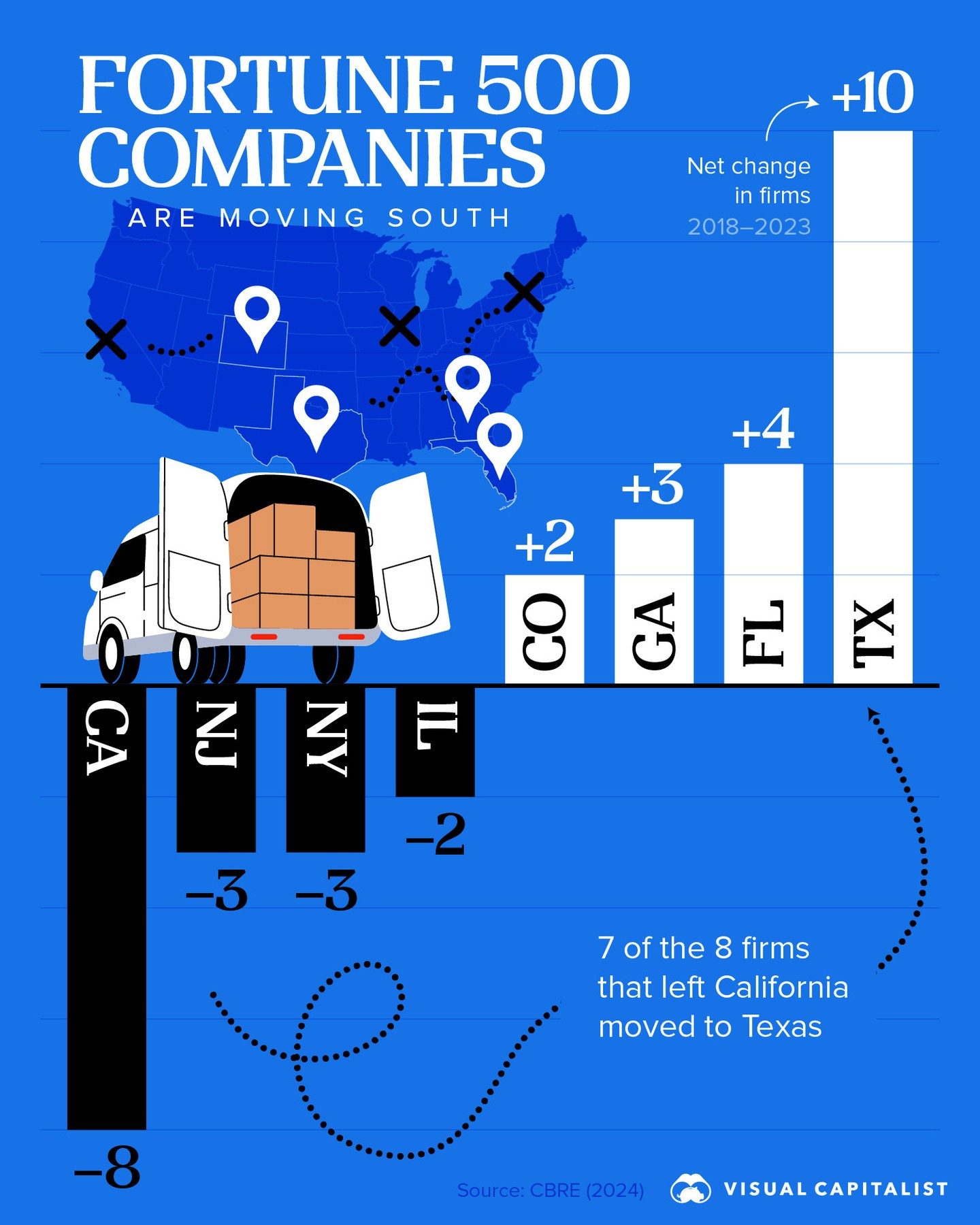
Fortune 500 Companies Moving South
The shift of Fortune 500 companies to the Southern United States has been significant between 2018 and 2023, with many firms relocating to states like Texas, Florida, and Georgia. This trend suggests a broader change in the corporate landscape, driven by factors such as lower taxes, a skilled workforce, and strategic geographical advantages.
Context / Why this matters
Understanding why these corporations are moving is crucial for grasping the economic and business dynamics at play. This shift impacts state economies, employment opportunities, and the competitive landscape for businesses. It also highlights the strategic advantages that Southern states offer, making them attractive to large corporations.
Economic Growth and Job Opportunities
When a Fortune 500 company relocates, it brings with it significant economic benefits. These include direct job creation, increased tax revenues, and a boost to local businesses that support the corporate operations. For instance, Texas, which saw the largest inflow of these firms, has been able to leverage this influx to further develop its economic infrastructure and attract additional investments.
Tax Incentives and Business Climate
Southern states, particularly Texas and Florida, have long been known for their favorable business climates. Low corporate taxes, minimal regulations, and a pro-business environment make these states attractive to companies looking to optimize their operational costs. Such incentives encourage more businesses to consider relocating to these regions, driving further economic growth.
Workforce and Infrastructure
Texas and other Southern states also offer a skilled workforce, often at a lower cost compared to Northern states. The availability of a trained, competent labor force is a significant factor for companies looking to maintain or enhance their productivity. Additionally, the states' strategic locations, often between coastal time zones, provide logistical advantages for businesses engaged in international trade.
Impact on Northern States
On the flip side, Northern states like California, New Jersey, and New York have seen a net loss of these companies. California, in particular, lost eight Fortune 500 firms, with seven of them moving to Texas. This trend highlights the competitive edge that Southern states offer, potentially driving Northern states to reevaluate their tax structures and business policies to retain or attract major corporations.
Main discussion
California's Challenges
California, a traditional hub for tech and innovation, has faced significant challenges in retaining large corporations. The state’s high cost of living, stringent regulations, and high corporate taxes have been cited as primary reasons for the exodus. Despite its innovation-driven economy, the cost of doing business in California has become a deterrent for many companies.
Texas as a New Corporate Hub
Texas has emerged as a clear winner in the corporate relocation race. With a net gain of ten Fortune 500 firms, Texas offers a unique blend of low taxes, a skilled workforce, and a pro-business environment. Cities like Dallas, Houston, and Austin have become epicenters for various industries, from finance to technology. The state’s strategic location, with easy access to both coasts, further enhances its appeal.
Colorado: An Emerging Tech Hub
Colorado, though not as prominent as Texas, is rapidly gaining traction as a tech hub. The state’s low corporate taxes, skilled workforce, and prime location between coastal time zones make it an attractive destination for tech companies. Additionally, Colorado’s quality of life, with its natural beauty and outdoor recreation opportunities, is a significant draw for professionals.
Practical tips
For businesses considering a relocation, several factors should be taken into account. These include:
Evaluate Tax Incentives and Business Climate
Understand the tax incentives and business climate of the potential destination. Southern states, particularly Texas and Florida, have lower corporate taxes and minimal regulations, which can significantly reduce operational costs.
Assess the Skilled Workforce
Consider the availability and cost of a skilled workforce. Texas and Colorado offer a skilled workforce at a lower cost compared to Northern states, making them attractive for companies looking to optimize their labor expenses.
Location and Logistics
Evaluate the strategic location of the potential destination. States like Texas and Colorado, being centrally located and easily accessible to both coasts, can offer significant logistical advantages for businesses engaged in international trade.
Important takeaways
The movement of Fortune 500 companies to the Southern United States reflects broader economic and business trends. States like Texas and Colorado offer favorable tax structures, a skilled workforce, and strategic locations, making them attractive to large corporations. Northern states, on the other hand, face challenges in retaining these firms due to high operational costs and stringent regulations.
Geographical Shifts in Corporate HQ
The data from 2018 to 2023 shows a clear north-to-south shift in corporate headquarters. While Northern states have seen a net loss of firms, Southern states, particularly Texas and Florida, have gained significantly. This trend suggests a reevaluation of business strategies and policies by both companies and states.
Strategic Considerations
For companies, the decision to relocate involves a assessment of various factors, including tax incentives, workforce availability, and strategic location. For Northern states, the trend highlights the need to reevaluate their business policies to retain or attract major corporations.
Conclusion
The movement of Fortune 500 companies to the Southern United States is a significant trend with far-reaching implications. This shift reflects the changing dynamics of business and economic landscapes, driven by factors such as favorable tax structures, a skilled workforce, and strategic locations. As more corporations consider relocating, the economic and business landscape of the United States is poised for further transformation. Understanding these trends and their implications is crucial for both companies and policymakers.
Watch the Reel
Questions readers ask
Which Southern states have seen the most Fortune 500 relocations from 2018 to 2023?
Texas, Florida, and Georgia have emerged as the top destinations for Fortune 500 companies relocating from other states. The states' favorable tax climates, strategic locations, and availability of skilled workers have made these states the most popular choice.
What are the primary reasons Fortune 500 firms are moving to the Southern United States?
The main drivers behind this corporate migration are lower tax rates, a plentiful and skilled labor force, and advantageous geographical locations. These factors have collectively made the Southern states more attractive for business operations.
How does the migration of Fortune 500 companies affect local economies in the Southern states?
The relocation of Fortune 500 companies brings significant economic growth by creating new jobs, increasing tax revenues, and stimulating spending within the communities, amplifying the benefits to the local economies.
What specific advantages do companies gain from moving to Texas, Florida, and Georgia?
Companies benefit from lower operational costs due to reduced taxes, access to a large and skilled workforce, and the states’ strategic locations, which facilitate easier access to national and international markets.
How does the corporate migration to the South impact the job market?
The influx of Fortune 500 companies creates a surge in employment opportunities, attracts new talent to the region, and can lead to wage growth as businesses compete for skilled labor, contributing to a robust and thriving job market.
What trends do the 2018-2023 corporate relocations reveal about future business movements?
The trend of Fortune 500 firms moving to Southern states indicates a broader shift towards regions that offer strong business incentives and support. Future corporate relocations are likely to follow similar paths, favoring locations with favorable business climates.
Recent articles
Fresh deep dives from the latest Reels we unpacked.




Comments
Be the first to comment.