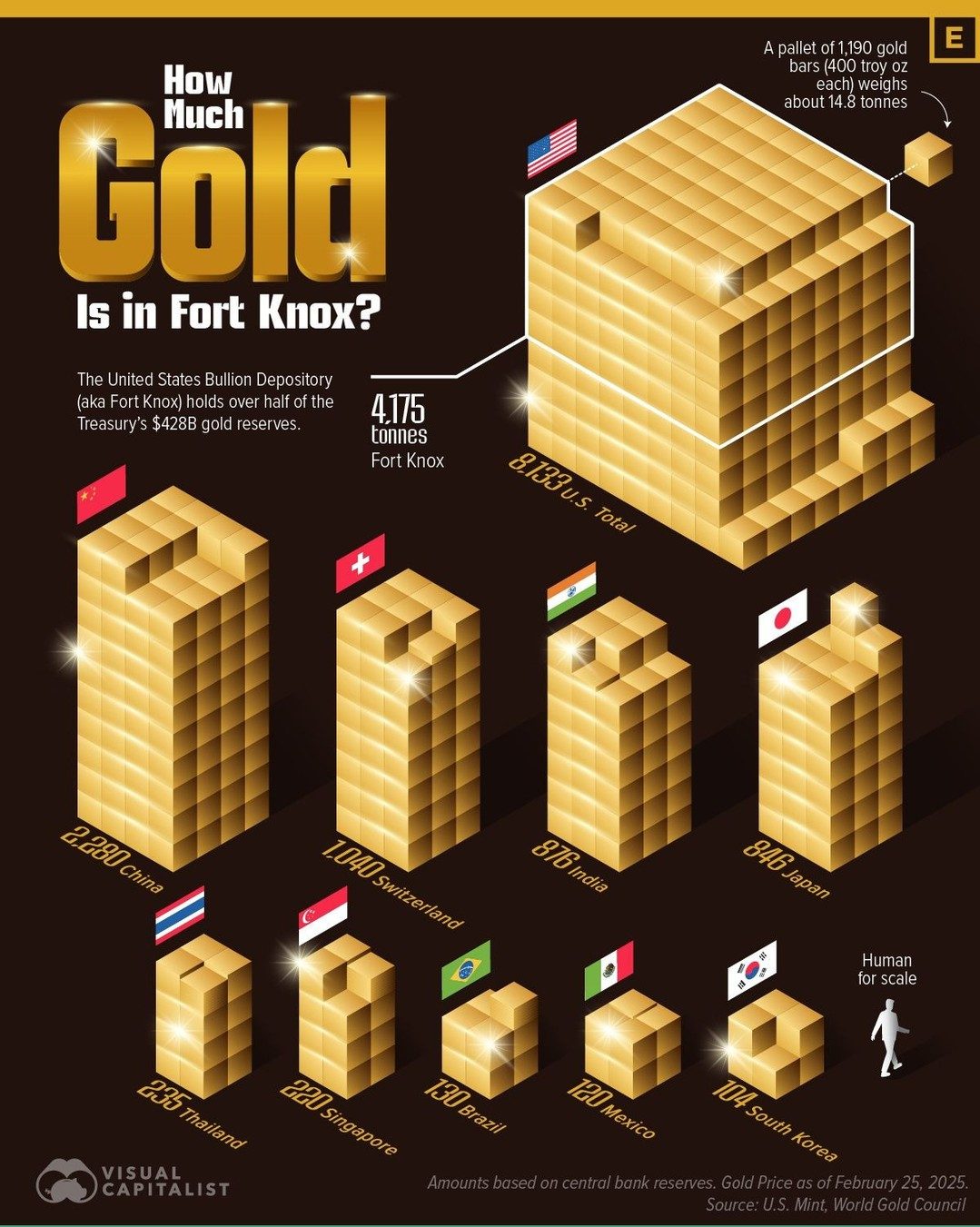
Gold Reserves of the World
The United States Bullion Depository, widely recognized as Fort Knox, holds over half of the U.S. Treasury’s $428 billion gold reserves. This makes it a significant repository of one of the world’s most valuable commodities. The sheer scale of these reserves can be hard to grasp, so it's helpful to compare them with the gold reserves of other central banks around the world. This comparison not only highlights Fort Knox's importance but also sheds light on the global distribution of gold reserves.
Why Fort Knox Matters
Fort Knox is more than just a symbol of American wealth and security; it plays a crucial role in the global economy. Gold reserves are a key component of a country’s financial stability. Central banks hold gold as a hedge against inflation and a means of diversifying their assets. By having such a large portion of its gold reserves in Fort Knox, the United States is able to influence global gold prices and maintain its economic power.
The Scale of Fort Knox’s Reserves
To understand the magnitude of Fort Knox's reserves, let’s delve into the numbers. The U.S. holds approximately 8,133 tonnes of gold. To visualize this, imagine 1,190 gold bars, each weighing about 400 troy ounces, or roughly 12.4 kilograms. That’s a staggering amount of gold, and it’s all stored in one place. This concentration of gold is a testament to the U.S. Treasury’s financial strategy.
Comparing Global Gold Reserves
When we look at the global distribution of gold reserves, the U.S. stands out, but it’s not alone. Other countries also hold significant amounts of gold. For instance, Japan has 8,846 tonnes, making it the second-largest holder of gold reserves. This figure is slightly higher than the U.S. total, showcasing Japan’s commitment to maintaining its financial stability through gold reserves.
Other Notable Holders
- China: With 2,280 tonnes, China is one of the largest holders of gold reserves in the world. Its reserves are a strategic move to diversify its foreign reserves and reduce its reliance on the U.S. dollar.
- Switzerland: Known for its neutrality and financial stability, Switzerland holds 1,040 tonnes of gold. This makes it a key player in the global gold market.
- India: With 876 tonnes, India is another significant holder. The country’s gold reserves are a reflection of its cultural affinity for gold and its economic strategy.
- Japan: Again, Japan’s 8,846 tonnes underscore its status as one of the world’s largest holders of gold reserves.
- Thailand: Thailand holds 235 tonnes, showcasing its commitment to maintaining financial stability through precious metal reserves.
- Singapore: With 220 tonnes, Singapore’s gold reserves are a testament to its status as a global financial hub.
- Brazil: Brazil’s 730 tonnes reflect its economic stability and financial strategy.
- Mexico: With 120 tonnes, Mexico is another country that relies on gold reserves as part of its economic strategy.
- South Korea: Holding 104 tonnes, South Korea is another significant player in the global gold market.
Practical Tips for Understanding Gold Reserves
Understanding gold reserves can be complex, but there are practical tips to help make sense of it all.
Visualizing Gold Reserves
One effective way to grasp the scale of gold reserves is through visualizations. Using gold bars to represent the quantities, as seen in the infographic, provides a tangible sense of the amount. Adding a human figure for scale helps to contextualize the size of the reserves. This method is particularly useful for those who are visual learners.
Understanding Central Bank Policies
Central banks use gold reserves as a strategic tool. Before delving into the numbers, it’s important to understand why countries hold gold. For many, it’s a means of ensuring financial stability and diversifying assets. Central banks often use gold as a hedge against inflation and economic uncertainty. By understanding these policies, one can better appreciate the significance of gold reserves.
Staying Updated on Global Gold Prices
Gold prices can fluctuate significantly, affecting the perceived value of gold reserves. Staying informed about global gold prices can help in understanding the current value of these reserves. For example, the amounts presented in the visualizations are based on the gold price as of February 25, 2025. Keeping track of such updates can provide a clearer picture of the global gold market.
Important Takeaways
- Fort Knox’s Dominance: Fort Knox holds over half of the U.S. Treasury’s gold reserves, making it a significant global player.
- Global Distribution: While the U.S. has the largest gold reserves, other countries like Switzerland and Japan also hold substantial amounts.
- Strategic Importance: Central banks hold gold reserves as a strategic tool for financial stability and asset diversification.
- Visualization Helps: Using visual aids like gold bars and human figures can help in understanding the scale of gold reserves.
- Market Fluctuations: Staying updated on gold prices can provide a clearer picture of the value of gold reserves.
Conclusion
Fort Knox is a pivotal location in the global gold market, holding a significant portion of the U.S. Treasury’s gold reserves. By comparing these reserves with those of other countries, we can better understand the strategic importance of gold in the global economy. Whether you’re a financial enthusiast or just curious about global reserves, understanding the scale and significance of Fort Knox’s gold holdings can provide valuable insights into the world of finance and economics.
Watch the Reel
Questions readers ask
How much gold is stored at Fort Knox, and why is this significant?
Fort Knox holds 8,133 tonnes of gold, which is the largest amount held by any single institution. This significant quantity represents over half of the U.S. Treasury’s gold reserves, making it a crucial asset in the global economy.
What is the global significance of Fort Knox’s gold reserves?
Fort Knox's gold reserves are a key component of the U.S. financial stability and a significant part of the global gold market. Central banks worldwide hold gold as a hedge against inflation and economic instability, making Fort Knox a vital player in international finance.
How do Fort Knox’s gold reserves compare to those of other countries?
Fort Knox’s 8,133 tonnes of gold dwarf the reserves of other nations. For example, Germany, which has the second-largest gold reserves, holds approximately 3,366 tonnes. This comparison underscores the immense scale of Fort Knox's holdings.
Why do central banks, including the U.S. Treasury, hold gold reserves?
Central banks hold gold reserves as a means to stabilize their economies. Gold is a tangible asset that retains its value over time, making it a reliable hedge against inflation and economic uncertainties. It also serves as a form of insurance in case of financial crises.
Are there any notable differences in how gold is stored at Fort Knox compared to other central banks?
Fort Knox is known for its stringent security measures and advanced storage facilities. The gold is typically stored in vaults with reinforced doors and walls, monitored by state-of-the-art security systems. While other central banks also prioritize security, Fort Knox's scale and historical significance set it apart.
Is the gold stored at Fort Knox accessible for public display or tours?
The gold stored at Fort Knox is not accessible for public display or tours. The facility is under strict security measures, and access is highly restricted. The last public tour was in 1974, and since then, the vault has remained closed to the public.
What is the process of adding or removing gold from Fort Knox’s reserves?
The process of adding or removing gold from Fort Knox’s reserves is meticulously managed. Any changes in the reserves require an intricate tracking process, including detailed documentation and verification of the gold’s authenticity and origin. This ensures the integrity and accuracy of the U.S. gold reserves.
Recent articles
Fresh deep dives from the latest Reels we unpacked.




Comments
Be the first to comment.