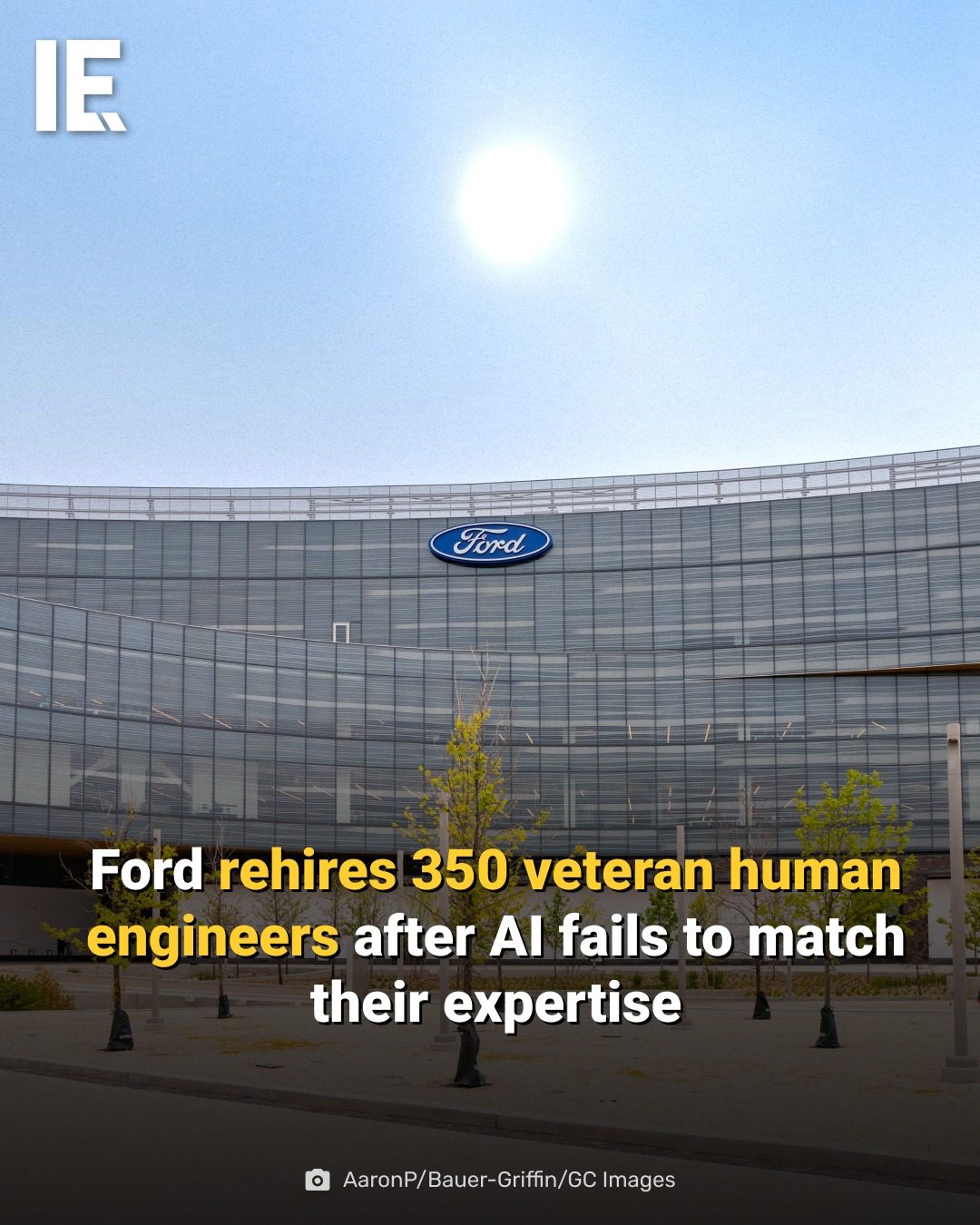
Ford Rehires 350 Engineers: AI and the Human Touch in Automotive Quality
Over the past three years, Ford has made a significant shift in their approach to engineering and vehicle quality. The company has hired, promoted, or brought back around 350 experienced technical specialists. This move comes after Ford discovered that relying solely on AI and automated quality systems wasn't enough to address the challenges in vehicle quality. This decision underscores the ongoing importance of human expertise in the automotive industry, despite the advancements in artificial intelligence.
Why This Matters
The rehiring of these engineers highlights a crucial aspect of modern manufacturing: the limitations of AI in certain specialized fields. While AI has made significant strides in areas like data analysis and predictive maintenance, it still lacks the nuanced understanding and creativity that human engineers bring to the table. Ford's experience serves as a reminder that technology, while powerful, is not a panacea and often requires the human touch to reach its full potential.
The Role of Human Expertise in Automotive Engineering
There are several reasons why human engineers remain indispensable in automotive engineering:
Mentorship and Knowledge Transfer
One of the most valuable contributions of the rehired engineers is their ability to mentor younger teams. Veteran engineers bring decades of experience and institutional knowledge that can't be replicated by AI or automated systems. This knowledge transfer is crucial for maintaining high standards of quality and innovation within the company.
Design Reviews and Quality Control
The rehired engineers are involved in leading design reviews, where their expertise is invaluable in identifying potential issues and ensuring that designs meet the necessary standards. This hands-on approach to quality control is something that AI, with its algorithm-driven processes, cannot fully replicate.
Data Quality and Tool Improvement
Another critical area where these engineers are making a difference is in improving the data behind Ford's quality tools. While AI can process vast amounts of data, human engineers can interpret this data in ways that improve the tools' accuracy and effectiveness. This human touch often results in more nuanced and reliable data, leading to better outcomes in quality control.
The Limitations of AI in Complex Tasks
While AI has proven to be a powerful tool in various aspects of manufacturing, it has its limitations:
Lack of Contextual Understanding
AI systems often struggle with contextual understanding, which is crucial in fields like automotive engineering. Human engineers, on the other hand, can interpret data within the broader context of the project, leading to more informed decisions.
Creative Problem-Solving
AI relies on pre-existing data and patterns to make decisions, which can limit its ability to solve complex or novel problems. Human engineers, however, can draw on their experience and intuition to develop innovative solutions that go beyond the data.
Practical Tips for Industries Considering AI Implementation
For industries considering the implementation of AI, Ford's experience offers some practical tips:
Balance Automation and Human Expertise
It's essential to strike a balance between automation and human expertise. While AI can handle routine tasks and data analysis, complex decision-making and creative problem-solving often require human intervention.
Invest in Continuous Improvement
Continuous improvement is key to leveraging the full potential of AI. This involves not just investing in technology but also in the people who will work alongside it. Training programs and knowledge-sharing initiatives can help ensure that human expertise remains a valuable asset.
Stay Adaptive
The landscape of AI and automation is constantly evolving, and industries need to stay adaptive. This means being open to new technologies and being willing to pivot strategies as needed. Regularly reassessing the role of AI and human expertise is crucial for long-term success.
Important Takeaways
Ford's decision to rehire 350 veteran engineers highlights several important takeaways:
- Human expertise remains invaluable in specialized fields like automotive engineering.
- AI is a powerful tool but has limitations in areas requiring contextual understanding and creative problem-solving.
- Balancing automation and human expertise is key to leveraging the full potential of AI.
- Continuous improvement and adaptability are crucial for long-term success in industries embracing AI.
Conclusion
The rehiring of 350 experienced engineers by Ford underscores the enduring value of human expertise in the automotive industry. While AI has made significant strides, it has not replaced the need for human intuition, creativity, and contextual understanding. For industries looking to implement AI, the lesson is clear: balance automation with human expertise, invest in continuous improvement, and stay adaptive. By doing so, they can harness the best of both worlds and drive innovation and quality forward.
Watch the Reel
Questions readers ask
Why did Ford decide to rehire 350 engineers?
Ford identified that certain complex engineering challenges required more than what AI and automated systems could provide. By rehiring 350 engineers, Ford aims to leverage their expertise to enhance vehicle quality and address these intricate issues more effectively.
What types of challenges are these engineers expected to tackle?
The engineers are expected to tackle a wide range of complex challenges in automotive engineering. This includes improving vehicle quality, enhancing quality control processes, and addressing specific engineering problems that AI alone cannot solve.
How will these engineers contribute to Ford's vehicle quality enhancement?
These engineers bring a wealth of experience and specialized knowledge that will be crucial in refining Ford's quality control processes. Their human insight and problem-solving skills will complement the capabilities of AI and automated systems, leading to better overall vehicle quality.
What does this move say about Ford's approach to AI in automotive engineering?
This move indicates that while Ford recognizes the benefits of AI, the company understands that human expertise is still indispensable. Ford is adopting a balanced approach, using AI for efficiency and human engineers for nuanced, high-level decision-making and problem-solving.
Are these engineers new hires or returning employees?
These engineers are a mix of both new hires and returning employees. Ford has actively sought out experienced technical specialists, including veteran engineers who previously worked at the company, to strengthen their engineering team.
How will the return of these engineers impact Ford's existing engineering team?
The return of these veteran engineers will bring a wealth of institutional knowledge and expertise to the existing team, fostering a more collaborative and experienced work environment. Additionally, their presence will provide valuable mentorship opportunities for younger engineers.
Related deep dives
Similar reads based on topic and creator.


Recent articles
Fresh deep dives from the latest Reels we unpacked.




Comments
Be the first to comment.