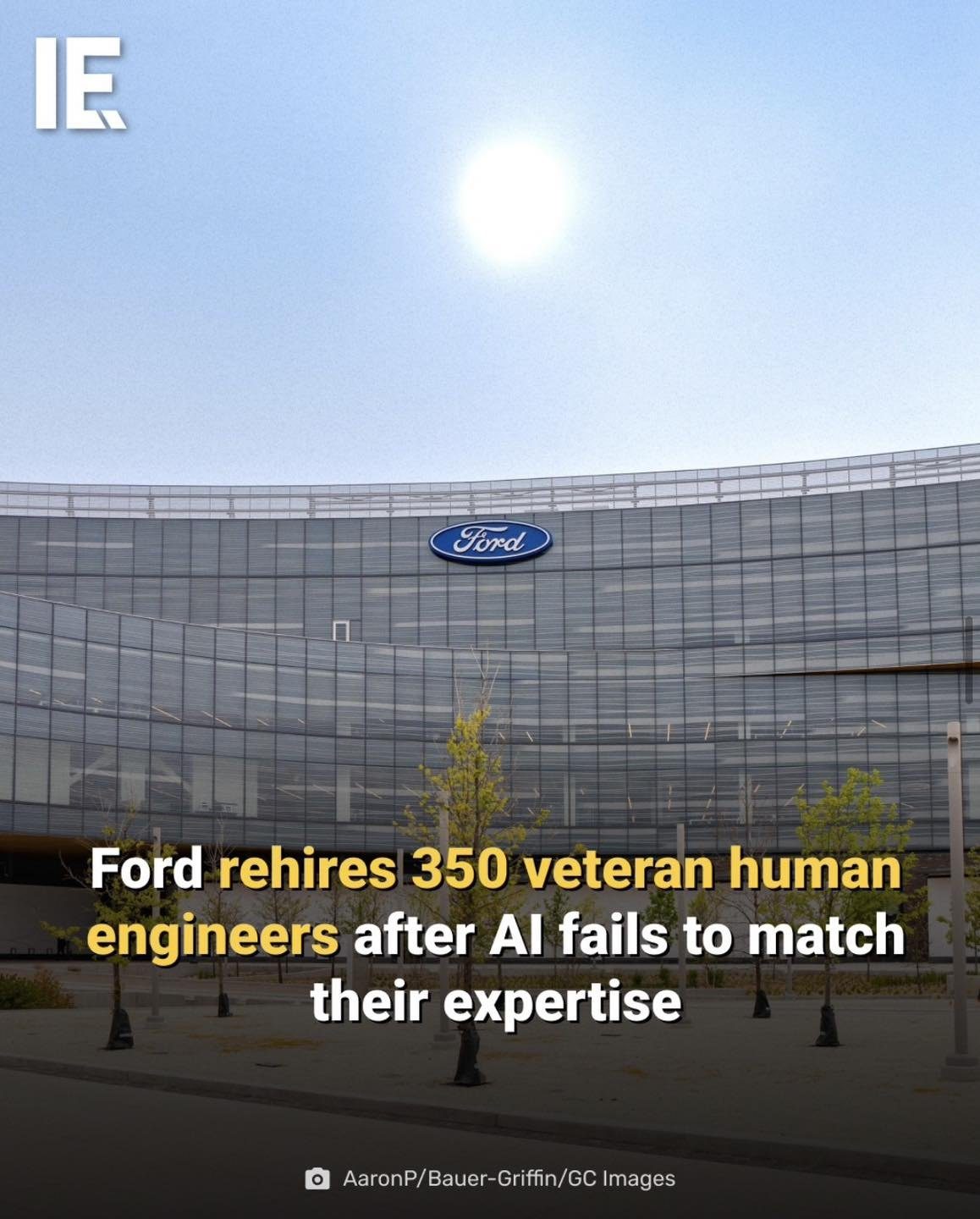
Ford's Strategic Shift: The Return of Veteran Engineers
Ford has made a significant strategic move by rehiring, promoting, or bringing back around 350 experienced technical specialists over the past three years. This decision comes after the automotive giant recognized that relying solely on AI and automated quality systems wasn't sufficient to address vehicle-quality issues. These veteran engineers are now playing a crucial role in mentoring younger teams, leading design reviews, and enhancing the data behind Ford’s quality tools.
Why This Matters
In an era where automation and artificial intelligence are increasingly integrated into every industry, Ford's decision to bring back experienced human engineers underscores the irreplaceable value of human expertise. This shift highlights the importance of blending human experience with advanced technology to achieve the best results, particularly in complex fields like automotive engineering.
The Limits of Automation
Ford's experience serves as a powerful reminder that while AI and automated systems are incredibly powerful, they are not infallible. The company's journey reveals the challenges of replicating the nuanced, intuitive understanding that comes from years of practical experience in solving complex engineering problems. This realization is a testament to the multifaceted nature of engineering, which often requires a deep, contextual understanding that machines currently lack.
The Human Touch
The 350 engineers Ford has rehired are critical in areas where human intuition, creativity, and experience are irreplaceable. Their roles involve mentoring younger engineers, providing insights that can only come from years of hands-on work, and leading crucial design reviews. This transfer of knowledge is invaluable in ensuring that the next generation of engineers can tackle challenges with a robust foundation.
Enhancing Quality Tools
In addition to mentoring, these veteran engineers are instrumental in improving the data used in Ford’s quality tools. They bring a level of precision and attention to detail that ensures the tools are not only effective but also reliable. This enhancement helps in making the tools more accurate and dependable, which is essential for maintaining high standards of vehicle quality.
Practical Tips for Integrating Human Expertise with AI
For companies looking to integrate human expertise with AI and automated systems, Ford's experience offers valuable lessons.
Identify Key Roles for Human Expertise
Determine which roles and tasks are best suited for human expertise. These often include complex problem-solving, high-stakes decision-making, and roles that require deep contextual understanding. Assess where human intuition can add value that AI cannot replicate.
Foster a Mentorship Culture
Create opportunities for experienced engineers to mentor younger team members. This not only ensures the continuity of knowledge but also builds a robust and competent workforce. Encourage knowledge-sharing sessions, peer reviews, and collaborative projects to leverage the unique insights of veteran engineers.
Continuous Improvement
Regularly update and refine the data and algorithms used in automated systems. Ensure that these systems are continually enhanced with the insights and knowledge from human experts. This helps in maintaining high standards and improving the overall effectiveness of the systems.
Important Takeaways
Ford's decision underscores the importance of blending human expertise with advanced technology. It highlights that while AI and automation offer immense benefits, they cannot replace the unique insights and problem-solving capabilities of experienced engineers. By integrating human knowledge with technological advancements, companies can achieve higher standards of quality and innovation.
Conclusion
The automotive industry, like many others, is at a critical juncture where the balance between human expertise and technological innovation is being finely tuned. Ford's strategic move to rehire 350 veteran engineers is a significant step in this direction. It sets a precedent for other companies to recognize the irreplaceable value of human experience and to integrate it effectively with advanced technological systems. By doing so, companies can achieve higher standards of quality and innovation, ensuring a future where both technology and human expertise coexist and thrive.
Watch the Reel
Questions readers ask
Why did Ford decide to bring back veteran engineers?
Ford recognized that while AI and automated systems are valuable, they are not enough to address vehicle-quality issues. The company found that the practical knowledge and problem-solving skills of experienced engineers were crucial in maintaining high standards. These veteran specialists were brought in to provide mentorship, lead design reviews, and improve the quality tools.
How many veteran engineers has Ford rehired or brought back?
Ford has brought back around 350 experienced technical specialists over the past three years. This includes rehiring, promoting, and bringing back engineers who had previously left the company. These engineers are now playing a crucial role in mentoring younger teams and enhancing the data behind Ford’s quality tools.
What roles are the returning veteran engineers playing at Ford?
These engineers are involved in various roles, including mentoring younger teams, leading design reviews, and ensuring the quality of Ford’s vehicles. Their practical knowledge and experience are essential in improving the data behind Ford’s quality tools, which helps in identifying and resolving vehicle-quality issues more effectively.
Why is human expertise so important in automotive engineering for Ford?
Although AI and advanced technology are integrated into the automotive industry, human expertise is indispensable for ensuring vehicle quality. The practical knowledge and problem-solving skills of experienced engineers are crucial in maintaining high standards and mentoring the next generation of engineers.
What benefits does Ford expect from this strategic shift?
Ford aims to improve vehicle quality, enhance mentorship for younger engineers, and better integrate human expertise with advanced technology. By focusing on both human knowledge and technological advancements, Ford is striving to achieve a more balanced and effective approach to automotive engineering.
How does this decision impact the future of Ford’s engineering efforts?
This decision shows a commitment to blending human expertise with advanced technology. It ensures that practical knowledge, mentorship, and quality control remain at the core of Ford's engineering efforts, which is likely to have a positive impact on the future of the company’s vehicles and its engineering teams.
Related deep dives
Similar reads based on topic and creator.


Recent articles
Fresh deep dives from the latest Reels we unpacked.




Comments
Be the first to comment.