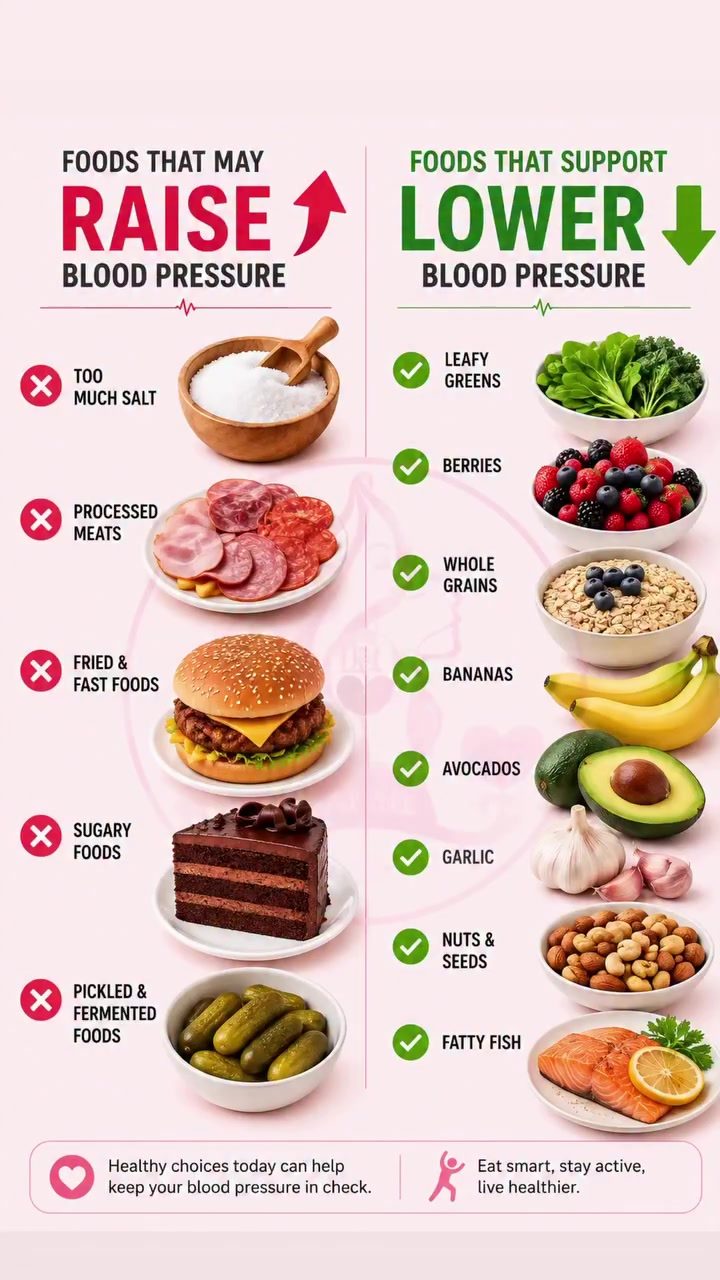
Blood Pressure and Foods
A balanced diet rich in key nutrients can help support heart health and manage blood pressure. Blood pressure is a critical indicator of heart health, and dietary choices can significantly influence it. Understanding which foods to include and which to limit can make a substantial difference in maintaining healthy blood pressure levels.
Context / Why this matters
Blood pressure is the force of blood pushing against the walls of the arteries. When blood pressure is too high, it can lead to serious health issues such as heart disease, stroke, and kidney problems. While there is no single food that can "cure" high blood pressure, making informed dietary choices can help manage and even lower it. A balanced diet rich in potassium, magnesium, fiber, and healthy fats is essential for supporting heart health.
Main discussion
Foods to Include for Lowering Blood Pressure
Leafy Greens
Leafy greens like spinach, kale, and collard greens are packed with vitamins, minerals, and antioxidants. They are particularly rich in potassium, a mineral that helps balance the negative effects of sodium, which can raise blood pressure. Adding these greens to your diet can contribute to lowering blood pressure and improving overall heart health.
Berries
Berries, including strawberries, blueberries, and raspberries, are high in antioxidants and fiber. These compounds help reduce inflammation and improve blood vessel function. Regular consumption of berries has been linked to lower blood pressure and a reduced risk of heart disease.
Whole Grains
Whole grains, such as oats, brown rice, and quinoa, are rich in fiber and essential nutrients. Fiber helps regulate blood pressure by aiding in digestion and promoting a healthy gut. The combination of fiber and other nutrients in whole grains supports overall heart health and helps lower blood pressure.
Bananas
Bananas are a great source of potassium, a mineral that is vital for maintaining normal blood pressure. Potassium helps to counteract the effects of sodium, promoting better blood vessel function and lowering blood pressure.
Avocados
Avocados are rich in heart-healthy monounsaturated fats and potassium. These nutrients work together to lower blood pressure by improving blood vessel function and reducing inflammation. Adding avocados to your diet can support overall heart health.
Garlic
Garlic contains compounds that help relax blood vessels and improve blood flow. These properties make garlic an effective natural remedy for lowering blood pressure. Regular consumption of garlic can contribute to better heart health and help manage blood pressure.
Nuts and Seeds
Nuts and seeds, such as almonds, walnuts, and chia seeds, are packed with healthy fats, fiber, and minerals. These nutrients help reduce inflammation, improve blood vessel function, and lower blood pressure. Adding a variety of nuts and seeds to your diet can support heart health and manage blood pressure.
Fatty Fish
Fatty fish, including salmon, mackerel, and sardines, are rich in omega-3 fatty acids. These healthy fats help reduce inflammation, improve blood vessel function, and lower blood pressure. Regular consumption of fatty fish can support overall heart health and help manage blood pressure.
Foods to Limit for Lowering Blood Pressure
Processed Meats
Processed meats, such as bacon, sausage, and deli meats, are high in sodium and saturated fats. These components can raise blood pressure and contribute to heart disease. Limiting the intake of processed meats can help maintain healthy blood pressure levels.
Fried and Fast Foods
Fried and fast foods are often high in unhealthy fats, sodium, and calories. These components can raise blood pressure and contribute to obesity and heart disease. Opting for healthier cooking methods and choosing nutrient-dense foods can help manage blood pressure and support overall health.
Sugary Foods
Sugary foods, including cakes, cookies, and sugary drinks, are high in added sugars and often low in essential nutrients. Excessive sugar intake can lead to weight gain, inflammation, and increased blood pressure. Limiting the consumption of sugary foods and opting for healthier alternatives can help manage blood pressure.
Pickled and Fermented Foods
Pickled and fermented foods, such as pickles, sauerkraut, and kimchi, are often high in sodium. Excessive sodium intake can raise blood pressure and contribute to heart disease. Limiting the consumption of these foods and opting for low-sodium alternatives can help manage blood pressure.
Practical tips
Make a Balanced Meal Plan
Creating a balanced meal plan that includes a variety of nutrient-rich foods can help manage blood pressure. Focus on incorporating leafy greens, berries, whole grains, bananas, avocados, garlic, nuts and seeds, and fatty fish into your daily meals. Limit processed meats, fried foods, sugary foods, and pickled foods to support heart health.
Monitor Sodium Intake
Reducing your sodium intake is crucial for managing blood pressure. Opt for low-sodium alternatives and season your food with herbs and spices instead of salt. Reading food labels and choosing low-sodium options can help keep your sodium intake in check.
Incorporate Potassium-Rich Foods
Potassium helps counterbalance the effects of sodium, promoting better blood vessel function. Include potassium-rich foods like bananas, avocados, and leafy greens in your diet to support healthy blood pressure levels.
Stay Hydrated
Drinking plenty of water is essential for maintaining overall health and supporting heart function. Staying hydrated can help regulate blood pressure and promote better blood flow.
Regular Exercise
Regular physical activity is crucial for maintaining a healthy weight and managing blood pressure. Aim for at least 30 minutes of moderate exercise most days of the week. Activities like walking, swimming, and cycling can help keep your blood pressure in check.
Important Takeaways
Diet plays a significant role in managing blood pressure. Including foods rich in potassium, magnesium, fiber, and healthy fats, such as leafy greens, berries, whole grains, bananas, avocados, garlic, nuts and seeds, and fatty fish, can support heart health and lower blood pressure. Limiting processed meats, fried foods, sugary foods, and pickled foods can also help manage blood pressure levels. Combining a healthy diet with regular exercise, maintaining a healthy weight, and getting good sleep can contribute to better overall health.
Conclusion
Making informed dietary choices is essential for managing blood pressure and supporting heart health. By including nutrient-rich foods and limiting those high in sodium and unhealthy fats, you can help keep your blood pressure in check. Regular exercise, maintaining a healthy weight, and getting good sleep are also crucial components of a heart-healthy lifestyle.
Watch the Reel
Questions readers ask
Which foods are particularly effective in lowering blood pressure?
Foods rich in potassium, magnesium, and fiber are particularly effective. Examples include leafy greens like spinach and kale, berries such as blueberries and strawberries, and whole grains like brown rice and quinoa. These foods help to relax blood vessels and reduce sodium levels, thereby lowering blood pressure.
How do leafy greens support heart health and lower blood pressure?
Leafy greens are packed with nitrates, which the body converts into nitric oxide. This compound helps to widen blood vessels, promoting better blood flow and reducing blood pressure. Additionally, they are high in potassium, which helps to balance the effects of sodium in the body.
What are the effects of processed foods on blood pressure?
Processed foods often contain high levels of sodium, unhealthy fats, and added sugars, which can all contribute to elevated blood pressure. These foods can lead to weight gain and inflammation, further exacerbating hypertension issues. Limiting processed foods and opting for whole, natural foods can help manage blood pressure more effectively.
What are some helpful tips for incorporating blood pressure-lowering foods into a diet?
Incorporate a variety of colorful fruits and vegetables into meals and snacks. Choose whole grains over refined grains, and include fatty fish like salmon or mackerel in your diet. Limit processed and sugary foods, and opt for natural, unprocessed options. Additionally, consider adding potassium-rich foods like bananas, avocados, and sweet potatoes to your diet.
How does potassium help in managing blood pressure?
Potassium helps to counter the effects of sodium in the body. It promotes the excretion of sodium through urine, which can help to lower blood pressure. Foods rich in potassium, such as leafy greens, bananas, and potatoes, are beneficial for maintaining healthy blood pressure levels.
What are some foods that can raise blood pressure?
Foods high in sodium, such as canned soups, pickled foods, and processed meats, can raise blood pressure. Additionally, sugary foods and beverages, as well as fatty foods, can contribute to weight gain and high blood pressure. Limiting these foods and focusing on a balanced diet can help manage blood pressure levels.
Can pickled foods be part of a blood pressure-friendly diet?
Pickled foods are typically high in sodium due to the pickling process, which can raise blood pressure. While small amounts may be okay for some, it's generally best to limit or avoid pickled foods when managing blood pressure. Opt for fresh, natural foods instead to support heart health and maintain healthy blood pressure levels.
Recent articles
Fresh deep dives from the latest Reels we unpacked.




Comments
Be the first to comment.