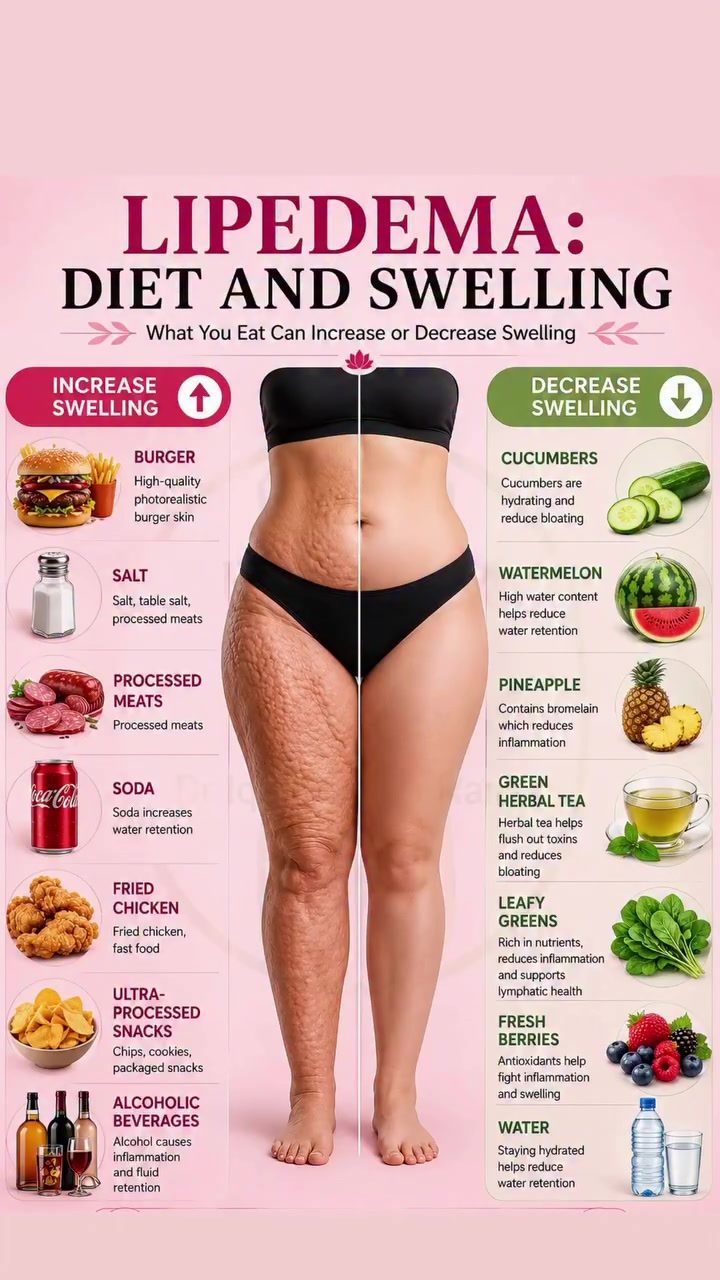
Lipedema: Understanding Diet and Swelling
Lipedema is a chronic condition characterized by the abnormal accumulation of fat in the lower body, often leading to swelling and discomfort. While there is no cure for lipedema, dietary choices can play a significant role in managing symptoms and overall health.
Why Diet Matters
A balanced, anti-inflammatory diet can help manage lipedema symptoms by reducing inflammation and promoting lymphatic health. This approach does not cure lipedema but can improve quality of life and overall well-being. By focusing on specific foods, individuals can influence swelling and inflammation associated with lipedema. Turning to a different dietary pattern can also help manage inflammation and health. Limiting ultra-processed foods and choosing more anti-inflammatory options can make a noticeable difference.
Foods to Increase and Decrease Swelling
Foods That Increase Swelling
Certain foods can exacerbate swelling and inflammation, making lipedema symptoms worse. Foods to limit or avoid include:
- Processed Meats: High in sodium and preservatives, processed meats can contribute to water retention and inflammation.
- Sugary Drinks: Beverages like soda can increase water retention and add empty calories, contributing to overall inflammation.
- Fried Foods: Fried chicken and other fried foods are high in unhealthy fats and can cause inflammation.
- Snacks: Packaged snacks like chips and cookies are often high in sodium and sugars, which can lead to water retention.
- Alcoholic Beverages: Alcohol can cause inflammation and fluid retention, worsening lipedema symptoms.
- Excess Salt: High sodium intake can lead to water retention and increased swelling.
Foods That Decrease Swelling
On the other hand, certain foods can help reduce swelling and promote overall health. Incorporating these foods into a balanced diet can be beneficial for managing lipedema symptoms:
- Cucumbers: Rich in water and electrolytes, cucumbers can help hydrate the body and reduce bloating.
- Watermelon: High in water content, watermelon can help flush out toxins and reduce water retention.
- Pineapple: Contains bromelain, an enzyme that helps reduce inflammation.
- Green Herbal Tea: Helps flush out toxins and reduces bloating.
- Leafy Greens: Rich in nutrients, leafy greens support lymphatic health and reduce inflammation.
- Fresh Berries: Packed with antioxidants, fresh berries can help fight inflammation.
- Water: Staying hydrated is crucial for reducing water retention and supporting overall health.
Practical Tips for Managing Lipedema Through Diet
Hydration is Key
Staying hydrated is essential for managing lipedema symptoms. Aim for at least eight glasses of water daily to help flush out toxins and reduce water retention. In addition to water, herbal teas and infused waters can add variety and additional health benefits.
Choose Fresh, Whole Foods
Focus on consuming fresh, whole foods rather than processed ones. Fresh fruits and vegetables, lean proteins, and whole grains can provide the nutrients needed to support overall health and manage inflammation. Avoiding ultra-processed foods can also help reduce the intake of unhealthy fats, sugars, and sodium.
Incorporate Anti-Inflammatory Foods
Anti-inflammatory foods can help reduce swelling and inflammation associated with lipedema. Incorporate foods rich in omega-3 fatty acids, antioxidants, and other anti-inflammatory compounds into your diet. Examples include fatty fish, nuts, seeds, and colorful fruits and vegetables.
Limit Salt and Sugary Drinks
High sodium and sugar intake can contribute to water retention and inflammation. Limit your intake of processed foods, sugary drinks, and excess salt. Opt for natural sweeteners like fruits and use herbs and spices to flavor food instead of salt.
Balance Meals
Aim for balanced meals that include a variety of nutrient-dense foods. Include a source of lean protein, complex carbohydrates, and healthy fats in each meal. This approach can help stabilize blood sugar levels, promote satiety, and support overall health.
Important Takeaways
While diet alone cannot cure lipedema, it can significantly impact symptom management and overall health. Incorporating anti-inflammatory foods and limiting processed, high-sodium, and sugary items can help reduce swelling and inflammation. Additionally, staying hydrated, choosing fresh whole foods, and balancing meals can support overall health and well-being.
Diet is just one part of lipedema management. Other essential components include compression therapy, regular movement, and appropriate medical care. Compression therapy can help reduce swelling and improve lymphatic drainage, while regular movement and exercise can promote circulation and overall health. Working with a healthcare provider to develop a comprehensive management plan is crucial for effectively managing lipedema.
Conclusion
Managing lipedema through diet involves making conscious choices about the foods you consume. By focusing on anti-inflammatory foods and limiting processed, high-sodium, and sugary items, individuals can reduce swelling and inflammation associated with lipedema. Incorporating hydration, fresh whole foods, and balanced meals into daily routines can support overall health and well-being. Complementing dietary changes with compression therapy, movement, and medical care can provide a comprehensive approach to managing lipedema symptoms and improving quality of life.
Watch the Reel
Questions readers ask
Which foods should I add to my diet to help manage lipedema symptoms?
Foods rich in antioxidants and anti-inflammatory properties can help manage lipedema symptoms. Leafy greens, berries, and pineapple are excellent choices. These foods are believed to reduce swelling and inflammation. They are also part of a balanced, anti-inflammatory diet that is helpful for managing symptoms.
What foods should I avoid to prevent exacerbating lipedema symptoms?
To prevent worsening lipedema symptoms, it's best to avoid processed meats, sugary drinks, and fried foods. These items can increase inflammation and swelling. Limiting your intake of these foods can improve your overall health.
How does hydration impact lipedema swelling?
Staying hydrated is crucial for managing lipedema swelling. Adequate water intake helps flush out toxins and supports lymphatic function. Experts recommend drinking at least 8 glasses of water a day, or more based on personal needs and activity levels.
Can a low-salt diet help with lipedema swelling?
Yes, reducing salt intake can help minimize lipedema swelling. Excess salt can lead to water retention, which exacerbates swelling. By lowering your salt consumption, you can help manage this symptom.
What are some benefits of including leafy greens in a lipedema diet?
Leafy greens are packed with essential nutrients and antioxidants that can help reduce inflammation and swelling. They are also low in calories and high in fiber, making them an excellent addition to a lipedema diet.
How does pineapple help with lipedema swelling?
Pineapple contains an enzyme called bromelain, which has anti-inflammatory properties. Consuming pineapple may help reduce swelling and inflammation associated with lipedema.
Recent articles
Fresh deep dives from the latest Reels we unpacked.




Comments
Be the first to comment.