When it comes to food and beauty, the saying "you are what you eat" takes on a whole new meaning. The foods we consume can significantly impact our facial appearance, causing issues like water retention, inflammation, or bloating, which can make our face look puffier or less defined. Conversely, certain foods can support hydration, digestion, and nutrient balance, helping our face look sharper, healthier, and more energized.
Context / Why This Matters
The relationship between diet and skin health is well-documented, but the specific effects on facial appearance, particularly in terms of puffiness and bloating, are less commonly discussed. Understanding how different foods affect your face can help you make more informed choices to achieve a healthier, more vibrant look.
Main Discussion
Foods That Quietly Affect Your Face
Certain foods are notorious for causing facial issues:
- Highly salty foods: Items like ramen or pickled foods can increase water retention, making your face appear puffier.
- Processed snacks and additives: These can trigger inflammation, leading to a less defined facial appearance.
- Excess chewing gum or ultra-processed foods: These can irritate digestion, contributing to bloating and a swollen face.
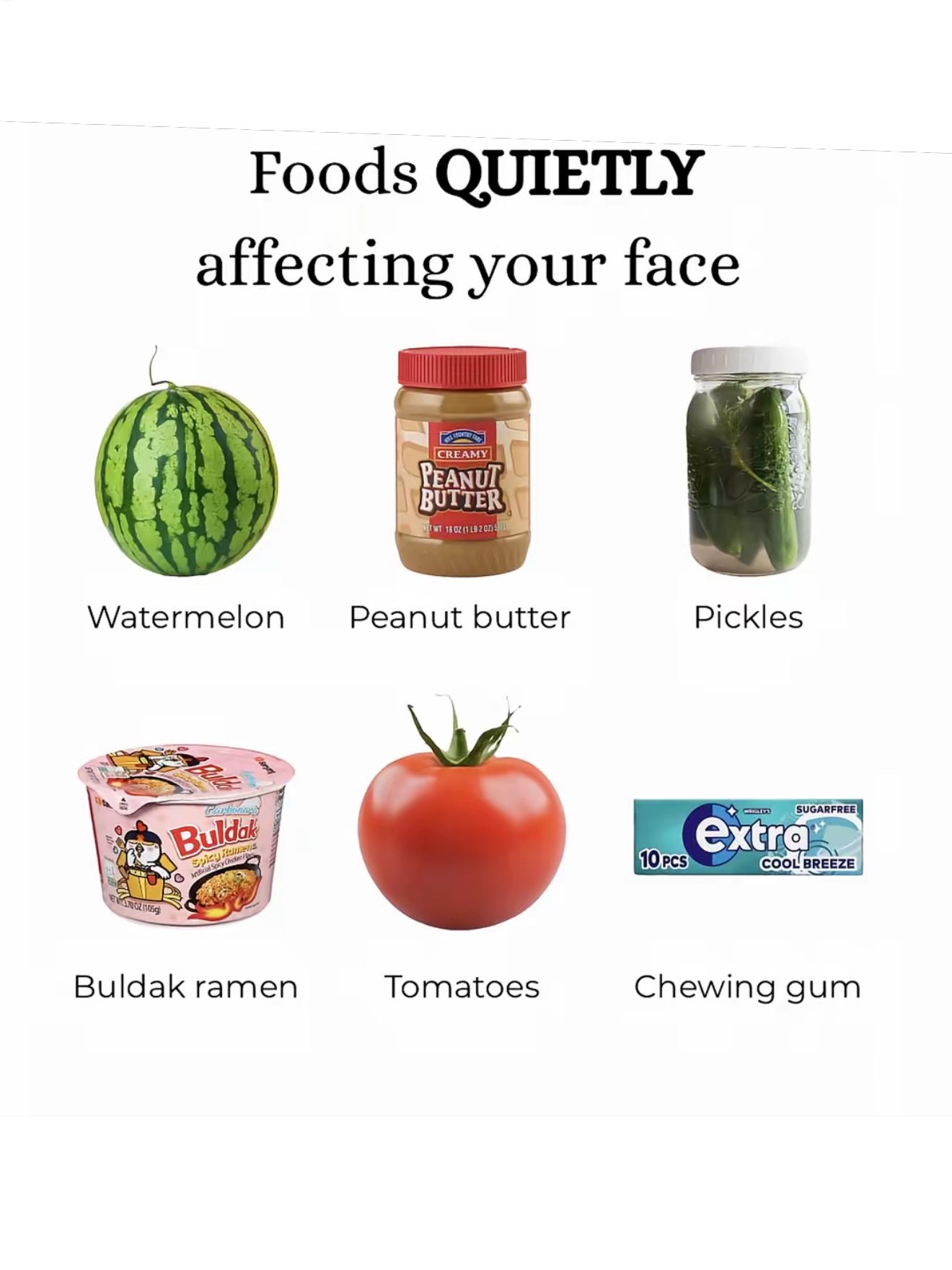
Examples of foods that quietly affect your face include:
- Watermelon: While hydrating, large amounts can contribute to water retention.
- Peanut butter: Rich in fats, it can cause inflammation if consumed in excess.
- Pickles: High in sodium, pickles can increase water retention.
- Tomatoes: Known to cause bloating in some individuals.
- Chewing gum: Excessive chewing can lead to air swallowing, causing bloating.
- Mushrooms: Can cause bloating in some people due to their high fiber content and complex carbohydrates.
- Corn: High in fiber and starch, corn can cause bloating.
- High-water fruit combined with sodium: Large amounts of fruits like watermelon or grapes, when paired with salty foods, can lead to water retention and puffiness.
Foods That Help Your Face Look More Defined and Refreshed
On the other hand, some foods can help your face look more defined and refreshed:
- Kiwi: Rich in vitamin C, kiwi supports skin health and collagen production.
- Cucumber: Super hydrating, cucumber helps reduce puffiness around the eyes.
- Bell peppers: Packed with antioxidants, bell peppers protect the skin from damage.
- Shrimp: High in protein and minerals, shrimp supports skin health and repair.
- Chia seeds: Great for digestion and omega-3s, chia seeds help maintain a healthy, clear complexion.
Foods That May Bloat Your Face for Some People
While these foods are generally healthy, they can cause bloating in some individuals:
- Tomatoes: Known to cause bloating in some people.
- Mushrooms: Can cause bloating due to their high fiber content.
- Corn: High in fiber and starch, corn can cause bloating.
- High-water fruit combined with sodium: Large amounts of fruits high in water content, when paired with salty foods, can lead to water retention and puffiness.
Foods That Can Help Reduce Bloating
Certain foods are particularly effective at reducing bloating:
- Kefir: Supports gut health and reduces inflammation.
- Bananas: Rich in potassium, bananas help balance sodium levels.
- Spinach: Rich in minerals, spinach supports overall skin health.
- Avocado: Contains healthy fats and potassium, avocado helps reduce bloating.
- Pineapple: Contains enzymes that support digestion.
- Ginger: A natural anti-inflammatory, ginger helps reduce bloating and inflammation.
Practical Tips
- Hydrate with Caution: While hydration is crucial, be mindful of high-water foods paired with sodium, as they can lead to water retention.
- Limit Processed Foods: Reduce intake of processed snacks and additives to minimize inflammation.
- Incorporate Anti-Bloating Foods: Regularly include foods like kefir, bananas, and ginger in your diet to combat bloating.
- Balance Your Diet: Ensure a balanced intake of nutrients to support overall skin health and reduce facial puffiness.
Important Takeaways
No single food is universally "bad" for everyone. Individual responses to food can vary significantly. The key is to pay attention to how different foods make you feel and look, and to adjust your diet accordingly.
Additionally, nutrition is just one part of the equation. Consistent physical activity and a healthy lifestyle can significantly enhance the benefits of a balanced diet, leading to improved body composition, reduced inflammation, and a more defined facial appearance.
Conclusion
Understanding the impact of food on your face can help you make better choices for a healthier, more vibrant appearance. By being mindful of what you eat and how it affects your body, you can achieve a more defined and energized look.
Watch the Reel
Questions readers ask
Which foods should I avoid to reduce facial puffiness and bloating?
To minimize facial puffiness and bloating, consider limiting your intake of high-sodium foods like chips and processed meats, as well as refined carbohydrates such as white bread and pasta. These foods can cause water retention and inflammation. Additionally, reduce your consumption of sugar and alcohol, which can lead to dehydration and exacerbate puffiness.
What are some foods that can help improve skin health and facial appearance?
Incorporating nutrient-rich foods into your diet can significantly enhance your skin health and facial appearance. Foods high in omega-3 fatty acids, such as salmon and walnuts, promote hydration and reduce inflammation. Vitamin C-rich foods like citrus fruits and berries boost collagen production, while leafy greens provide essential antioxidants for skin health.
How do chia seeds benefit facial health?
Chia seeds are excellent for facial health due to their high omega-3 fatty acid content, which helps reduce inflammation and promote skin hydration. They also contain fiber, which supports digestion and can help minimize bloating, contributing to a more defined facial appearance. Additionally, chia seeds are rich in antioxidants, which protect the skin from damage caused by free radicals.
Can kiwi improve skin health and facial appearance?
Yes, kiwi can be beneficial for skin health and facial appearance. It is rich in vitamin C, which aids in collagen production and supports skin elasticity. Kiwi also contains antioxidants and enzymes that can help improve digestion and reduce inflammation, leading to a healthier, more vibrant complexion.
What is the significance of an anti-inflammatory diet for facial health?
An anti-inflammatory diet is crucial for maintaining facial health as it helps reduce puffiness, redness, and acne. Foods like fatty fish, leafy greens, and turmeric contain compounds that combat inflammation in the body. By minimizing inflammation, you can achieve a clearer, more even-toned complexion, and reduce the appearance of fine lines and wrinkles.
What are some dietary tips to achieve a more vibrant skin look?
To achieve a more vibrant skin look, focus on consuming a balanced diet rich in fruits, vegetables, lean proteins, and healthy fats. Stay hydrated by drinking plenty of water and incorporating hydrating foods like cucumbers and watermelon. Additionally, limit your intake of processed foods and sugars, which can contribute to dullness and inflammation.
How does sugar affect facial appearance?
Consuming excessive amounts of sugar can negatively impact facial appearance by causing inflammation and dehydration. Sugar can break down collagen and elastin, leading to premature aging and a loss of skin elasticity. Reducing sugar intake can help minimize these effects, promoting a clearer, more youthful complexion.
Recent articles
Fresh deep dives from the latest Reels we unpacked.




Comments
Be the first to comment.