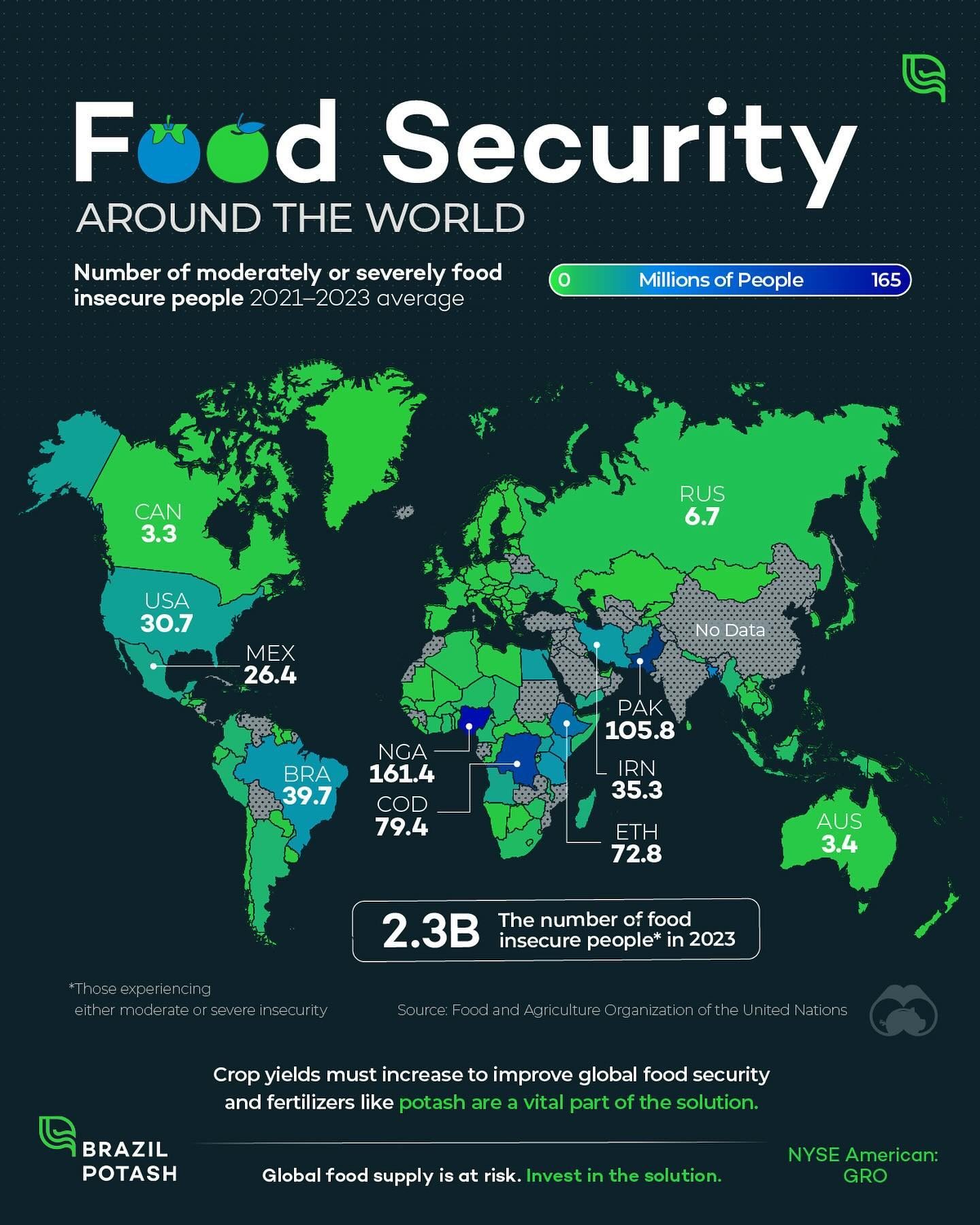
Global Food Security: A Critical Issue in 2023
Food security is a pressing global issue, with 2.3 billion people facing food insecurity in 2023. This means that a significant portion of the world's population is concerned about the quantity and quality of their food, and some go without eating for at least a day. To address this challenge, it's crucial to focus on improving crop yields, with fertilizers such as potash playing a vital role.
Why This Matters
Food security is fundamental to societal stability and human well-being. The current state of global food insecurity poses significant risks, not only to individual health but also to global economies and political stability. Addressing food insecurity requires a multi-faceted approach, including increasing crop yields, enhancing agricultural infrastructure, and ensuring equitable distribution of resources. The data highlights the urgency and necessity of these efforts.
Understanding Global Food Insecurity
Food insecurity is a complex issue affected by various factors, including economic instability, environmental changes, and agricultural practices. Let's break down the current statistics and understand the scope of the problem.
The Numbers: A Global Perspective
According to recent data, the number of moderately or severely food insecure people between 2021 and 2023 shows a stark reality:
- Canada: 30.7 million people
- Mexico: 26.4 million people
- Brazil: 39.7 million people
- Russia: 6.7 million people
- Pakistan: 10.8 million people
- Ethiopia: 72.8 million people
- Australia: 3.4 million people
These numbers underscore the widespread nature of the problem, affecting both developed and developing countries. While some nations have lower figures, the sheer scale of food insecurity worldwide is alarming.
The Impact of Crop Yields
Crop yields are a critical factor in addressing food insecurity. Increasing crop yields can provide more food for a growing population and improve the quality of food available. This can be achieved through various means, including the use of advanced fertilizers and improved farming techniques. The importance of enhancing crop yields is underscored by the data, which highlights the need for sustained efforts in this area.
The Role of Potash and Other Fertilizers
Potash, a type of fertilizer, plays a crucial role in increasing crop yields. It enhances soil fertility, promotes plant growth, and improves crop quality. By investing in solutions like potash, farmers can produce more food, which is essential for addressing food insecurity. Fertilizers are part of a broader strategy that includes sustainable farming practices, technological advancements, and policy reforms.
Practical Tips for Addressing Food Insecurity
Addressing food insecurity requires a collective effort from governments, businesses, and individuals. Here are some practical tips for contributing to the solution:
- Support Sustainable Farming Practices: Advocate for and support farming methods that promote soil health, biodiversity, and water conservation.
- Invest in Research and Development: Encourage investment in agricultural research to develop new technologies and techniques that can improve crop yields and quality.
- Promote Food Assistance Programs: Support initiatives that provide food assistance to those in need, ensuring that everyone has access to adequate nutrition.
- Encourage Policy Reforms: Advocate for policies that prioritize food security, including investments in agricultural infrastructure and sustainable farming practices.
- Invest in Fertilizers and Other Solutions: Encourage farmers to use fertilizers like potash to enhance crop yields and improve food quality.
Important Takeaways
- Global Scope: Food insecurity is a global issue, affecting both developed and developing countries.
- Critical Role of Crop Yields: Increasing crop yields is essential for addressing food insecurity and ensuring a stable food supply.
- Importance of Fertilizers: Fertilizers like potash play a crucial role in enhancing crop yields and improving food quality.
- Collective Effort: Addressing food insecurity requires a collective effort from governments, businesses, and individuals.
Conclusion
Food security is a critical issue that demands immediate attention. The data from 2023 highlights the urgent need to address food insecurity by increasing crop yields, supporting sustainable farming practices, and investing in solutions like potash. By working together, we can create a more food-secure world and ensure that everyone has access to the nutrition they need to thrive. The path to a food-secure future requires sustained effort, innovative solutions, and a collective commitment to addressing this global challenge.
Watch the Reel
Questions readers ask
What is the current global food insecurity situation in 2023?
As of 2023, approximately 2.3 billion people worldwide are affected by food insecurity, meaning they face challenges in accessing sufficient and quality food. This includes individuals who are concerned about their food supply and those who go without eating for at least a day.
How does potash fertilizer contribute to improving global food security?
Potash fertilizers are essential for enhancing agricultural productivity. They improve soil health and boost crop yields, which helps to increase the overall food supply and stabilize it, thereby addressing global food insecurity.
Why is improving crop yields crucial for solving food insecurity issues?
Improving crop yields is vital because it directly increases the amount of food available. Higher yields can help feed more people and reduce the number of food-insecure individuals worldwide. This is a key strategy in tackling global food insecurity.
What are the implications of food insecurity on global economies and political stability?
Food insecurity can lead to economic instability and political unrest. When people do not have access to sufficient food, it can result in social unrest, migration, and economic disruption. This, in turn, affects global economies and political stability.
What are some other ways to address food insecurity besides improving crop yields?
While improving crop yields is a significant part of the solution, other strategies include reducing food waste, enhancing food distribution systems, and promoting sustainable agricultural practices. Additionally, addressing poverty and economic inequality can help alleviate food insecurity.
How does food insecurity impact human health?
Food insecurity can have severe health consequences, including malnutrition, which can lead to a host of health issues such as stunted growth in children, weakened immune systems, and increased susceptibility to diseases. Long-term food insecurity can result in chronic health problems, with cycles of malnutrition affecting future generations.
Recent articles
Fresh deep dives from the latest Reels we unpacked.




Comments
Be the first to comment.