Building GHG Emissions
Buildings and construction are the world’s largest source of greenhouse gases (GHG), accounting for 37% of global emissions. A significant portion of this impact comes from embodied carbon—the emissions tied to producing and transporting materials like steel, concrete, and aluminum. This article delves into how insulation can help improve energy efficiency and reduce emissions over time, focusing on the benefits of foam plastic insulation.
Context / Why this Matters
The construction industry is a major contributor to global greenhouse gas emissions, primarily due to the production and transportation of building materials. Steel, concrete, and aluminum are among the most carbon-intensive materials used in construction, contributing significantly to embodied carbon emissions.
In response to this, building practices are evolving to incorporate more sustainable materials and energy-efficient solutions. Insulation, in particular, has emerged as a critical component in reducing the carbon footprint of buildings. By improving energy efficiency, insulation can help offset the initial carbon emissions associated with its production and installation, leading to long-term environmental benefits.
Main Discussion
Embodied Carbon in Building Materials
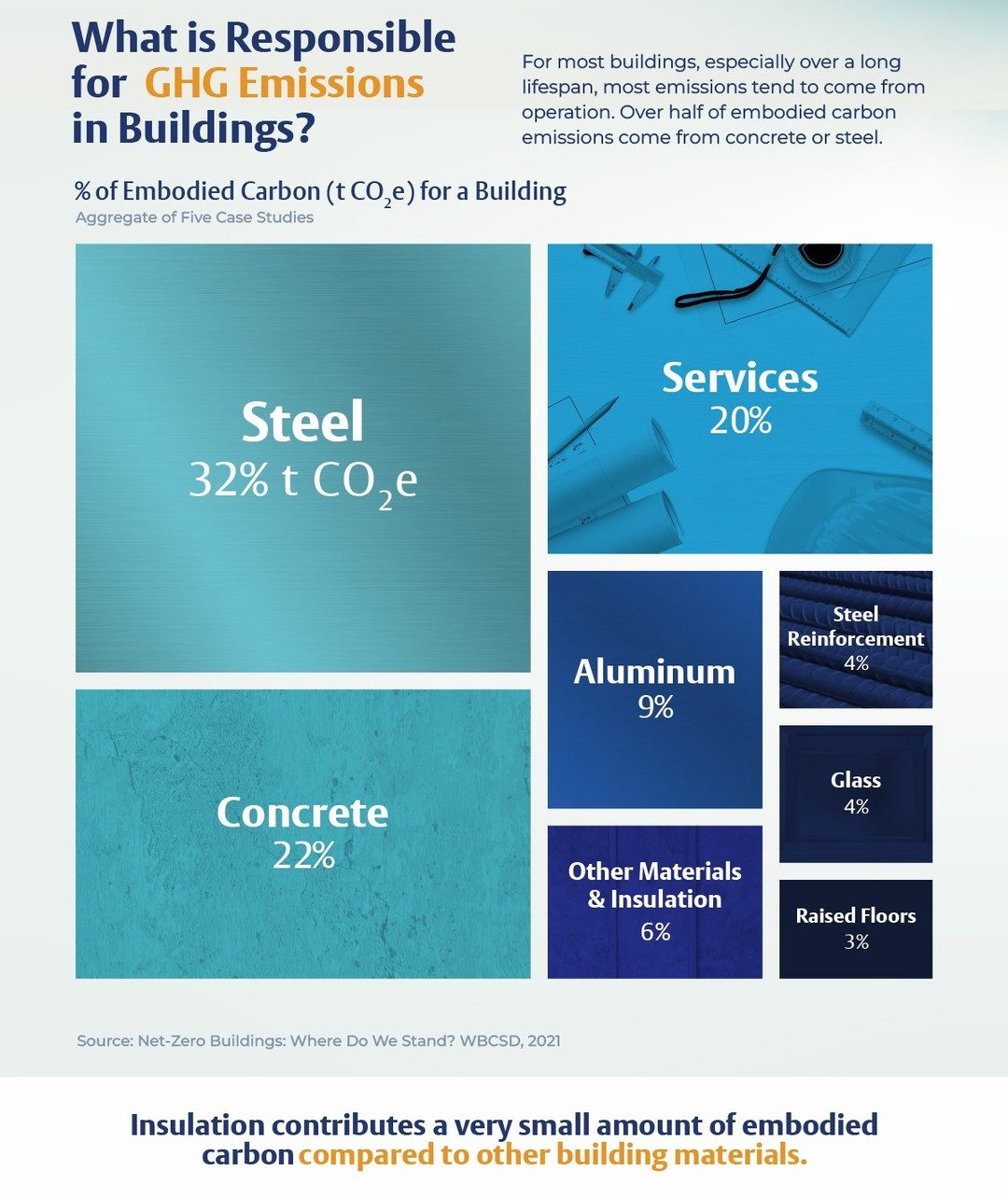
Embodied carbon refers to the total greenhouse gas emissions associated with the production, transportation, and disposal of construction materials. Different materials contribute varying amounts to the overall embodied carbon of a building. Here’s a breakdown of the key contributors:
- Steel: Accounts for 32% of embodied carbon in buildings. Its production is energy-intensive, requiring significant amounts of fossil fuels.
- Concrete: Contributes 22% to embodied carbon. The production of cement, a key component of concrete, releases large amounts of carbon dioxide.
- Aluminum: Represents 9% of embodied carbon. The energy-intensive extraction and smelting processes contribute to its high emissions.
- Other Materials & Insulation: Make up 6% of embodied carbon, with specific subcategories like raised floors and various insulation types contributing to this percentage.
The Role of Insulation
Insulation plays a crucial role in enhancing the energy efficiency of buildings. By reducing the need for heating and cooling, insulation can significantly lower a building's operational carbon emissions. This, in turn, helps offset the initial embodied carbon associated with the production and installation of insulation materials.
Types of Insulation
Several types of insulation materials are used in construction, each with its own benefits and carbon payback periods:
- Foam Plastic Insulation: This type includes materials like Polyisocyanurate (Wall), oc-SPF, EPS, cc-SPF, and XPS. Foam plastic insulation has a reduced global warming potential (GWP) compared to traditional insulation materials. It effectively traps heat, reducing the energy required for heating and cooling.
- Other Insulation Materials: These can include materials like fiberglass, cellulose, and mineral wool. While they also contribute to energy efficiency, their carbon payback periods may vary.
Carbon Payback Periods
The carbon payback period is the time it takes for a product or system to offset the carbon emissions created during its production and use. Foam plastic insulation generally has a relatively short carbon payback period, making it an attractive option for sustainable building practices.
- Wall Insulation: 3.0 Months
- Whole Home Insulation: 5.2 Months
- Basement Insulation: 5.9 Months
- Attic Insulation: 8.1 Months
These short payback periods indicate that foam plastic insulation can quickly offset its initial carbon footprint, leading to long-term environmental benefits.
Practical Tips
To maximize the benefits of insulation and reduce the overall carbon footprint of a building, consider the following practical tips:
Selecting the Right Insulation
Choose insulation materials with lower GWP and shorter carbon payback periods. Foam plastic insulation, for example, offers significant benefits in terms of energy efficiency and quick payback.
Proper Installation
Ensure that insulation is installed correctly to avoid gaps and ensure optimal performance. Proper installation can significantly enhance the energy efficiency of a building.
Combining with Other Sustainable Practices
Combine insulation with other sustainable building practices, such as using renewable energy sources, to further reduce the carbon footprint of a building.
Regular Maintenance
Regularly inspect and maintain insulation to ensure it continues to perform effectively. This can help maintain the building's energy efficiency over time.
Important Takeaways
- Embodied Carbon: Materials like steel, concrete, and aluminum contribute significantly to the embodied carbon of buildings.
- Insulation Benefits: Proper insulation can greatly reduce a building’s operational carbon emissions, offsetting the initial embodied carbon of the insulation material.
- Carbon Payback: Foam plastic insulation offers a quick carbon payback period, making it an effective choice for sustainable building practices.
Conclusion
The construction industry faces significant challenges in reducing its carbon footprint, but solutions like improved insulation can make a substantial difference. By understanding the embodied carbon of different materials and the benefits of insulation, builders and homeowners can make informed decisions that lead to more sustainable and energy-efficient structures. This helps to reduce greenhouse gas emissions, mitigate climate change, and create a more sustainable future for the construction industry.
Watch the Reel
Questions readers ask
What are the main sources of greenhouse gas emissions in construction?
The primary sources of greenhouse gas emissions in construction are the production and transportation of materials like steel, concrete, and aluminum, which contribute to embodied carbon. Additionally, the energy consumed by buildings during their operational phase adds to the overall emissions.
How does foam insulation help reduce construction-related emissions?
Foam insulation enhances energy efficiency in buildings, which in turn reduces the energy required for heating and cooling. By lowering energy consumption, it can offset the initial carbon costs of its production and transportation, making it a valuable tool for reducing overall emissions in the construction industry.
What is embodied carbon in construction, and how can foam insulation address it?
Embodied carbon refers to the greenhouse gas emissions associated with the production, transportation, and disposal of construction materials. Foam insulation can help address this by improving a building's energy efficiency, which reduces operational emissions over time, offsetting the initial embodied carbon of the insulation itself.
What is the payback period for foam insulation in terms of emission reduction?
The payback period for foam insulation varies depending on the specific building and climate, but generally, it can achieve a carbon payback within a few years. This means that the emissions saved by improved energy efficiency will exceed the emissions from the insulation's production and installation, making it a sustainable choice for reducing a building's carbon footprint.
Why is foam insulation considered a green building practice?
Foam insulation is considered a green building practice because it significantly improves a building's energy efficiency, leading to reduced operational emissions. Additionally, advancements in foam insulation technologies, such as spray polyurethane foam (SPF), have made it a durable and effective solution for creating energy-efficient walls and roofs, which contribute to lower overall emissions.
How can foam insulation help reduce global construction emissions?
By enhancing energy efficiency in buildings, foam insulation can lower the operational emissions that account for a significant portion of global construction emissions. Moreover, as a low emissions insulation material, it can help reduce the overall carbon footprint of the construction industry, making it a key solution for sustainable construction practices worldwide.
What are the benefits of using foam insulation in sustainable construction?
The benefits of using foam insulation in sustainable construction include improved energy efficiency, reduced operational emissions, and a lower carbon footprint. Additionally, foam insulation can enhance indoor comfort and durability, making it a versatile and effective choice for green building practices.
Recent articles
Fresh deep dives from the latest Reels we unpacked.




Comments
Be the first to comment.