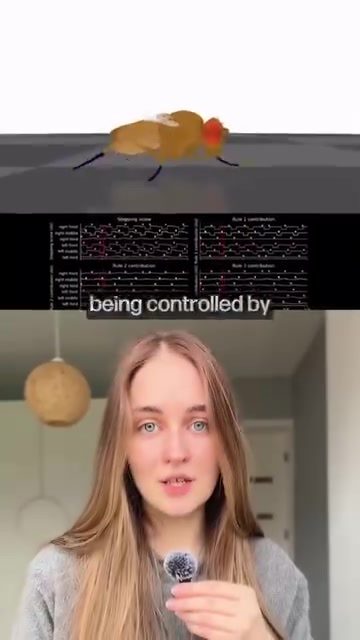
Brain emulation and insect control are revolutionizing the way scientists understand and manipulate complex biological systems. This cutting-edge technology involves creating digital replicas of biological brains and connecting them to virtual bodies, allowing for unprecedented control and study of movement and behavior.
Context / Why This Matters
The ability to emulate and control the brain of an insect, such as a fruit fly, has profound implications for various fields, including neuroscience, robotics, and artificial intelligence. By mapping the intricate neural networks of these small creatures, researchers gain insights that could ultimately lead to breakthroughs in understanding and treating human neurological disorders.
Main Discussion
The Complexity of Insect Brains
The brain of a fruit fly, though small, is incredibly complex. It consists of approximately 125,000 neurons and 50 million synapses. These neurons and synapses work together to process sensory information, coordinate movement, and regulate behavior. Scientists have meticulously mapped these connections using advanced techniques like electron microscopy. This detailed mapping allows for the creation of accurate digital models of the brain, which can then be simulated and studied.
Building Digital Models
Once the brain's structure is mapped, the next step is to build a digital model. This involves translating the complex neural network into a format that simulation software can understand and process. The digital model is then connected to a virtual body, allowing researchers to observe how the brain controls movement and behavior in a simulated environment.
Controlling Movement
One of the most remarkable achievements in this field is the ability to control the movement of an insect using a digital brain simulation. When signals are input into the digital brain, it processes them just like a real brain would. The virtual body then responds accordingly, mimicking the natural movements of a live insect. This breakthrough demonstrates the potential for similar technologies to be applied to more complex organisms, including humans.
Future Goals
The ultimate goal of this research is to extend brain emulation technology to more complex organisms, starting with mice and eventually moving on to human brains. Each step forward in this process brings us closer to a deeper understanding of how brains work and how they can be manipulated to treat diseases and injuries.
Practical Tips
While the technology is still in its early stages, there are several practical tips for those interested in exploring this field:
Stay Updated on Research
The field of brain emulation is rapidly evolving. Keeping up with the latest research and developments can provide valuable insights and opportunities. Follow leading researchers and institutions to stay informed about the newest findings and technological advancements.
Understand the Basics
Gain a fundamental understanding of neuroscience, computer simulation, and artificial intelligence. These fields are interrelated and provide the foundation for brain emulation research. Courses, workshops, and online resources can be excellent starting points.
Collaborate with Experts
Collaboration is key in this interdisciplinary field. Partner with experts in neuroscience, computer science, and engineering to leverage their expertise and resources. This can accelerate progress and lead to more meaningful breakthroughs.
Important Takeaways
Brain emulation and insect control represent a significant leap forward in our ability to understand and manipulate complex biological systems. The detailed mapping of insect brains, the creation of digital models, and the control of movement are all crucial steps toward more advanced applications. As research continues, the potential for treating neurological disorders and advancing artificial intelligence becomes increasingly promising.
Conclusion
The journey from mapping the brain of a fruit fly to controlling its movements through a digital simulation is a testament to human ingenuity and scientific progress. As researchers continue to push the boundaries of what is possible, we can look forward to a future where brain emulation plays a pivotal role in medicine, technology, and our understanding of the natural world.
Watch the Reel
Questions readers ask
How do scientists create a digital replica of an insect brain?
Scientists use advanced scanning techniques and computational models to map the intricate neural networks of an insect brain, such as that of a fruit fly. This process involves detailed imaging and data analysis to replicate the structure and function of the brain digitally. The virtual brain model can then be connected to a virtual body for further study and manipulation.
What is the significance of controlling insect movements through brain emulation?
By controlling insect movements, researchers can gain a deeper understanding of how neural circuits drive behavior. This knowledge can be applied to various fields, including robotics and artificial intelligence, where precise movement control is essential. Insect brain research on movement could lead to advancements in understanding or treating human neurological disorders.
How does digital brain emulation help in studying complex biological systems?
Digital brain emulation allows researchers to study the intricate neural networks of insects in a controlled virtual environment. This method provides a unique way to observe and manipulate the brain's behavior without the constraints of a physical body, yielding insights into the mechanisms of sensory processing, motor control, and decision-making.
Can the insights from fly brain control be applied to robotics and AI?
Yes, the precision movement control achieved through fly brain emulation can significantly influence robotics and AI. By understanding how insect brains coordinate complex movements, researchers can develop more agile and efficient robotic systems. This can lead to advancements in AI algorithms that mimic the neural processes of insects.
What does it mean to connect a digital brain to a virtual body?
Connecting a digital brain to a virtual body involves linking the emulated neural networks to a simulated physical structure. This allows researchers to observe how the brain controls the body's movements and behaviors in a virtual environment. The virtual body can be programmed to respond to the brain's commands, providing a comprehensive view of the neural-motor interface.
What are the potential benefits of simulating insect brain synapses?
Simulating insect brain synapses offers a detailed look into the fundamental units of neural communication. By studying these synapses in a virtual setting, researchers can identify key mechanisms underlying neural signaling and processing, which could inspire new approaches in neuroscience, robotics, and AI.
How might this research impact the study of human neurological disorders?
The precision movement control and neural network insights gained from insect brain emulation could offer new perspectives on human neurological disorders. By understanding how insects control movement, researchers can translate these findings to develop novel therapies or treatments for conditions like Parkinson's disease, which involve motor control issues.
Related deep dives
Similar reads based on topic and creator.


Recent articles
Fresh deep dives from the latest Reels we unpacked.



Comments
Be the first to comment.