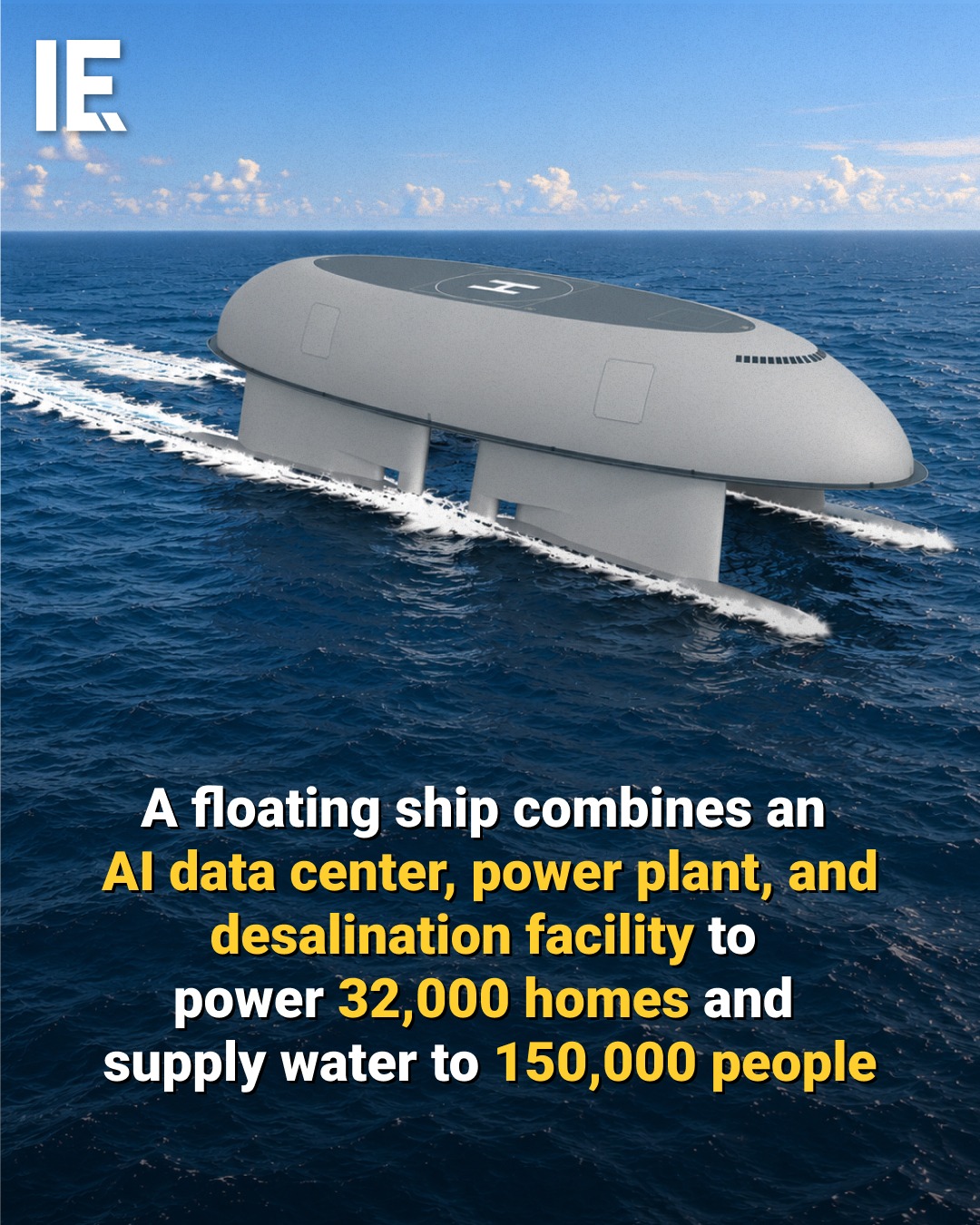
Imagining a stretch of ocean fronted by a sprawling metal platform, framed by cloud-kissed skyline and hemmed in by vast blue. This is the rendering of a floating platform that straddles the divide between ship, an AI data center, a power plant, and desalination facility. It powers 32,000 homes and can supply water to 150,000 people. The only why and where are absent.
The Floating Platform
The floating platform is an integrated technology designed to tackle two of the world's most pressing issues: energy scarcity and water shortage. It achieves this through a clever combination. A data center generates heat as a byproduct, which can run the desalination plant. The desalination process requires energy, which the power plant provides. The ocean water, once desalinated, can supply fresh water to coastal communities and power plants can provide clean energy. Its ingenuity lies in integrating the data center, power plant, and desalination facility—typically separate, land-based operations—into a single, cohesive marine unit. Unlike standard land-based power plants, the floating platform's colossal size and design make it an ideal candidate for offshore deployment. While it has the advantages of compactness and portability, its sheer scale demands vast resources to build and operate — and still faces hurdles in physical implementation. The floating platform capitalizes on the abundance of ocean water, positioning itself closer to coastal cities grappling with water scarcity. It can be deployed in other resource-constrained locations like islands and remote coastal regions. Fossil fuels are not required, relying instead on renewable sources to create power. The on-screen text notes the ability to "power 32,000 homes"; however the power plant's size and mechanism is unknown. The exact operating methods of the AI data center are omitted, too.
The Vision for Oceans
The floating platform anchors a future where technological ingenuity solves real-world problems. Innovations like this could meet growing energy and water demands while mitigating environmental impact. For coastal cities and islands, the solution can alleviate stress on local water resources. Harnessing ocean water is a solution to the increasing scarcity of potable water due to global warming. Ocean water is abundant and replenished by natural processes. This floating platform allows for its use as a resource. Floating platforms could reshape how we think about infrastructure in a world where land is scarce. These oceanic hubs can circumvent land-use constraints. The floating platform represents a bold leap forward in sustainable infrastructure design, promising to revolutionize how we approach resource management in a world facing complex environmental challenges.
Floating Platforms
A Symphony of Systems
The floating platform revolves around three core components: an AI data center, a desalination facility, and a power plant. The AI data center transforms heat generated from data processes into energy to power the desalination process. These data centers are not solely virtual — they require significant physical infrastructure. The exact specifications of the AI data center are not detailed, but it is clear that this technology is complex, necessitates a substantial power source to operate and is not like a data center on land. The combination of these technologies is not a simple assemblage but a network of interconnected systems that feed into and support each other — a true symphony. However, the interconnected and energy-dense nature of the floating platform introduces significant challenges. Large-scale floating platforms are subject to the weather and ocean hazards. The sheer scale of the floating platform implies a complex, logistics-heavy construction process, and the vulnerabilities include instability of the ocean floor, the unknown magnitude of energy consumption for three integrated systems. Ensuring the stability and reliability of such a behemoth and the safety risks of handling and processing water at this scale are significant.
Powering the Platform
What does it take to power a floating AI center? "To power 32,000 homes," we know that it is substantial. The floating platform is a nexus of activity and requires large amounts of energy. The power plant on board supplies this. However, the technology of the power plant, the energy source, and the specifics of the generation are not detailed. The exact mechanism of the power plant to generate the electrical energy it needs for its data center is unknown. It would need to be scaled up.
Ocean Depths
Ocean water is abundant, but the desalination process is energy-intensive. As such, the floating platform is host to a desalination facility. This facility removes salt from seawater using energy from the power plant. Its byproduct includes brine, a highly concentrated salt solution and disposal issues. The facility benefits from the floating platform, which provides the water.
The Ocean's Enduring Draw
Remote Reach
If a platform of this size and production capacity can be built and moved, it can be used in places where the conditions are otherwise impossible to sustain a large-scale operation. Remote regions and islands, for example, could benefit enormously from this technology. Island communities often grapple with water scarcity but have abundant ocean water. The floating platform could provide a sustainable solution to these resource-constrained regions. However, the cost of building and transporting a floating platform is unknown. Are other countries building these? The precise circumstances under which the floating platform could sufficiently power 32,000 homes and supply water to 150,000 people are not detailed.
Resilience by Design
The floating platform's vastness and adaptability lend itself to various maritime environments. The platform's stability and resilience are key considerations, particularly in harsh ocean conditions. The floating platform, given its size, is equipped to withstand severe weather and ocean conditions. However, it is unknown what kind of tides the floating platform is designed to withstand. Technological safeguards are necessary to mitigate the risks for the floating platform in potentially rough ocean conditions. Engineering challenges and uncertainties abound.
The Peculiar Intrigue of Floating Tech
Creating a Base
Constructing a floating platform of this magnitude presents formidable logistical challenges and substantial resources. The floating platform must maintain equilibrium in dynamic ocean environments while performing intricate operations. Building a floating AI center would require a great deal of engineering expertise and resources. Fortunately, materials designed for marine structures are available. There are no specific details on the materials used in the floating platform — but they are critical to its feasibility. The floating platform must have a robust anchoring system. The base is what keeps the platform stable. The floating platform also requires a structural shell to keep its systems safe. The floating platform with it filled with computerized systems must be kept safe from the harsh marine environment. It also needs to keep the power plant and desalination facility operational without obstruction or disruption.
The Ocean's Edge
The floating platform is designed to be deployed in open ocean environments. This design allows it to integrate seamlessly with marine ecosystems without disrupting the natural balance. The floating platform could impact shipping and marine life. The floating platform is deployed in the open ocean where there are no space constraints and ample water. The floating platform can be a win-win for energy conservation, answering the sustainability opportunity in the ocean. The floating platform should be constructed of materials designed to withstand ocean conditions. The floating platform could have numerous benefits to the ocean — it mitigates coastal land-use constraints, it could help control ocean water.
Watch the Reel
Questions readers ask
How does the desalination process on the floating platform work?
The desalination process on the floating platform utilizes heat generated by the AI data center, which is a byproduct of its operations. This heat is then used to power the desalination plant, converting seawater into fresh water. The energy required for this process is supplied by the integrated power plant, making it a self-sustaining system.
What kind of power plant is used on the floating platform?
The article doesn't specify the type of power plant used on the floating platform, but it mentions relying on renewable sources. It could be a combination of solar, wind, or other renewable energy sources, given the platform's location in the ocean. The exact size and mechanism of the power plant are not detailed.
Can this floating platform be built and operated anywhere in the world?
The floating platform is designed for offshore deployment, making it suitable for coastal cities and islands facing water scarcity. However, its sheer scale and the vast resources required for building and operating it could limit its feasibility in some locations. The exact locations or conditions for deployment are not specified.
How does the AI data center contribute to the overall functionality of the platform?
The AI data center is a key component of the floating platform. It generates heat as a byproduct of its data processing operations, which is then used to power the desalination facility. The data center's integration with the power plant and desalination facility creates a symbiotic relationship, making the platform more efficient and self-sustaining.
What are the environmental benefits of using a floating platform for power and water generation?
The floating platform offers several environmental benefits. It relies on renewable energy sources, reducing dependence on fossil fuels. By harnessing ocean water for desalination, it addresses water scarcity without depleting freshwater resources. Additionally, its offshore deployment can alleviate pressure on land-based infrastructure, promoting sustainable resource management.
Related deep dives
Similar reads based on topic and creator.


Recent articles
Fresh deep dives from the latest Reels we unpacked.



Comments
Be the first to comment.