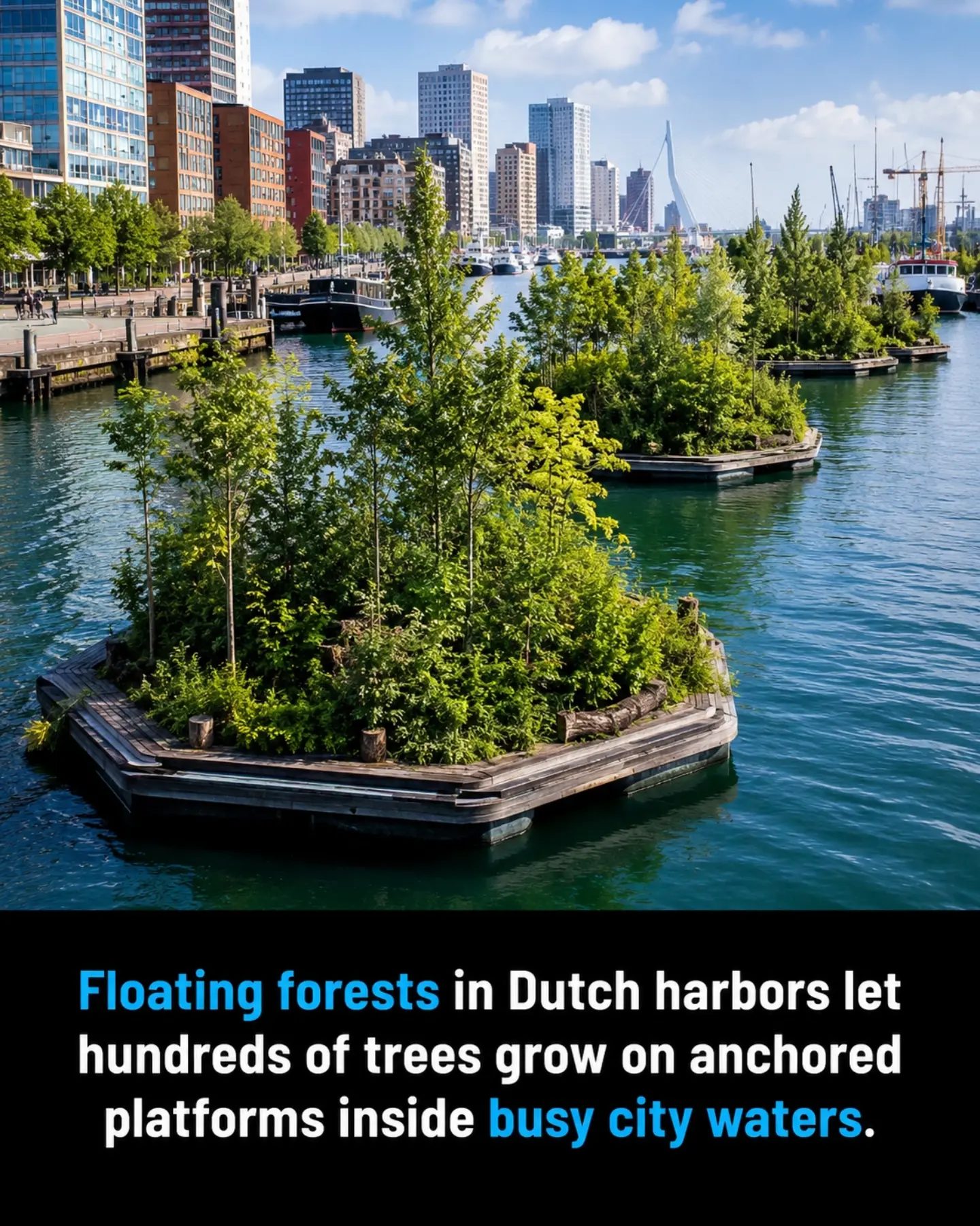
Floating Forest Islands
Floating forest islands, nestled within Dutch harbors, offer a unique and sustainable solution to urban green spaces. These innovative structures allow hundreds of trees to thrive on anchored platforms, seamlessly blending nature with the bustling city waters.
Why This Matters
In an era where urbanization is on the rise, the need for sustainable green spaces has become paramount. Floating forest islands address this need by providing a practical solution that benefits both the environment and urban dwellers. They offer a breath of fresh air in congested city areas, promoting biodiversity and enhancing the quality of life for residents.
The Concept of Floating Forest Islands
What Are Floating Forest Islands?
Floating forest islands are essentially large platforms designed to support a variety of trees and plant life. These platforms are anchored in water bodies, specifically harbors, where they can thrive without competing for land space. The concept is a testament to human ingenuity in finding innovative ways to coexist with nature.
How Do They Work?
The platforms are engineered to be stable and buoyant, ensuring that the trees and plants can grow just as they would on solid ground. The design often includes soil layers and drainage systems to support plant growth. Additionally, these islands are equipped with anchoring systems to keep them in place despite water currents and waves.
Sustainability and Environment
One of the key benefits of floating forest islands is their contribution to a greener environment. By providing a habitat for various species of plants and potentially animals, these islands help maintain biodiversity. Moreover, they absorb carbon dioxide, release oxygen, and improve air quality, making them a valuable addition to urban landscapes.
Practical Tips for Creating and Maintaining Floating Forest Islands
Design Considerations
When designing floating forest islands, several factors must be considered. The platform's material, size, and buoyancy are critical. Common materials include durable plastics, metals, and composite materials that can withstand environmental conditions. The size of the platform depends on the number and type of trees to be planted. Buoyancy is essential to ensure the platform remains afloat and stable.
Plant Selection
Choosing the right plants is crucial for the success of floating forest islands. Trees and plants that are hardy and can adapt to aquatic environments are ideal. Species that thrive in moist conditions and can tolerate varying water levels are particularly suitable.
Maintaining the Ecosystem
Regular maintenance is necessary to ensure the health and longevity of the floating forest islands. This includes checking the anchoring systems, monitoring plant health, and managing any pests or diseases that may affect the ecosystem. Regular pruning and fertilizing can also help maintain the islands' aesthetic and ecological value.
Community Engagement
Engaging the local community can greatly enhance the success of floating forest islands. Workshops and educational programs can inform residents about the importance of these green spaces and encourage their participation in maintenance activities. Community involvement can foster a sense of ownership and responsibility, ensuring the islands are well-maintained and appreciated.
Important Takeaways
Floating forest islands offer a unique and sustainable way to integrate nature into urban environments. These platforms not only provide green spaces but also contribute to biodiversity and air quality. By understanding the design, maintenance, and community engagement aspects, we can create and sustain these eco-friendly solutions effectively.
Conclusion
The concept of floating forest islands represents a forward-thinking approach to urban green spaces. By leveraging innovation and sustainability, we can create thriving ecosystems that coexist harmoniously with urban life. Whether you are a city planner, an environmentalist, or a curious onlooker, floating forest islands offer a fascinating glimpse into the future of urban development and green spaces.
Watch the Reel
Questions readers ask
What are floating forest islands and how do they work?
Floating forest islands are man-made structures designed to support tree growth on water. They are anchored in Dutch harbors and use a variety of materials and techniques to create a stable, water-based platform. Trees thrive in these platforms with the help of nutrient-rich soil and constant moisture, providing a unique green space in urban areas.
How do floating forest islands benefit urban environments?
Floating forest islands offer numerous benefits to urban environments. They improve air quality by absorbing pollutants and producing oxygen. Additionally, these islands promote biodiversity by providing habitats for various plant and animal species, contributing to a healthier ecosystem within the city. They also offer a serene, green space for residents to enjoy amidst the urban landscape.
What types of trees can be found on floating forest islands?
The choice of trees for floating forest islands depends on several factors, including the local climate and the specific design of the platform. Generally, trees that are adaptable to wet conditions and have a smaller root system are preferred. Examples include willow, alder, and some species of maple and birch. These trees are selected for their ability to thrive in the unique aquatic environment.
Are floating forest islands a sustainable solution for urban green spaces?
Yes, floating forest islands are a sustainable solution for urban green spaces. They make use of underutilized water areas in harbors, reducing the demand for land-based parks. These islands also help mitigate urban heat island effects, improve local air quality, and support wildlife. Additionally, they can be constructed using recycled materials, further enhancing their sustainability.
Can floating forest islands be implemented in other cities besides Dutch harbors?
Yes, the concept of floating forest islands can be adapted for other cities with suitable water bodies, such as ports, lakes, or slow-moving rivers. Cities with limited land for green spaces can particularly benefit from this innovative solution. However, the specific design and implementation will need to be tailored to the local environment, climate, and regulatory requirements.
How are floating forest islands maintained?
Maintenance of floating forest islands involves regular monitoring of tree health, soil conditions, and the structural integrity of the platforms. This includes pruning trees, managing nutrients, and ensuring the anchoring systems are secure. Local authorities or community groups can oversee this maintenance, promoting a sense of ownership and stewardship among residents.
What role do floating forest islands play in urban biodiversity?
Floating forest islands significantly enhance urban biodiversity by creating new habitats for a variety of plant and animal species. They attract birds, insects, and other wildlife, contributing to a richer urban ecosystem. This increased biodiversity not only supports local wildlife but also enriches the urban environment, providing residents with opportunities to connect with nature in their daily lives.
Related deep dives
Similar reads based on topic and creator.



Recent articles
Fresh deep dives from the latest Reels we unpacked.




Comments
Be the first to comment.