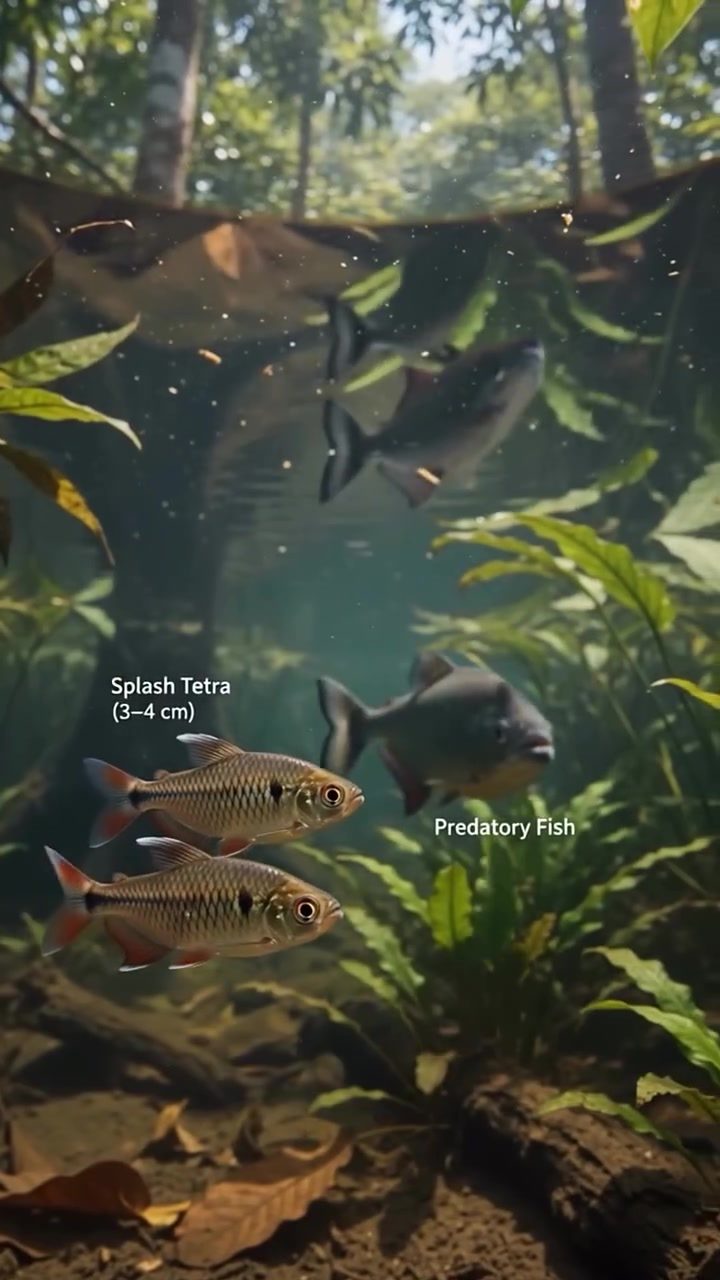
The Remarkable Reproductive Strategy of the Splash Tetra
The Splash Tetra, a small freshwater fish measuring around 3 to 4 centimeters, has developed a fascinating and unique reproductive strategy. Unlike most fish, which lay their eggs in water, the Splash Tetra lays its eggs on leaves and branches hanging above the river. This unusual behavior is a clever adaptation to protect their offspring from predators lurking below.
Why This Matters
Understanding the reproductive strategies of different fish species sheds light on the incredible adaptive mechanisms present in nature. The Splash Tetra's method of laying eggs above water is a testament to the resourcefulness of wildlife in ensuring the survival of their species. This behavior is not just an interesting phenomenon but a critical survival tactic in their ecosystem.
The Reproductive Process
Choosing the Right Spot
The Splash Tetra carefully selects a leaf or branch above the river to lay its eggs. This choice is strategic: predators are less likely to reach the eggs in this elevated position. The female leaps above the water, quickly laying her tiny eggs, which are approximately 1 millimeter in diameter. Immediately after, the male fertilizes the eggs before both fish return to the water below.
The Role of the Father
After the eggs are laid and fertilized, the mother leaves, and the father takes on the crucial role of caring for the eggs. He stays by the eggs, splashing water onto them every few minutes. This constant dampening is essential to prevent the eggs from drying out, which would be fatal for the developing embryos.
Embryonic Development
The incubation period lasts nearly three days. During this time, the embryos develop rapidly. Tiny hearts begin to beat, and tails start to move. The constant care from the father ensures that the embryos receive the necessary moisture to complete their development.
Hatching and Survival
Once the embryos are fully developed, they hatch and fall into the river below. This timed release ensures that the new life begins just as the babies are ready to fend for themselves, minimizing the risk of predation. The Splash Tetra's strategy not only protects the eggs from predators but also gives the newly hatched fish a head start in their new environment.
Practical Tips for Observing Splash Tetras
While observing Splash Tetras in their natural habitat or in a controlled environment, there are a few key points to keep in mind:
-
Habitat: Splash Tetras thrive in freshwater environments with plenty of aquatic plants and branches or leaves hanging over the water. Ensuring a habitat that mimics their natural environment is crucial for their well-being.
-
Predators: In natural settings, Splash Tetras are prey to larger fish. In an aquarium, it’s essential to provide a safe and predator-free environment.
-
Reproductive Conditions: For those interested in observing the reproductive process, providing suitable leaves or branches for the female to lay her eggs is necessary. The male will take care of the eggs as described, but it’s important to monitor the process to ensure the eggs remain moist and safe.
Important Takeaways
-
Adaptation: The Splash Tetra's method of laying eggs above water is a remarkable example of adaptation in nature. This behavior showcases how species evolve unique strategies to ensure the survival of their offspring.
-
Parental Care: The role of the male in caring for the eggs is crucial. His constant attention ensures that the eggs remain moist and protected, highlighting the importance of parental care in the reproductive success of the species.
-
Ecosystem Balance: This unique reproductive strategy contributes to the overall balance of the ecosystem. By laying eggs in a less predictable location, the Splash Tetra ensures that their offspring have a better chance of survival, thus maintaining the population.
Conclusion
The Splash Tetra's reproductive strategy is a fascinating example of nature's ingenuity. By laying their eggs above water and ensuring constant care, these small fish have found a way to protect their offspring from predators and environmental hazards. Understanding and appreciating these adaptive mechanisms enriches our knowledge of the natural world and the complex strategies that ensure the survival of various species.
Watch the Reel
Questions readers ask
How does the Splash Tetra protect its eggs from predators?
The Splash Tetra protects its eggs by laying them above water on leaves and branches. This unique behavior keeps the eggs out of reach from aquatic predators that inhabit the water, ensuring a higher survival rate for their offspring.
What is the size of a Splash Tetra?
The Splash Tetra is a small freshwater fish, typically measuring between 3 to 4 centimeters in length.
How does the Splash Tetra's reproductive strategy differ from most other fish?
Unlike most fish that lay their eggs in water, the Splash Tetra lays its eggs on vegetation above the water surface. This distinctive method helps in shielding the eggs from water-borne predators.
What triggers the Splash Tetra to lay its eggs out of water?
The Splash Tetra's behavior of laying eggs out of water is primarily driven by the need to protect their offspring from aquatic predators. By depositing their eggs on leaves and branches above the water, they significantly enhance the survival chances of their eggs.
What is the process of fertilization for the Splash Tetra's eggs?
The male Splash Tetra fertilizes the eggs immediately after the female lays them on the vegetation. The process involves the male releasing milt (sperm) onto the eggs as they are deposited.
Why is the Splash Tetra's egg-laying behavior considered a remarkable adaptation?
The Splash Tetra's behavior of laying eggs above water is considered remarkable because it demonstrates a unique and effective strategy for ensuring the survival of their species. This adaptation helps in safeguarding the eggs from aquatic predators, thereby increasing the likelihood of successful reproduction.
Are there any other fish species that exhibit similar behaviors to the Splash Tetra?
While the Splash Tetra's method of laying eggs above water is quite unique, there are a few other fish species that exhibit similar behaviors. For example, the Mangrove Killifish also lays its eggs in moist environments above water, showcasing a comparable adaptation to ensure offspring survival.
Recent articles
Fresh deep dives from the latest Reels we unpacked.




Comments
Be the first to comment.