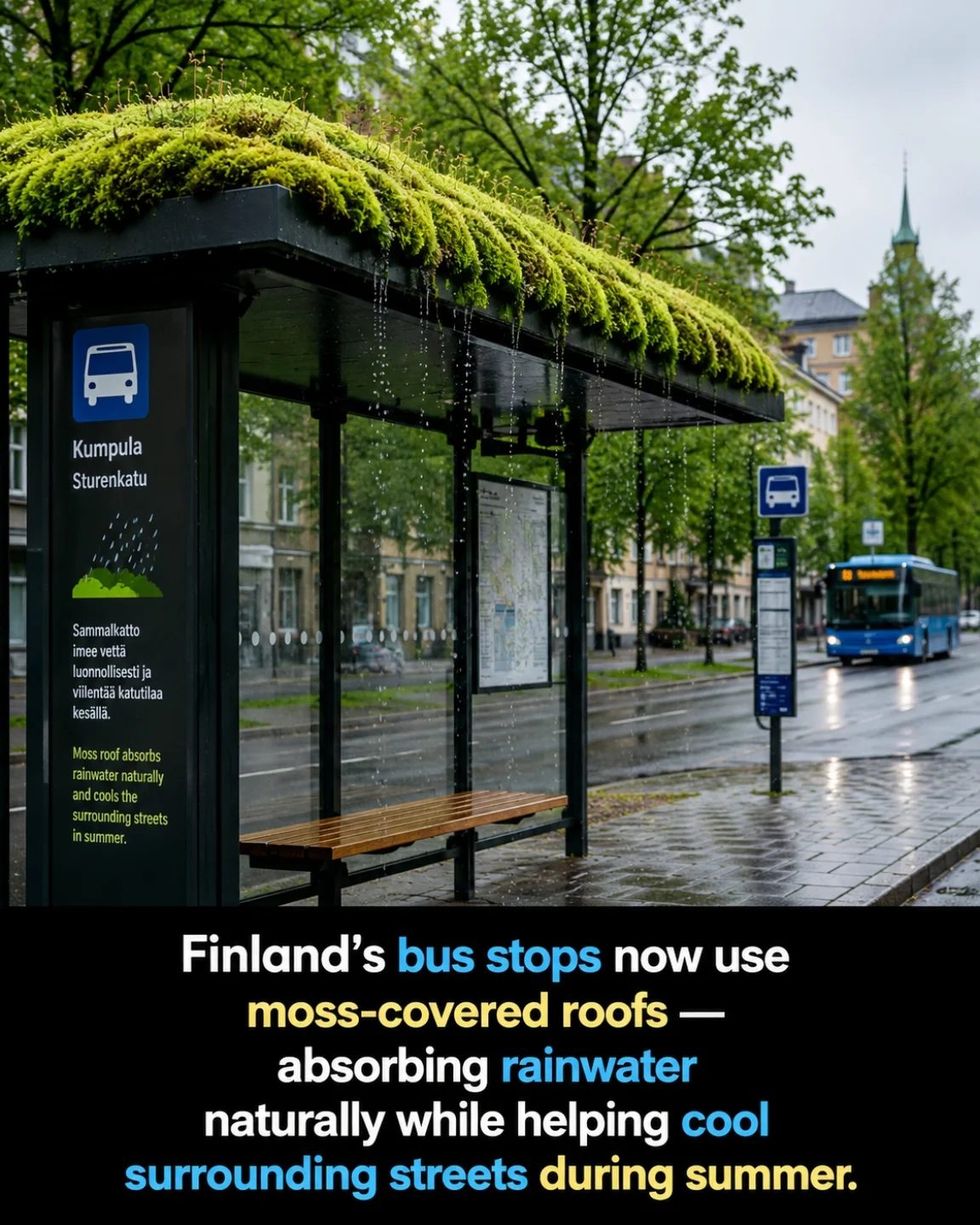
Innovative Bus Stops in Finland
Finland has taken a unique approach to urban design with its moss-covered bus stops. This innovative solution not only enhances the aesthetic appeal of urban spaces but also provides practical benefits for the environment and city dwellers.
Why This Matters
In the urban landscape, bus stops are essential infrastructure for public transportation. They serve as waiting areas, often without any significant environmental impact. Finland's initiative to cover bus stop roofs with moss is a step towards sustainability and improving the urban environment in several ways.
Main Discussion
Environmental Benefits
Moss-covered roofs, like the ones seen at the Kumpula Sturenkatu bus stop, offer multiple environmental advantages. The moss acts as a natural sponge, absorbing rainwater, helps to reduce runoff, and mitigating the urban heat island effect. By absorbing rainwater, moss roofs help to alleviate the strain on urban drainage systems, which can often be overwhelmed during heavy rainfall. This natural water management system reduces the risk of flooding and improves water quality by filtering pollutants from the rainwater.
Cooling Surrounding Streets
One of the more significant benefits of moss-covered roofs is their ability to cool the surrounding streets during the summer. Moss has natural, insulating properties that can help lower the temperature of the buildings and street areas around the bus stop. This cooling effect creates a more comfortable environment for pedestrians and commuters, making urban spaces more pleasant, especially during hot summer months.
Sustainable Urban Design
Finland's moss-covered bus stop design is a model of sustainable urban design. By incorporating natural elements into urban infrastructure, cities can achieve a balance between functionality and environmental responsibility. This approach not only enhances the aesthetics of urban spaces but also promotes a greener, healthier living environment.
Local Community Perception
While the visual summary provides insights into the design and benefits of moss-covered bus stops, it does not delve into the community's perception or the local response to this innovative design. However, it is reasonable to assume that such a design would be well-received, given the growing awareness of environmental issues and the increasing demand for eco-friendly urban solutions.
Practical Tips
Adopting Moss-Covered Roofs in Other Cities
Cities around the world can take inspiration from Finland's moss-covered bus stops and explore similar sustainable solutions. Here are a few practical tips for adopting moss-covered roofs:
- Assess Local Conditions: Before implementing moss roofs, assess local weather conditions to ensure moss can thrive. Moss requires specific conditions, including humidity and shade, to grow effectively.
- Test on a Small Scale: Start with a pilot program on a few bus stops to test the feasibility and benefits of moss roofs in your city.
- Community Engagement: Engage with local communities and stakeholders to gather feedback and build support for the initiative.
- Maintenance Planning: Develop a maintenance plan to ensure the moss roofs remain healthy and functional. This includes regular inspection, cleaning, and possibly re-vegetating the moss as needed.
Integration with Other Green Infrastructure
Moss-covered roofs can be integrated with other green infrastructure elements to create a more comprehensive sustainable urban design. Consider combining moss roofs with green walls, rain gardens, and permeable pavements to enhance the overall environmental benefits.
Cost-Benefit Analysis
Conduct a cost-benefit analysis to evaluate the financial implications of implementing moss-covered roofs. Consider factors such as installation costs, maintenance expenses, and potential long-term savings from reduced drainage and cooling costs.
Important Takeaways
Moss-covered bus stops represent a forward-thinking approach to urban design that prioritizes sustainability and environmental responsibility. By absorbing rainwater and cooling surrounding streets, these innovative structures offer practical benefits that enhance the quality of life for urban dwellers. Cities looking to adopt similar solutions should carefully assess local conditions, engage with the community, and integrate moss roofs with other green infrastructure elements to maximize their benefits.
Conclusion
Finland's moss-covered bus stops provide a compelling example of how cities can innovate to create more sustainable and livable urban environments. This design not only addresses practical challenges like rainwater management and urban heat but also enhances the aesthetic appeal of public spaces. By adopting similar solutions, cities worldwide can move towards a greener and more resilient future.
Watch the Reel
Questions readers ask
What are the primary environmental benefits of moss-covered bus stops in Finland?
The moss-covered bus stops in Finland offer several environmental benefits. They absorb rainwater, reducing runoff and helping to manage urban water systems. Additionally, they reduce urban heat by providing a natural cooling effect, which helps to lower ambient temperatures in city areas.
How do moss-covered bus stops contribute to sustainable urban planning?
These bus stops contribute to sustainable urban planning by integrating nature into public infrastructure. By covering bus stop roofs with moss, Finland is promoting eco-friendly urban design and enhancing the aesthetic appeal of urban spaces, which encourages a greener approach to city development.
Can moss-covered bus stops help mitigate urban heat island effects?
Yes, moss-covered bus stops can help mitigate the urban heat island effect. The moss acts as a natural insulator, absorbing heat and releasing it slowly, which helps to lower surrounding temperatures. This creates a cooler, more comfortable environment for city residents and visitors.
How do moss-covered bus stops manage rainwater?
Moss-covered bus stops are designed to absorb rainwater effectively. The moss acts like a sponge, soaking up water and allowing it to evaporate slowly. This process not only helps to manage urban water systems but also contributes to the natural cooling of the surrounding area.
What role does moss play in the design of these eco-friendly bus shelters?
Moss plays a crucial role in the design of these eco-friendly bus shelters. It serves as a natural covering that provides insulation, absorbs rainwater, and helps to reduce urban heat. This makes the bus stops more environmentally friendly and contributes to a greener urban infrastructure.
Are there other cities implementing similar green urban infrastructure?
While Finland's moss-covered bus stops are quite unique, other cities around the world are also exploring green urban infrastructure. For example, some cities have implemented green roofs on buildings and bus shelters, as well as urban parks and green walls, to enhance sustainability and create a more pleasant urban environment.
How does the integration of nature in urban planning benefit city dwellers?
Integrating nature into urban planning, such as through moss-covered bus stops, offers numerous benefits to city dwellers. It creates more pleasant and comfortable spaces, reduces urban heat, and promotes a healthier, more natural environment. This can lead to improved well-being and a greater appreciation for the urban landscape.
Recent articles
Fresh deep dives from the latest Reels we unpacked.




Comments
Be the first to comment.