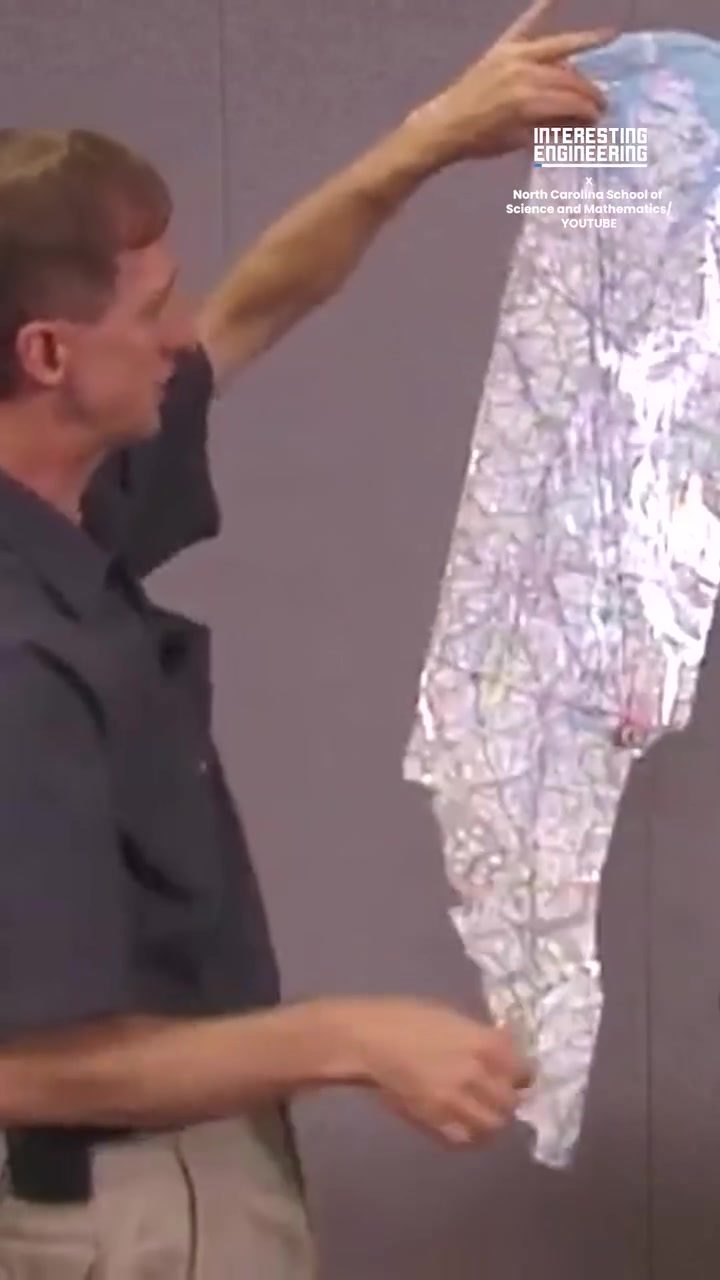
Finding the Center of Mass of Irregular Shapes
Understanding the center of mass is crucial in various fields, from engineering to physics. The center of mass is a point where the whole mass of an object may be considered to be concentrated. For regular shapes, calculating the center of mass is straightforward. However, for irregularly shaped objects, the process can be more complex. Fortunately, there's a simple trick that involves using a flexible rod, a pin, a string, and a pencil to pinpoint the center of mass accurately.
Why This Matters
Knowing the center of mass of an object is essential for several reasons. It helps in determining the stability and balance of structures, which is crucial in engineering and design. In physics, understanding the center of mass is vital for analyzing the motion of objects under various forces. This knowledge can also be applied in fields like robotics, aerospace, and even sports.
The Trick: Using a Flexible Rod and a Pin
Materials Needed
To perform this trick, you will need:
- A flexible rod
- A pin
- A string
- A pencil
- An irregularly shaped object (e.g., a cutout of a map or any irregular shape)
Step-by-Step Instructions
-
Suspend the Object: Hold the flexible rod and suspend the irregularly shaped object from one end. Ensure the object hangs freely and is balanced.
-
Draw the First Line: Use a pencil to draw a vertical line on the object along the direction of the flexible rod. This line represents the first suspension point and helps locate the center of mass along this vertical axis.
-
Suspend from a Second Point: Move the pin to a new position on the object, suspend it again, and draw a second vertical line. This line should intersect the first line at a point.
-
Intersection Point: The point where the two lines intersect is the center of mass of the object. This method works because the center of mass must lie along any line of suspension.
Practical Tips
-
Accuracy: Ensure that the object is suspended freely and that the lines are drawn accurately for precise results. Any deviation can affect the intersection point and, consequently, the location of the center of mass.
-
Multiple Suspensions: For better accuracy, you can suspend the object from multiple points and draw corresponding lines. The point where all the lines intersect will give you the exact center of mass.
-
Flexibility of the Rod: The flexibility of the rod is crucial as it allows the object to find its natural balance point. A rod that is too stiff may not provide accurate results.
Important Takeaways
-
Simplicity: This method is simple and requires minimal equipment, making it accessible for anyone to perform.
-
Versatility: The technique can be applied to various irregular shapes, from complex engineering designs to natural forms found in biology.
-
Precision: By suspending the object from multiple points and drawing intersecting lines, you can achieve a high degree of precision in locating the center of mass.
Conclusion
Finding the center of mass of an irregularly shaped object doesn't have to be a complex task. With a flexible rod, a pin, a string, and a pencil, you can easily determine the center of mass using a straightforward and effective method. This knowledge is invaluable in various fields, from engineering to sports, and can be applied in numerous practical scenarios. By mastering this trick, you can enhance your understanding of physics and improve your problem-solving skills in real-world applications.
Watch the Reel
Questions readers ask
What is the center of mass and why is it important in physics and engineering?
The center of mass is a point where the entire mass of an object can be thought to be concentrated. It's important in physics and engineering because it helps determine the balance and stability of objects and structures. Understanding this concept can aid in designing stable structures and predicting the behavior of objects in motion.
How can I find the center of mass of an irregularly shaped object at home?
To find the center of mass of an irregularly shaped object at home, you can conduct a simple experiment. You'll need a flexible rod, a pin, a string, and a pencil. Suspend the object from a point using the pin and string, then draw a line along the rod on the object. Repeat this process from a different point, and the intersection of the two lines will give you the center of mass.
Can the center of mass be found for the state of North Carolina?
Yes, the center of mass can be determined for a geographical area like North Carolina. This involves more complex calculations and data, but it can provide interesting insights. This can be useful in fields like cartography and geology. You can do a rough estimate by using a map of North Carolina and a similar string and pin method, but this will require some scaling and interpretation.
What is the suspended rod experiment and how does it help in finding the center of mass?
The suspended rod experiment is a practical method to find the center of mass of an object. By suspending the object from a pin and allowing it to hang freely, the rod will align with the vertical line passing through the center of mass. This process is repeated from different points, and the intersection of these lines indicates the center of mass.
Why is knowing the center of mass crucial for stability and balance in physics?
Knowing the center of mass is crucial for understanding an object's stability and balance. It helps predict how an object will behave when forces are applied, such as when it is in motion or at rest. This information is vital in fields like engineering, where the stability of structures is paramount, and in physics, where understanding the behavior of objects is key.
What materials do I need to conduct a center of mass experiment at home?
To conduct a center of mass experiment at home, you will need a flexible rod, a pin, a string, and a pencil. These materials are used to suspend the object and draw the necessary lines to pinpoint the center of mass. This simple setup allows for a hands-on approach to understanding a complex concept in physics and mathematics.
Related deep dives
Similar reads based on topic and creator.




Recent articles
Fresh deep dives from the latest Reels we unpacked.




Comments
Be the first to comment.