Financial Crime Risks
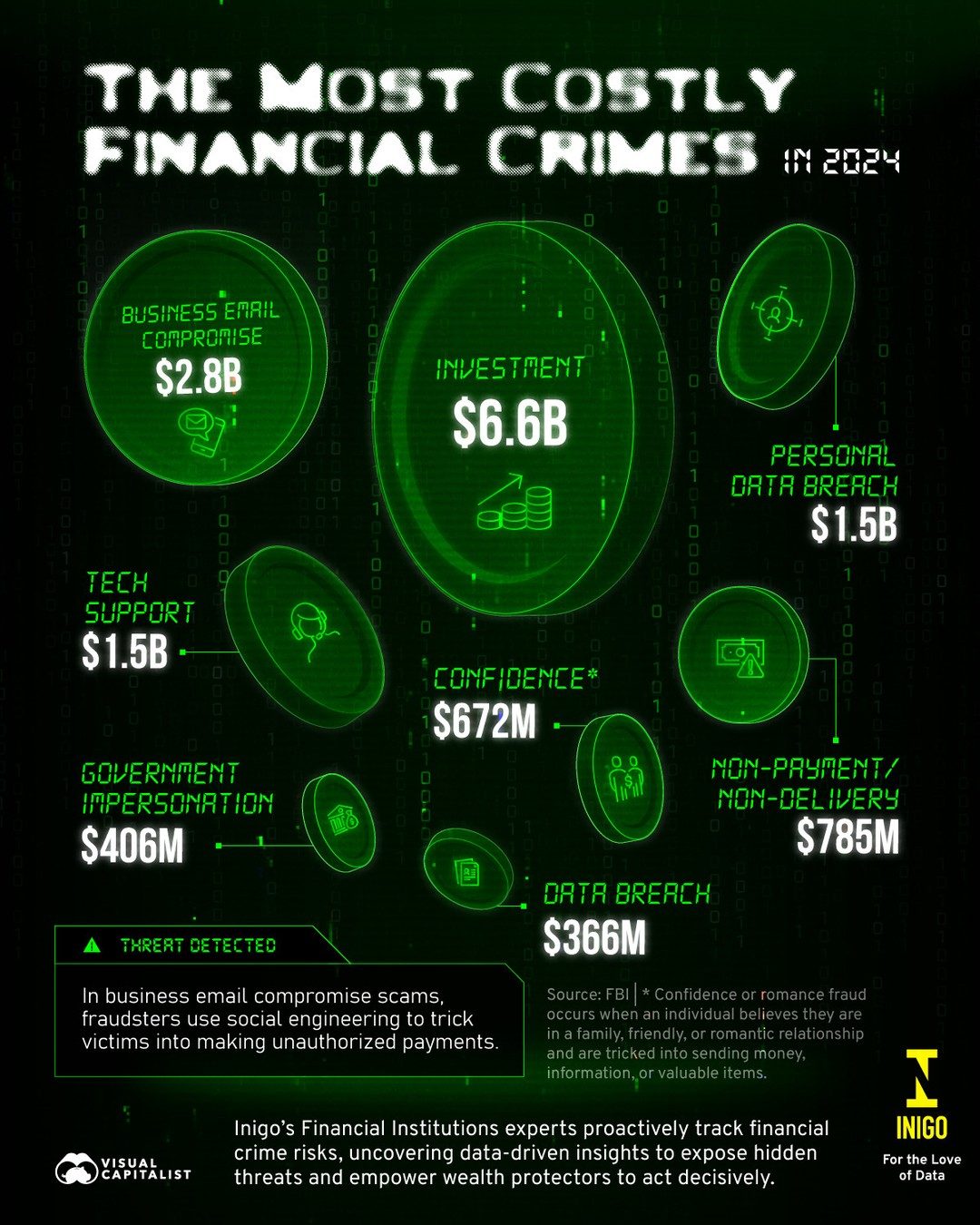
Between 2023 and 2024, financial crime has become more pervasive and sophisticated. Understanding the types of financial crimes causing the most harm is crucial for both individuals and enterprises. Let's explore the most costly financial crimes in 2024, as well as strategies to mitigate these risks.
Context / Why this matters
Financial crimes not only result in substantial monetary losses but also erode trust in financial institutions and systems. Proactive threat detection and data-driven insights are essential for identifying and mitigating these risks. Financial crimes can have widespread implications, affecting everything from personal savings to national security. Knowing the most prevalent and costly financial crimes can help individuals and organizations take targeted measures to protect themselves.
Main discussion
Business Email Compromise
Business email compromise (BEC) scams rank as one of the most financially damaging types of financial crime. These scams involve fraudsters impersonating high-ranking executives or trusted business partners to trick employees into making unauthorized payments. In 2024, BEC scams resulted in losses amounting to $2.8 billion. The financial impact of these scams underscores the need for robust email security measures and employee training to recognize and respond to potential threats effectively.
Investment Fraud
Investment fraud ranks as the most costly financial crime in 2024, with losses totaling $6.6 billion. This type of fraud involves deceiving investors into parting with their money through false promises of high returns or nonexistent investment opportunities. Investment fraud is particularly insidious because it exploits the trust and financial expertise of investors. Recognizing the red flags of investment fraud, such as unsolicited investment offers or requests for upfront fees, is essential in protecting oneself against these schemes.
Personal Data Breaches
Personal data breaches are a significant concern, with financial losses amounting to $1.5 billion in 2024. Data breaches involve the unauthorized access and theft of personal information, which can then be used for identity theft, fraud, and other malicious activities. The financial impact of data breaches highlights the importance of strong cybersecurity measures and regular monitoring of personal information.
Tech Fraud
In 2024, financial losses from tech fraud reached $1.5 billion. Tech fraud refers to schemes that exploit technological vulnerabilities to gain unauthorized access to financial information or assets. This type of fraud can be particularly challenging to detect and mitigate, as it often occurs through sophisticated and hard-to-trace online methods.
Government Impersonation
Government impersonation scams are another costly type of financial crime, with losses totaling $406 million in 2024. These scams involve fraudsters posing as government officials to deceive individuals into providing personal information or making payments. As government impersonation scams become more common, it is crucial to verify the authenticity of any requests for personal information or payments.
Proactive Threat Detection and Data-Driven Insights
INIGO's Financial Institutions experts emphasize the significance of proactive threat detection and data-driven insights in combating financial crimes. By proactively tracking financial crime risks and uncovering hidden threats, organizations can act decisively to mitigate potential losses. Data-driven insights provide valuable information that can be used to enhance security measures and prevent future financial crimes.
Practical tips
Here are some practical tips to safeguard against the most costly financial crimes:
- Email Security: Implement robust email security measures, including two-factor authentication and regular training for employees to recognize phishing attempts.
- Investment Verification: Verify the legitimacy of investment opportunities through trusted sources and avoid unsolicited offers or upfront fees.
- Data Protection: Use strong passwords and multi-factor authentication for online accounts. Regularly monitor financial statements and credit reports for any unauthorized activities.
- Tech Security: Keep software and systems up to date with the latest security patches. Use reputable antivirus and anti-malware software to protect against tech fraud.
- Government Verification: Verify the authenticity of any government requests for personal information or payments through official channels.
Important takeaways
- Financial crimes, particularly BEC scams, investment fraud, personal data breaches, tech fraud, and government impersonation, are causing significant financial harm.
- Proactive threat detection and data-driven insights are essential for identifying and mitigating financial crime risks.
- Implementing robust security measures and staying informed about common financial crimes can help individuals and organizations protect themselves against these threats.
Conclusion
Understanding the most costly financial crimes in 2024 and taking proactive measures is essential for safeguarding against financial losses. By staying informed and implementing robust security measures, individuals and organizations can protect themselves against the evolving landscape of financial crime. Whether it's through better email security, investment verification, data protection, tech security, or government verification, taking these steps can make a significant difference in mitigating the risks associated with financial crimes.
Watch the Reel
Questions readers ask
What are the most common types of financial crimes targeting consumers in 2024?
The most common financial crimes targeting consumers in 2024 include business email compromise, investment fraud, and personal data breaches. These crimes have become more sophisticated, making it crucial for individuals to stay informed and vigilant.
How does business email compromise (BEC) work and how can I protect myself?
Business email compromise involves fraudsters impersonating someone you trust, like a colleague or vendor, to trick you into transferring money or sensitive information. To protect yourself, verify requests independently and use multi-factor authentication. Always confirm unusual requests through a different channel.
What should I know about investment fraud and how to protect against it?
Investment fraud involves deceptive practices to convince you to invest in non-existent or overvalued schemes. To protect against it, always verify the legitimacy of any investment opportunity, check the credentials of the broker or company, and be wary of promises of high returns with low risk.
What are the implications of data breaches on personal finance?
Data breaches can lead to significant financial harm, including identity theft and unauthorized access to financial accounts. To mitigate risks, use strong, unique passwords, enable two-factor authentication, and regularly monitor your financial statements for any unauthorized activity.
How can I identify potential financial crimes targeting me?
To identify potential financial crimes, be aware of common red flags such as urgent or threatening requests for money, unsolicited investment offers, and unexpected emails or calls asking for personal information. Verify the legitimacy of any suspicious communication through official channels.
What steps can individuals take to safeguard their financial well-being in 2024?
Individuals can safeguard their financial well-being by staying informed about common financial crimes, using strong security measures like two-factor authentication, regularly monitoring financial accounts, and verifying the legitimacy of any financial transactions or requests.
Recent articles
Fresh deep dives from the latest Reels we unpacked.




Comments
Be the first to comment.