Financial Crime: A $3.1 Trillion Global Drain
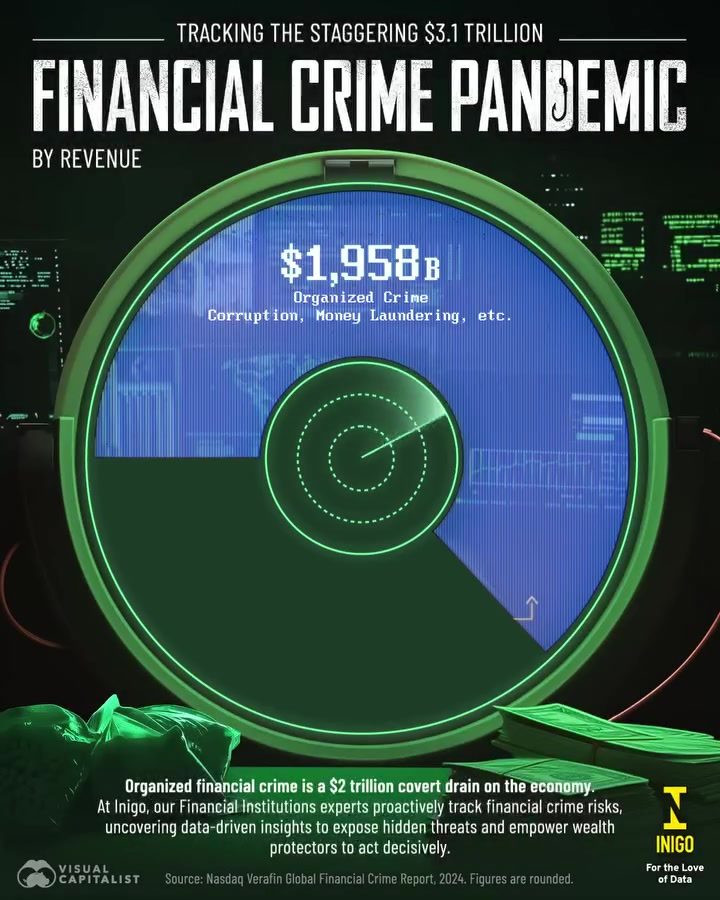
Financial crime—ranging from money laundering to fraud—is a significant drain on the global economy, costing approximately $3.1 trillion annually. This staggering figure underscores the pervasive nature of financial crimes and their impact on economies worldwide. Financial crime encompasses a variety of illicit activities, each contributing to the overall economic loss. Understanding the sources and mechanisms of these crimes is crucial for developing effective strategies to mitigate their impact.
Why This Matters
The financial crime landscape is complex and multifaceted. It includes activities like corruption, human trafficking, terrorist financing, drug trafficking, and fraud. Each of these crimes not only has severe economic consequences but also social and political implications. The global financial crime figures highlighted by the Nasdaq Verafin Global Financial Crime Report for 2024 are a stark reminder of the need for robust risk management and proactive measures to combat these threats.
Main Discussion
The Scale of Financial Crime
Corruption and organized crime contribute the largest share, totaling approximately $1.958 trillion. This staggering figure highlights the scale of these activities and their pervasive impact on global economies. Corruption often undermines the rule of law, distorts markets, and diverts resources from legitimate economic activities, making it a critical issue for governments and financial institutions alike.
Human Trafficking
Human trafficking is another significant contributor to financial crime, generating an estimated $347 billion annually. This crime not only involves the exploitation of individuals but also has far-reaching social and health impacts. Addressing human trafficking requires a multi-faceted approach that includes law enforcement, policy changes, and public awareness campaigns.
Terrorist Financing
Terrorist financing, although smaller in scale compared to other crimes, is equally concerning. The global annual losses from terrorist financing are estimated to be around $12 billion. This funding supports terrorist activities, making it a critical area for financial institutions to monitor and report suspicious activities. Effective counter-terrorism financing measures are essential to disrupt these networks and prevent future attacks.
Drug Trafficking
Drug trafficking contributes $783 billion to the global financial crime revenue. This illicit activity fuels criminal organizations and has widespread social and health consequences. Combating drug trafficking requires coordinated efforts from law enforcement agencies, governments, and international organizations. Effective strategies include disrupting supply chains, addressing demand, and implementing strict regulatory measures.
Fraud
Fraud is a significant area of financial crime, with global annual losses approaching $500 billion. This figure highlights the need for enhanced fraud detection and prevention mechanisms. Financial institutions must adopt advanced technologies and data-driven insights to identify and mitigate fraudulent activities. Proactive risk management and robust regulatory frameworks are essential to combat this pervasive crime.
Practical Tips
-
Enhance Data-Driven Insights: Financial institutions should leverage data analytics to uncover hidden threats and expose fraudulent activities. This proactive approach enables early detection and mitigation of financial crimes.
-
Implement Advanced Technologies: Adopting cutting-edge technologies such as artificial intelligence and machine learning can significantly enhance the ability to detect and prevent financial crimes. These technologies can analyze vast amounts of data in real-time, providing valuable insights and alerts.
-
Strengthen Regulatory Frameworks: Governments and financial regulators must work together to implement robust regulatory frameworks that address the complexities of financial crimes. This includes stricter compliance requirements, mandatory reporting, and increased penalties for non-compliance.
-
Foster International Collaboration: Financial crime is a global issue that requires international cooperation. Sharing information, coordinating efforts, and implementing harmonized regulatory standards can enhance the effectiveness of anti-financial crime measures.
-
Raise Public Awareness: Public awareness campaigns are crucial for preventing financial crimes. Educating the public about the signs of financial crimes and encouraging them to report suspicious activities can help in early detection and prevention.
Important Takeaways
Financial crime is a pervasive and complex issue that drains significant resources from the global economy. Addressing this challenge requires a multi-faceted approach that includes enhanced data analytics, advanced technologies, robust regulatory frameworks, international collaboration, and public awareness campaigns. By taking proactive measures, financial institutions and governments can mitigate the impact of financial crimes and create a more secure and stable global financial ecosystem.
Conclusion
Financial crime, with its diverse forms and significant economic impact, poses a major threat to global economies. The staggering $3.1 trillion annual loss underscores the need for concerted efforts to combat these activities. By understanding the sources and mechanisms of financial crime, and implementing proactive measures, we can work towards a more secure and prosperous financial future.
Watch the Reel
Questions readers ask
How does money laundering contribute to the $3.1 trillion annual loss from financial crime?
Money laundering generates billions of dollars in illicit funds that are then integrated into the legitimate economy. This process not only hides the origins of criminal proceeds but also distorts financial markets and depletes resources that could otherwise contribute to economic growth.
What are the primary sources of financial crime in the global economy?
The primary sources of financial crime include corruption, human trafficking, terrorist financing, drug trafficking, and fraud. These activities generate significant revenues that are often laundered and reinvested in illegal operations or legitimate businesses.
How does financial crime impact the global economy beyond direct financial losses?
Financial crime undermines economic stability, erodes public trust in institutions, and distorts market competition. It also diverts resources away from productive investments and social programs, exacerbating economic inequalities and hindering sustainable development.
What role do global fraud statistics play in understanding financial crime?
Global fraud statistics provide insights into the prevalence and trends of fraudulent activities, helping policymakers and law enforcement agencies identify hotspots and develop targeted prevention strategies. For example, the 2024 Financial Crime report may highlight emerging fraud patterns and suggest areas for enhanced vigilance.
Why is it important to track terrorist financing in the context of financial crime?
Tracking terrorist financing is crucial for disrupting the operations of terrorist organizations and preventing violent acts. By identifying and freezing the financial assets of terrorists, authorities can limit their ability to carry out attacks and destabilize regions, thus contributing to global security and economic stability.
Recent articles
Fresh deep dives from the latest Reels we unpacked.




Comments
Be the first to comment.