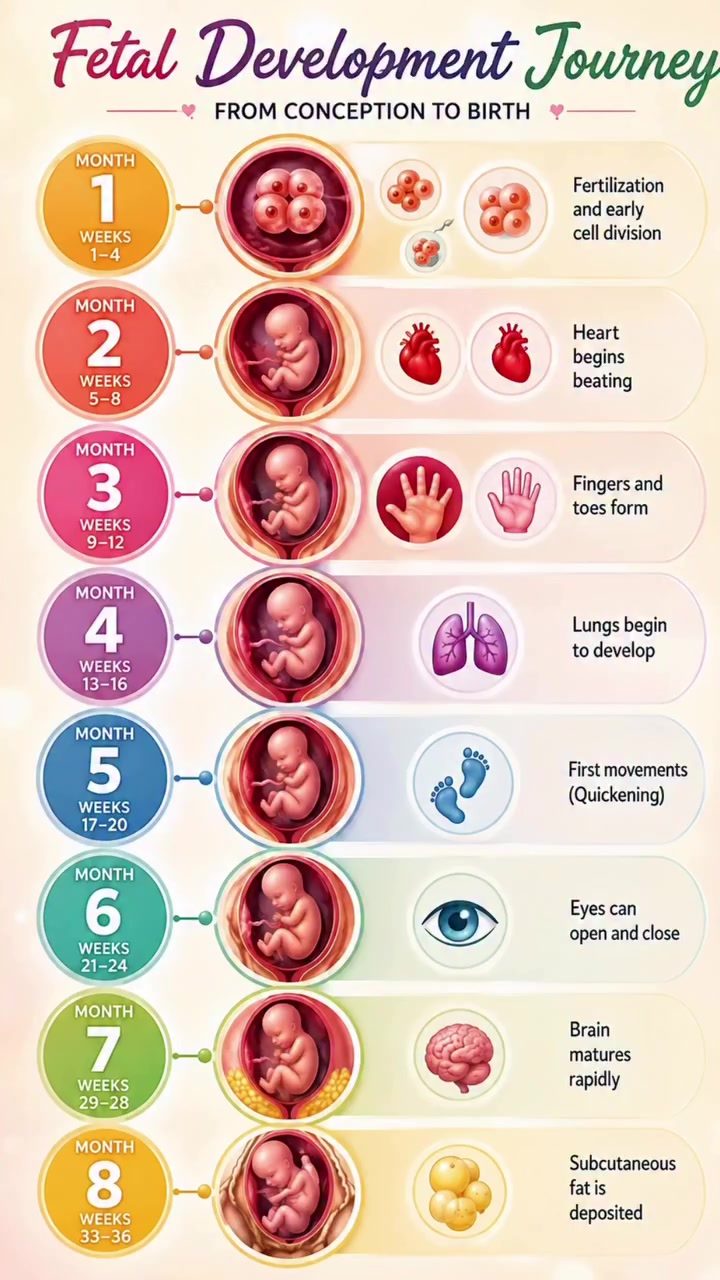
The Fetal Development Journey: A Month-by-Month Overview
Pregnancy is a remarkable process, and understanding the stages of fetal development can be both fascinating and reassuring. Here, we break down the key milestones of fetal growth from conception to birth, month by month.
Context / Why This Matters
Monitoring fetal development is crucial for ensuring a healthy pregnancy. Each stage of fetal growth brings significant changes and milestones that highlight the remarkable progression from a single cell to a fully formed newborn. Knowing what to expect can help parents prepare for their baby's arrival and understand the incredible journey their child is taking.
The Fetal Development Journey
Month 1: Fertilization and Early Cell Division
The first month marks the beginning of life. Fertilization occurs when a sperm cell penetrates an egg, forming a zygote. This zygote then begins to divide rapidly, forming a blastocyst. The blastocyst implants itself into the uterine lining, where it will continue to develop. By the end of the first month, the embryo consists of three layers of cells, which will eventually develop into different organs and tissues.
Month 2: Heart Development
Around the second month, the heart starts to form and begin beating. The heart is one of the first organs to develop, and by the end of this month, it can pump blood throughout the tiny body. This is a crucial milestone, as the heart's development is essential for the fetus's survival and growth.
Month 3: Formation of Fingers and Toes
During the third month, the embryo's limbs start to take shape, and fingers and toes begin to form. The head grows larger in proportion to the body, and facial features become more distinct. The tail, which was present in earlier stages, disappears. The embryo is now referred to as a fetus.
Month 4: Lung Development
In the fourth month, the lungs begin to develop. The fetus practices breathing movements, inhaling and exhaling amniotic fluid, which helps to prepare the lungs for breathing air after birth. The fetus also starts to produce meconium, a dark, sticky substance that will accumulate in the intestines until after birth.
Month 5: First Movements
Around the fifth month, mothers-to-be may start to feel their baby move. These initial movements, known as "quickening," are often described as fluttering or bubbling sensations. The fetus's senses are also developing; they can perceive light, taste, and touch. The fetus also starts to produce lanugo, a fine hair that covers the body for protection.
Month 6: Eye Development
During the sixth month, the eyes can open and close. Eyelids, which had been fused shut, now separate, allowing the eyes to open. The fetus's eyes can perceive changes in light, and the eyes can produce tears, which help to prevent infections after birth. The fetus's skin is still thin and translucent, but it begins to thicken as fat deposits form underneath.
Month 7: Brain Maturation
The seventh month is a critical period for brain development. The brain grows rapidly, and the cerebral cortex—the outer layer of the brain responsible for cognitive thought, speech, and motor function—begins to form. The fetus's senses are fully developed, and they can taste, touch, see, hear, and even smell. The fetus also starts to store essential nutrients, such as iron and calcium, in preparation for birth.
Month 8: Subcutaneous Fat Deposition
In the eighth month, the fetus builds up layers of subcutaneous fat, which help to regulate body temperature and provide energy reserves. The fetus also practices essential skills, such as sucking and swallowing, in preparation for feeding after birth. The fetus's lungs continue to mature, and the digestive system prepares for processing milk.
Practical Tips for Tracking Fetal Development
Tracking your baby's development can be an exciting part of your pregnancy journey. Here are some practical tips to help you stay informed and prepared:
1. Attend Regular Prenatal Check-ups
Regular pre-natal check-ups allow healthcare providers to monitor your baby's growth and development. These appointments typically include ultrasounds, which can provide a visual representation of your baby's progress.
2. Listen to Your Body
Pay attention to any changes or sensations you experience. Quickening, or the first movements, is an exciting milestone that many mothers look forward to. Other sensations, such as Braxton Hicks contractions, can also indicate that your body is preparing for labor.
3. Stay Informed
Read books, attend classes, and talk to other mothers about their experiences. Knowledge is power, and understanding what to expect can help alleviate anxiety and prepare you for the journey ahead.
4. Keep a Journal
Documenting your pregnancy journey can be a rewarding experience. Write down your thoughts, feelings, and milestones as they occur. This can be a cherished keepsake and a wonderful way to remember the incredible journey of fetal development.
5. Engage with Support Communities
Join online forums, support groups, or local clubs for expecting mothers. Sharing your experiences and learning from others can provide valuable insights and a sense of community.
Important Takeaways
Each stage of fetal development is unique and essential for the growth and well-being of the baby. Understanding these milestones can help you appreciate the incredible journey your baby is taking and prepare you for the joys and challenges of parenthood.
Conclusion
Watching your baby grow from conception to birth is a transformative experience. By understanding the key milestones of fetal development, you can better appreciate the remarkable process that takes place and prepare for the arrival of your little one. Embrace this journey, and remember that every baby develops at their own pace. Enjoy the incredible adventure of prenatal growth!
Watch the Reel
Questions readers ask
When does the fetal heart start to develop?
The fetal heart starts to develop around the third week of pregnancy. By the end of the fifth week, the heart begins to beat at a regular rhythm, which can often be detected by an ultrasound around the sixth week.
What are the key milestones in the first month of pregnancy?
The first month of pregnancy is crucial for early cell division and implantation. The fertilized egg travels down the fallopian tube and implants into the uterine lining. Rapid cell division occurs, forming a blastocyst that will eventually develop into an embryo.
How does the brain develop in the fetus?
Brain development in the fetus begins early in pregnancy. By the end of the third week, the neural tube, which will become the brain and spinal cord, starts to form. This process continues throughout pregnancy, with significant developments in the brain's structure and function occurring in the second and third trimesters.
When can parents expect to feel the baby move during pregnancy?
Most parents can feel their baby move for the first time around the 18-25 week mark. These initial movements, often described as 'fluttering' or 'bubbles,' become more pronounced as the pregnancy progresses, allowing parents to bond with their baby through these sensations.
What are the key prenatal health measures during the first trimester?
During the first trimester, prenatal health measures include regular check-ups, taking prenatal vitamins with folic acid, maintaining a balanced diet, and avoiding harmful substances like alcohol and tobacco. These steps support the baby's early development and help prevent potential complications.
How does fetal development progress in the second trimester?
The second trimester is a period of rapid growth and development. Key milestones include the formation of vital organs like the lungs and digestive system, the development of sensory organs, and the appearance of fine hair called lanugo. By the end of the second trimester, the fetus is more proportionate and active.
Why is monitoring fetal development important throughout pregnancy?
Monitoring fetal development is important for detecting any potential issues early. Regular prenatal check-ups, ultrasounds, and monitoring fetal movements help ensure the baby is growing and developing as expected, allowing for timely interventions if necessary.
Recent articles
Fresh deep dives from the latest Reels we unpacked.




Comments
Be the first to comment.