Fertility Rates Over Time
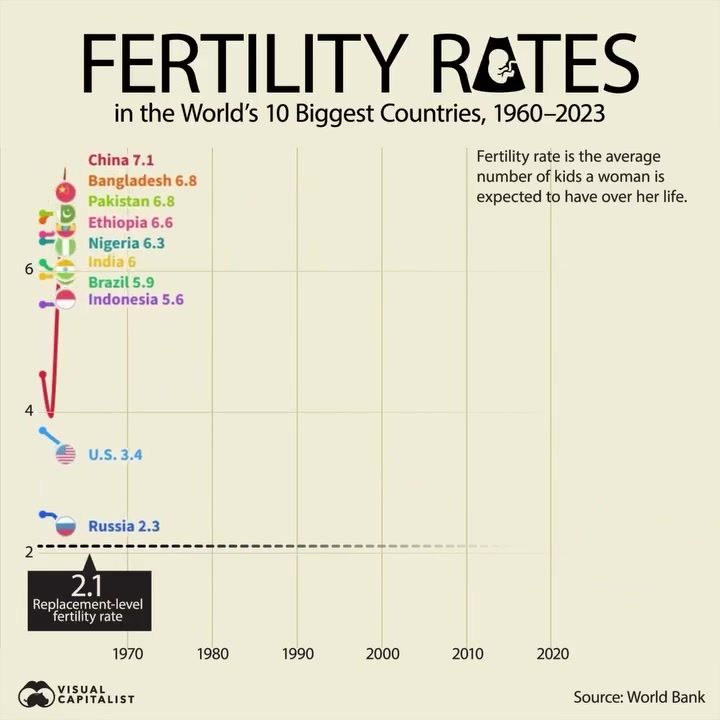
Fertility rates are a key metric for understanding population dynamics. The World Bank recently provided data that highlights significant shifts in fertility rates among the world’s 10 largest countries from 1960 to 2023. This data reveals critical insights into demographic trends and potential future challenges.
Context / Why This Matters
Fertility rates are more than just numbers; they reflect broader societal changes, economic conditions, and cultural shifts. Understanding these trends can help policymakers develop strategies to address potential demographic challenges, such as an aging population or shrinking workforce.
Fertility Rates: A Global Perspective
The Global Trends
Over the past six decades, there have been significant changes in the fertility rates of the world's largest countries. The global average fertility rate has declined from around 5 children per woman in the 1960s to just over 2.5 children per woman in 2023. These shifts are driven by various factors, including improved healthcare, increased access to education, and changes in cultural norms.
Replacement-Level Fertility
The replacement-level fertility rate, defined as the average number of children born per woman needed to maintain a population, is 2.1. This rate ensures that each generation replaces the previous one without ongoing population growth or decline. According to the data, five of the world's 10 largest countries now have fertility rates below this critical threshold, indicating a demographic shift towards slower population growth or even decline.
China's Steep Decline
China, the world's most populous country, has seen a particularly dramatic decline in its fertility rate. From 6.0 in 1960, China's fertility rate has plummeted to just 1.0. This steep decline highlights significant demographic challenges, including an aging population and potential labor shortages. Other countries like Russia, the U.S., and Indonesia also show fertility rates below the replacement level.
High Fertility Rates
In contrast, countries like Nigeria, Pakistan, and Bangladesh still maintain relatively high fertility rates, with Nigeria’s rate exceeding 6.0. These higher rates indicate potential future areas of rapid population growth, which can have significant implications for resource allocation and economic development.
Practical Tips for Understanding Fertility Data
Contextualizing Fertility Rates
Fertility rates are influenced by a myriad of factors, including economic conditions, healthcare access, and education levels. When analyzing fertility data, it's essential to consider these contextual factors to gain a comprehensive understanding of the trends.
Looking at Trends Over Time
Examining fertility rates over time can provide insights into broader demographic trends and potential future changes. For instance, the consistent decline in fertility rates across many countries suggests an aging population, which can impact everything from healthcare provision to retirement systems.
Regional Comparisons
Comparing fertility rates across regions can reveal significant disparities and provide insights into varying demographics and cultural norms. For example, the high fertility rates in sub-Saharan Africa contrast sharply with the low rates in Europe and East Asia.
Important Takeaways
Demographic Shifts
The data highlights a global trend towards lower fertility rates, with significant implications for population growth and demographic composition. Countries with fertility rates below the replacement level will need to prepare for an aging population and potential labor shortages.
Policy Implications
Understanding these trends can inform policy decisions related to healthcare, education, and economic growth. Policies aimed at supporting families, improving healthcare, and fostering economic development can help address the challenges posed by shifting demographic patterns.
Future Considerations
Looking ahead, it's crucial to consider how these trends will evolve. Factors such as technological advancements, economic changes, and cultural shifts will continue to influence fertility rates, making ongoing analysis and adaptation essential.
Conclusion
Fertility rates provide a window into the future of our world's population. The data from the World Bank on the world’s 10 largest countries offers valuable insights into demographic trends. As these trends continue to evolve, understanding and responding to these shifts will be crucial for policymakers and societies alike. By staying informed and proactive, we can navigate the challenges and opportunities presented by these demographic changes.
Watch the Reel
Questions readers ask
Which countries have fertility rates below the replacement level of 2.1 children?
As of the latest data, five of the world's ten largest countries have fertility rates below the replacement level of 2.1 children. These countries are experiencing demographic shifts that may lead to an aging population and potential labor shortages.
What factors have driven the decline in fertility rates over the past 60 years?
The decline in fertility rates among the world's largest countries can be attributed to several factors, including advances in healthcare, increased access to family planning resources, changes in cultural norms, and improvements in women's rights and opportunities.
How has China's fertility rate changed over the past 60 years, and what challenges does it face?
China has experienced a dramatic decline in fertility rates, dropping significantly from its peak in 1960. Today, it faces challenges such as an aging population and potential labor shortages due to its low fertility rate, which is below the replacement level.
Why is the fertility rate an important metric for understanding population dynamics?
The fertility rate is a crucial metric because it indicates the average number of children born to women in a population, which can predict future population growth, aging trends, and economic impacts, such as workforce availability.
What are some key insights from the World Bank's data on fertility rates from 1960 to 2023?
The World Bank's data highlights significant shifts in fertility rates among the world's 10 largest countries, showing declines in fertility and revealing demographic trends that can help policymakers address future challenges like an aging population and labor shortages.
Recent articles
Fresh deep dives from the latest Reels we unpacked.




Comments
Be the first to comment.