Federal Reserve Interest Rate Hikes
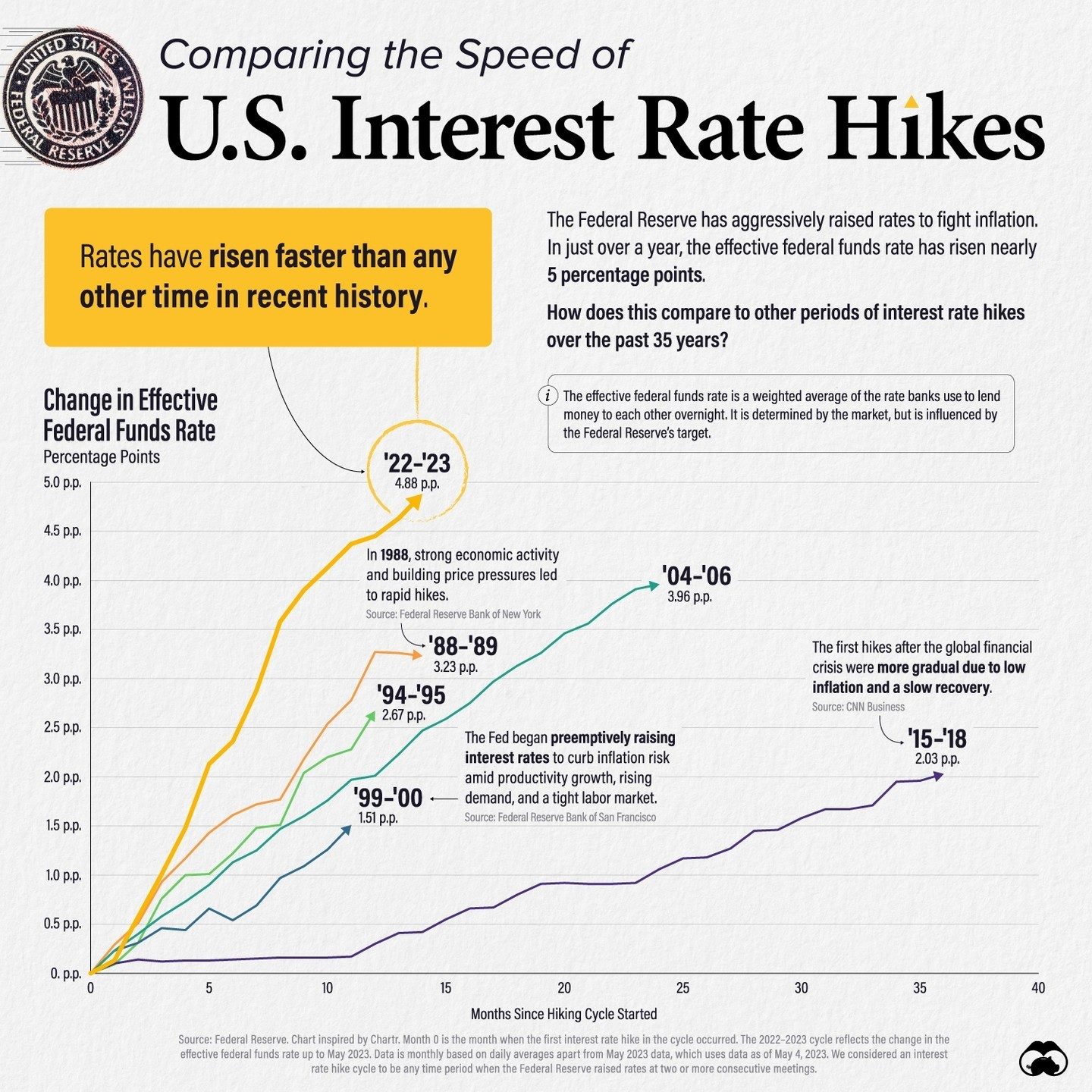
The Federal Reserve's recent interest rate hikes have pushed U.S. rates to levels not seen since 2007, marking an aggressive response to persistent inflation. The rate increases, which have totaled nearly five percentage points in just 14 months, are among the most significant in recent history.
Context: Why This Matters
Interest rates are a critical tool used by the Federal Reserve to manage the economy. By raising rates, the Federal Reserve aims to reduce inflation by making borrowing more expensive, which can slow consumer spending and business investment. Understanding the context and impact of these rate hikes is essential for anyone involved in financial decision-making, from individual investors to business leaders.
Main Discussion
Historical Comparison
To put the current rate hikes into perspective, it's helpful to compare them to other periods of monetary tightening. The infographic highlights several key periods:
- 1988-1989: During this time, the Federal Reserve increased rates by 3.23 percentage points. This period was marked by efforts to combat high inflation rates and stabilize the economy.
- 1994-1995: The rate hikes in this period totaled 2.67 percentage points. This increase was part of a broader strategy to cool down an overheating economy.
- 2015-2018: This period saw a more gradual increase of 2.03 percentage points, reflecting a cautious approach to normalizing rates after the Great Recession.
- 2022-2023: The most recent hikes, which have reached 4.88 percentage points, are the most aggressive in the past 35 years. This significant increase underscores the Federal Reserve’s commitment to tackling inflation.
The 2022-2023 Rate Hikes
The current rate hikes are the most substantial in recent history, reflecting the Federal Reserve's urgency in addressing inflation. The effective federal funds rate, which is the interest rate at which banks lend to each other overnight, has seen a rapid increase. This rate is a benchmark for many other interest rates in the economy, including mortgages, credit cards, and savings accounts.
Impact on the Economy
The rapid increase in interest rates has several implications for the economy:
- Inflation Control: The primary goal of these hikes is to reduce inflation by making borrowing more expensive. This can help cool down an overheating economy and stabilize prices.
- Consumer Spending: Higher interest rates can lead to lower consumer spending as loans become more expensive. This can slow economic growth but is intended to bring inflation under control.
- Borrowing Costs: Businesses and individuals will face higher borrowing costs, which can affect investment decisions and consumer behavior.
Comparison to Past Periods
Comparing the current rate hikes to previous periods provides valuable insights:
- Speed of Hikes: The 2022-2023 rate hikes have been much faster than in previous periods. This rapid increase is a response to the urgent need to control inflation.
- Magnitude of Hikes: The magnitude of the current hikes is also significant, exceeding the increases seen in the 1988-1989 and 1994-1995 periods.
Practical Tips
For individuals and businesses navigating this economic environment, here are some practical tips:
- Review Your Finances: Assess your current debt and financial obligations. Consider refinancing loans if possible to lock in current rates before further increases.
- Budget Carefully: With higher borrowing costs, it's essential to budget carefully. Prioritize essential expenses and look for ways to reduce discretionary spending.
- Invest Wisely: In a high-interest rate environment, certain investments, such as bonds, may become more attractive. Consult with a financial advisor to make informed decisions.
- Stay Informed: Keep an eye on economic indicators and Federal Reserve announcements. Staying informed can help you anticipate future rate changes and adjust your financial plans accordingly.
Important Takeaways
- Historical Context: The current rate hikes are among the most aggressive in recent history, reflecting the Federal Reserve’s commitment to controlling inflation.
- Economic Impact: Higher interest rates can slow economic growth but are intended to stabilize prices and control inflation.
- Practical Steps: Review your finances, budget carefully, invest wisely, and stay informed to navigate this economic environment effectively.
Conclusion
The Federal Reserve's recent interest rate hikes represent a significant shift in monetary policy, aimed at combating persistent inflation. By understanding the historical context, the impact on the economy, and practical steps to navigate this environment, individuals and businesses can make informed financial decisions. Whether you're an investor, a business owner, or a consumer, staying informed and proactive is key to weathering these economic changes.
Watch the Reel
Questions readers ask
What prompted the Federal Reserve to implement such significant rate hikes in 2023?
The Federal Reserve's historic rate hikes in 2023 were primarily driven by the need to control persistent inflation. By raising interest rates, the Fed aims to make borrowing more costly, which can help to slow down consumer spending and business investment, ultimately reducing inflationary pressures.
How do the current U.S. interest rates compare to historical levels?
The current U.S. interest rates, following the Federal Reserve's recent hikes, are at levels not seen since 2007. This marks a substantial increase, with rates rising nearly five percentage points in just 14 months, making it one of the most aggressive monetary tightening periods in recent history.
What is the timeline of the Federal Reserve's rate hike strategy in 2023?
The Federal Reserve began implementing significant rate hikes in early 2023, with multiple increases occurring over a short period. This rapid succession of hikes is part of the Fed's strategy to quickly address inflation, making it a key aspect of their monetary policy for the year.
How do interest rate hikes by the Federal Reserve impact the broader economy?
Interest rate hikes by the Federal Reserve can have wide-ranging effects on the economy. Higher rates make borrowing more expensive, which can deter consumers from purchasing big-ticket items and businesses from expanding. This reduction in spending and investment can help to cool down an overheated economy and curb inflation, but it may also slow economic growth and potentially lead to a recession if rates rise too quickly or too high.
Why are interest rates a crucial tool for the Federal Reserve in managing the economy?
Interest rates are a primary tool used by the Federal Reserve to influence economic activity. By adjusting rates, the Fed can control the cost of borrowing, which in turn affects consumer spending, business investment, and overall economic growth. This makes interest rates a key component of the Fed's monetary policy.
What are the potential long-term effects of the Federal Reserve's aggressive rate hikes?
The long-term effects of the Federal Reserve's aggressive rate hikes could include a sustained reduction in inflation, but also potential risks such as a slowed economy, increased unemployment, and a higher cost of living. The ultimate impact will depend on how quickly inflation responds to the rate increases and how the economy adapts to the higher borrowing costs.
How do the Federal Reserve's rate hikes in 2023 compare to previous rate hike cycles?
The Federal Reserve's rate hikes in 2023 stand out due to their speed and magnitude, making them one of the most aggressive in the past 35 years. Previous rate hike cycles, such as those in the 1980s and 1990s, also aimed to control inflation but occurred over longer periods and with more gradual increases compared to the recent hikes.
Recent articles
Fresh deep dives from the latest Reels we unpacked.




Comments
Be the first to comment.