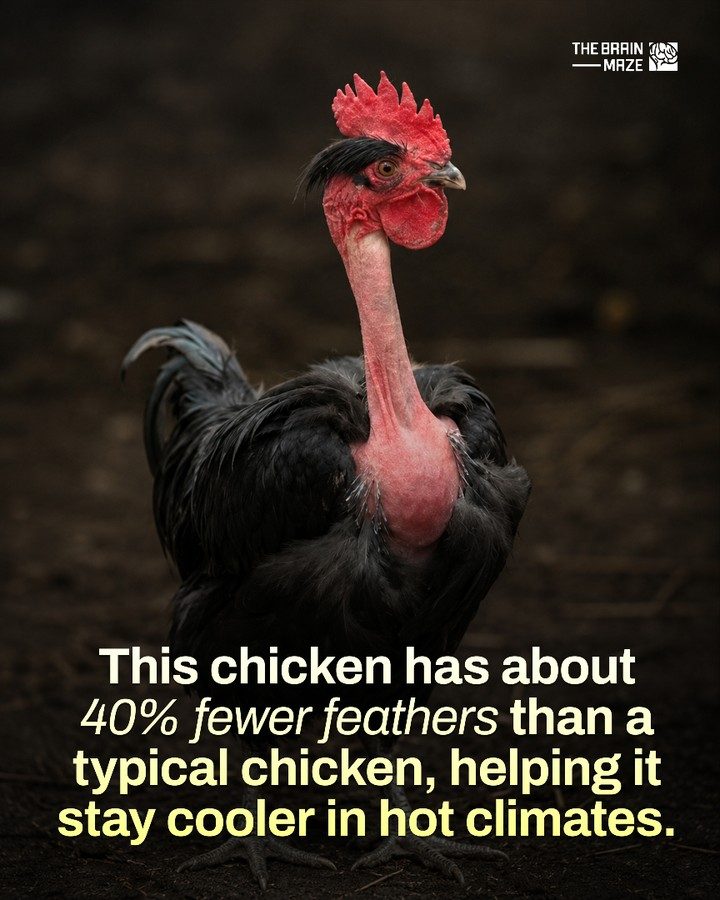
Chicken Adaptation
Chickens are among the most common poultry worldwide, but have you ever encountered one with significantly fewer feathers? The featherless or "naked" chicken is a fascinating example of genetic adaptation and selective breeding. This chicken has about 40% fewer feathers than typical chickens, which helps it stay cooler in hot climates.
Context / Why this matters
The development of the featherless chicken is not merely a curiosity but a result of selective breeding for research purposes. The Hebrew University of Jerusalem is at the forefront of studying this unique trait, which offers several advantages. The primary goal is to improve production efficiency, particularly in hot climates, without aiming to create a new species.
Main discussion
Featherless chickens have some remarkable characteristics that make them an interesting subject for research and agriculture.
The Science Behind Featherless Chickens
Featherless chickens are developed through selective breeding, a process where individuals with desirable traits are chosen to produce offspring. In this case, the goal is to reduce the number of feathers, which serves multiple purposes.
Improved Heat Tolerance
One of the most significant benefits of having fewer feathers is improved heat tolerance. Feathers are excellent insulators and help chickens regulate their body temperature. However, in hot climates, this insulation can become a disadvantage, trapping heat and making the chickens susceptible to heat stress. By having 40% fewer feathers, these chickens can dissipate heat more efficiently, staying cooler and more comfortable in warm environments.
Enhanced Production Efficiency
Heat stress is a major concern in poultry farming, as it can lead to reduced feed intake, lower growth rates, and decreased egg production. By improving heat tolerance, featherless chickens can maintain better productivity even in hot climates. This adaptation can lead to more efficient poultry production, benefiting farmers in regions with high ambient temperatures.
Health and Welfare
While the primary goal is to improve production efficiency, the health and welfare of the chickens are also important considerations. The reduction in feathers can make these chickens more susceptible to scratches, pecking from other chickens, and infections. However, farmers and researchers are working on strategies to mitigate these issues, such as providing appropriate housing and monitoring the chickens' health closely.
Practical tips
If you're a farmer or researcher interested in exploring the benefits of featherless chickens, here are some practical tips to get started:
Understand the Environment
Before introducing featherless chickens to your farm, assess the environmental conditions. Ensure that the climate is suitable for these birds, as they are more susceptible to cold temperatures due to their reduced feather coverage.
Provide Adequate Housing
Featherless chickens require special housing conditions to protect them from injuries and infections. Provide clean, dry bedding and ensure that the coop is well-ventilated to prevent moisture buildup.
Monitor Health Closely
Regular health checks are essential for featherless chickens. Keep an eye out for any signs of injury, infection, or stress. Consult with a veterinarian experienced in poultry health to develop a comprehensive health management plan.
Optimize Nutrition
Featherless chickens may have different nutritional needs compared to their feathered counterparts. Work with a poultry nutritionist to formulate a balanced diet that supports their growth and overall health.
Important takeaways
The development of featherless chickens through selective breeding offers several advantages, particularly in improving heat tolerance and production efficiency. While there are challenges to consider, such as susceptibility to injuries and infections, ongoing research and practical strategies can help mitigate these issues.
Conclusion
Featherless chickens represent a significant advancement in poultry breeding, offering potential benefits for both farmers and researchers. By improving heat tolerance and production efficiency, these chickens can thrive in hot climates, leading to more sustainable and profitable poultry farming practices. Whether you're a farmer looking to optimize your operations or a researcher interested in genetic adaptations, featherless chickens are a fascinating and promising area of study.
Watch the Reel
Questions readers ask
What are featherless chickens and how are they created?
Featherless chickens, also known as 'naked' chickens, are a result of selective breeding. They have been bred to have approximately 40% fewer feathers than typical chickens. This process involves carefully choosing and breeding chickens with desirable traits over several generations, leading to the development of this unique variety.
Why are featherless chickens more suited to hot climates?
Featherless chickens are better suited to hot climates because they can dissipate heat more efficiently. With fewer feathers, these chickens can cool down more effectively, making them more comfortable and resilient in high temperatures. This is particularly beneficial for improving their production efficiency in hot climates.
What is the purpose of breeding featherless chickens?
The primary purpose of breeding featherless chickens is to enhance production efficiency, especially in hot climates. This is achieved by selectively breeding chickens with fewer feathers, which helps them stay cooler and more comfortable. The goal is not to create a new species but to develop a trait that offers practical advantages in specific environments.
Are featherless chickens a new species?
No, featherless chickens are not a new species. They are a variety of domestic chickens that have been selectively bred for specific traits. The Hebrew University of Jerusalem has been studying this trait to understand its benefits and potential applications, but the goal is not to create a distinct species.
What are the main benefits of featherless chickens in hot climates?
The main benefits of featherless chickens in hot climates include improved heat tolerance and better heat dissipation. With fewer feathers, these chickens can more effectively regulate their body temperature, leading to increased comfort and productivity. This makes them an advantageous choice for poultry farming in regions with high temperatures.
How do featherless chickens' heat tolerance compare to regular chickens'?
Featherless chickens have a significant advantage in heat tolerance compared to regular chickens. Due to their reduced feather coverage, they can dissipate heat more efficiently, which helps them stay cooler in high temperatures. This makes them more comfortable and productive in hot climates, aiding in improved overall performance.
What role does selective breeding play in improving heat tolerance in chickens?
Selective breeding is crucial for improving heat tolerance in chickens. By selectively breeding chickens with fewer feathers, researchers can enhance the chickens' ability to dissipate heat and regulate their body temperature more effectively. This targeted breeding process aims to develop chickens that are better adapted to hot climates, leading to increased comfort and productivity.
Related deep dives
Similar reads based on topic and creator.


Recent articles
Fresh deep dives from the latest Reels we unpacked.




Comments
Be the first to comment.