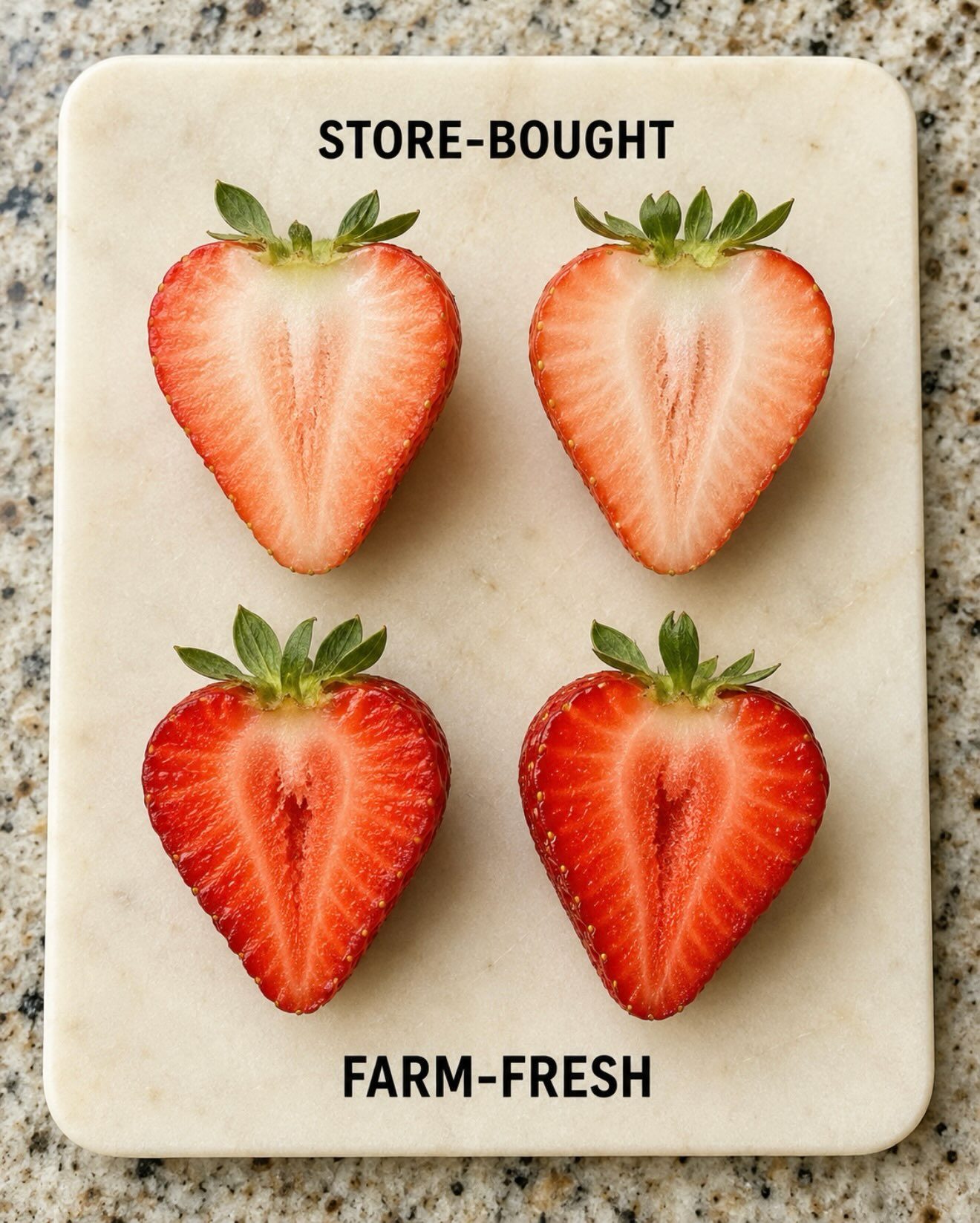
Understanding the Difference Between Farm-Fresh and Store-Bought Food
Farm-fresh and store-bought foods often present noticeable visual differences, including variations in color, texture, and shape. Yet, these differences alone do not provide the entire picture. It's essential to delve deeper into the factors that influence these differences to make informed choices.
Context / Why This Matters
First, it's important to recognize that the differences between farm-fresh and store-bought food are more than just skin deep. Factors such as variety, breed, animal diet, fat content, ripeness, freshness, storage, transportation, processing, packaging, and growing environment can all play a significant role in how food appears and tastes. This makes it crucial to look beyond the surface and consider other aspects when choosing between farm-fresh and store-bought options.
Main Discussion
Visual Differences in Strawberries
Strawberries can exhibit noticeable differences in appearance. Farm-fresh strawberries often have a deeper red color, which can be more vibrant and enticing. In contrast, store-bought strawberries might appear less vibrant and less juicy. These differences can be influenced by various factors, such as ripeness, variety, and growing conditions. For instance, farm-fresh strawberries are often picked at peak ripeness, which can result in a brighter color and sweeter taste. Store-bought strawberries, on the other hand, might be picked earlier to ensure they survive transportation and storage, resulting in a less vibrant appearance.
Appearance of Eggs
Eggs also show distinct differences in appearance. Farm-fresh eggs typically have a darker, richer yolk, while store-bought eggs may have a paler yolk. The color of the yolk can be influenced by the hen's diet. Chickens raised on a diet rich in certain nutrients, such as marigold petals, may produce eggs with a deeper yolk color. Additionally, the storage and handling of eggs can affect their appearance. Eggs that have been stored for longer periods or transported over long distances might have a paler yolk due to the breakdown of certain pigments.
Ground Meat: Texture and Color
Ground meat also presents noticeable differences. Farm-fresh ground meat is often brighter in color and has a more uniform texture. This can be attributed to the freshness of the meat and the way it has been handled. Store-bought ground meat, in contrast, may have a duller color and a less uniform texture due to processing, packaging, and storage conditions. The fat content and the cut of the meat can also contribute to these visual differences.
Factors Influencing Appearance
Several factors can influence the appearance of farm-fresh and store-bought food:
-
Variety or breed: Different varieties or breeds of plants and animals can result in varying appearances, textures, and tastes.
-
Animal's diet: The diet of animals, such as chickens and cows, can significantly impact the color and quality of the meat, eggs, and dairy products they produce. For example, chickens fed a diet rich in certain nutrients may produce eggs with a deeper yolk color.
-
Fat content and cut: The fat content and the specific cut of meat can affect its appearance. Leaner cuts of meat, for example, may have a different texture and color than fattier cuts.
-
Ripeness and freshness: The ripeness and freshness of produce can greatly influence its appearance. Ripe, fresh produce often has a more vibrant color and better texture.
-
Storage and transportation: The way food is stored and transported can affect its appearance and quality. Proper storage and transport conditions can help maintain the freshness and quality of food, while suboptimal conditions can lead to deterioration.
-
Processing and packaging: The way food is processed and packaged can also impact its appearance. Different processing techniques and packaging materials can affect the color, texture, and taste of food.
-
Species and growing environment: The species of plant or animal and the environment in which it was grown or raised can influence its appearance. For example, different species of livestock may have different meat colors and textures.
The Role of Storage and Transportation
Storage and transportation play a critical role in maintaining the quality and appearance of food. Proper storage conditions, such as temperature and humidity, can help preserve the freshness and quality of food. Similarly, transportation methods, including the use of refrigeration and protective packaging, can help prevent damage and deterioration during transit. These factors are crucial for ensuring that food reaches consumers in the best possible condition.
Practical Tips
When choosing between farm-fresh and store-bought options, consider the following tips:
-
Look beyond appearance. Notice the color, texture, and shape, but also consider other factors such as ingredients, source, and handling.
-
Read the label. Check the ingredients and nutritional information to make informed choices.
-
Notice the source. Pay attention to where the food comes from and how it has been produced and handled.
-
Follow proper food-safety guidance. Ensure that food is stored and handled correctly to maintain its quality and safety.
-
Choose options that fit your budget and lifestyle. Consider your personal preferences, dietary needs, and budget when making food choices.
Important Takeaways
- Appearance alone does not tell the full story of a food's quality, freshness, or nutritional value.
- Factors such as variety, diet, ripeness, and storage can influence the appearance of food.
- It's essential to look beyond appearance and consider other factors when choosing between farm-fresh and store-bought options.
- Proper storage and transportation are crucial for maintaining the quality and appearance of food.
Conclusion
Understanding the differences between farm-fresh and store-bought food goes beyond visual appearance. By considering factors such as variety, diet, ripeness, and storage, consumers can make more informed choices. Ultimately, the best approach is to look beyond appearance and consider the overall quality, freshness, and nutritional value of the food.
Watch the Reel
Questions readers ask
What are the key visual differences between farm-fresh and store-bought produce?
Farm-fresh produce often exhibits more vibrant colors, firmer textures, and varied shapes. In contrast, store-bought produce may appear less colorful, softer, and more uniform due to standardized growing and harvesting practices.
How does the appearance of farm-fresh meat differ from store-bought meat?
Farm-fresh meat often has a more natural, sometimes marbled appearance, indicating healthier fat content. Store-bought meat may look leaner and have a more uniform color due to mass-production processes and additives.
Why do farm-fresh strawberries look different from store-bought ones?
Farm-fresh strawberries typically have a deeper red color, are firmer to the touch, and have a more irregular shape. Store-bought strawberries may appear less vibrant, softer, and more uniform in size and shape due to selective breeding and harvesting practices.
What factors influence the visual differences between farm-fresh and store-bought foods?
Several factors contribute to these visual differences, including the variety of the produce, the diet of the animals in the case of meat, fat content, ripeness, freshness, storage methods, transportation, processing, packaging, and the growing environment.
How can I identify farm-fresh meat and produce?
To identify farm-fresh meat and produce, look for more vibrant colors, firmer textures, and a more natural, sometimes irregular shape. Additionally, farm-fresh items often have a shorter shelf-life and may lack the uniformity seen in store-bought products. Checking for certifications or direct communication with local farmers can also be helpful.
Why does the appearance of farm-fresh foods matter?
The appearance of farm-fresh foods can indicate their freshness and nutritional benefits. Vibrant colors and firm textures often correlate with higher nutrient content, better taste, and a more enjoyable eating experience.
How does the growing environment affect the appearance of farm-fresh produce?
The growing environment, including soil quality, sunlight exposure, and water sources, significantly impacts the appearance of farm-fresh produce. For instance, produce grown in nutrient-rich soil and optimal climatic conditions often displays richer colors and more robust textures.
Recent articles
Fresh deep dives from the latest Reels we unpacked.




Comments
Be the first to comment.