Family Businesses: Global Impact and Economic Significance
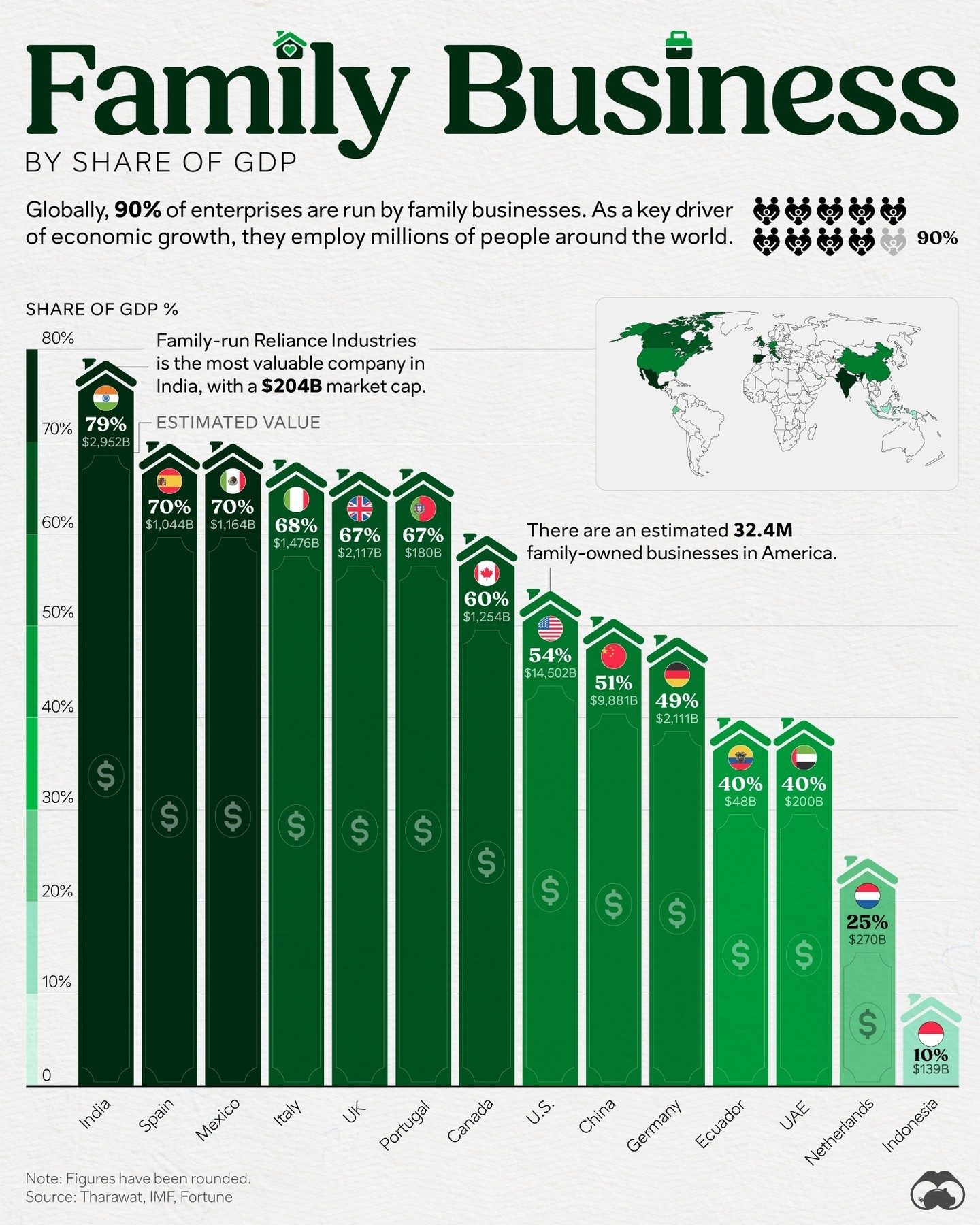
Family-owned businesses are a cornerstone of the global economy, accounting for an impressive 90% of all enterprises worldwide. These businesses, ranging from small mom-and-pop shops to multinational giants like Walmart and Ford, significantly contribute to job creation, entrepreneurship, and economic growth.
The economic influence of family businesses is vast and multifaceted. These enterprises employ millions of people globally, driving local economies and fostering community development. Reliance Industries is a prime example, standing as the most valuable family-run company in India with a market capitalization of $204 billion. This level of economic impact is not unique to India; family-owned businesses play a pivotal role in various countries, shaping their economic landscapes.
Context / Why this Matters
Understanding the role of family businesses in the global economy is crucial for several reasons. Firstly, these businesses are often the backbone of local communities, providing employment opportunities and supporting local economies. Secondly, they drive innovation and entrepreneurship, contributing to the dynamic evolution of industries. Lastly, family businesses serve as a critical source of wealth, employment, and economic stability in both developed and developing nations.
Key Economic Contributions
Let's delve into the specific ways family-owned businesses contribute to economic growth and stability. The impact extends across various metrics, including GDP share, job creation, and overall economic stability.
Share of GDP
Family businesses contribute significantly to the GDP of many countries. For instance, in India, 79% of the GDP is attributed to family businesses, totaling $2.952 billion. Similarly, in Spain, family-run enterprises contribute 70% of the GDP, amounting to $1.044 billion. These figures underscore the substantial economic role these businesses play in their respective countries, driving overall economic growth and stability.
Job Creation
The employment impact of family-owned businesses is equally significant. These enterprises are major employers, providing jobs to millions of people worldwide. Reliance Industries, for example, is not only the most valuable company in India but also a significant employer, contributing to the country's economic stability and growth. Similarly, in the United States, family-owned businesses employ a significant portion of the workforce, with an estimated 32.4 million family-owned enterprises contributing to employment and economic activity.
Economic Stability
Family-owned businesses play a crucial role in maintaining economic stability. They often weather economic downturns better than non-family-owned businesses due to their long-term vision and risk management strategies. This stability helps sustain local economies, especially during challenging times.
Examples from Around the World
Let's look at how family businesses impact specific countries globally.
India
In India, family-owned businesses, led by giants like Reliance Industries, contribute significantly to the GDP and employ a large portion of the workforce. Reliance Industries, valued at $204 billion, exemplifies the economic clout and job-creation potential of family businesses in the country. The economic influence of such enterprises underpins India's economic stability and growth.
Spain
Spain showcases another significant example of family business contributions. Family-owned enterprises contribute 70% of the GDP in Spain, totaling $1.044 billion. This substantial contribution is a testament to the economic impact and importance of these businesses in the country's economic landscape.
United States
The United States boasts a significant number of family-owned businesses. With an estimated 32.4 million family-owned enterprises, these businesses contribute to job creation and economic activity across various sectors. They play a pivotal role in sustaining the country's economic stability and growth.
United Kingdom
In the United Kingdom, 68% of the GDP is attributed to family-owned businesses, totaling $1.476 billion. This contribution highlights the economic significance of family businesses in the country, driving job creation and economic growth.
Germany
Germany is another key player in the family business landscape. Family-owned enterprises contribute 67% of the GDP, amounting to $2.117 billion. This economic contribution underscores the significance of family businesses in fueling Germany's economic engine and maintaining stability.
Main discussion
Challenges and Opportunities
While family-owned businesses are a driving force in the global economy, they also face unique challenges and opportunities.
Succession Planning
One of the primary challenges for family businesses is succession planning. Transitioning leadership from one generation to the next can be complex and fraught with potential conflicts. Successful succession planning involves not only choosing the right successor but also ensuring that the business vision and values are carried forward. Reliance Industries, for example, has demonstrated a successful transition of leadership, maintaining its market position and economic influence.
Innovation and Adaptation
Family businesses must continually innovate and adapt to stay competitive. This requires a balance between maintaining traditional values and embracing new technologies and market trends. Family-owned enterprises that succeed in this balance often become industry leaders, driving innovation and economic growth.
Financial Management
Effective financial management is crucial for the sustainability of family-owned businesses. This includes prudent risk management, financial planning, and strategic investment. Many family businesses prioritize long-term stability over short-term gains, ensuring their longevity and economic impact.
Practical tips
Sustainability and Long-term Vision
Sustainability is key for family-owned businesses. Long-term vision and strategic planning are essential to maintain economic stability and growth. Businesses like Reliance Industries have demonstrated how a long-term approach can drive economic influence and stability.
Succession Planning
A robust succession plan is vital for the continuity of family-owned businesses. It involves identifying potential successors, training them, and ensuring that the business vision and values are preserved. This pro-active approach can help mitigate potential conflicts and ensure smooth transitions.
Innovation and Adaptation
Incorporating technology and adapting to market trends is crucial for family businesses to stay competitive. This could involve adopting new technologies, diversifying product offerings, or entering new markets. Successful adaptation helps these businesses maintain their economic significance and drive innovation.
Financial Management
Proper financial management is essential for the sustainability of family-owned businesses. This includes prudent risk management, financial planning, and strategic investments. A long-term financial strategy can help these businesses weather economic downturns and sustain their economic impact.
Important Takeaways
Understanding the economic role and impact of family businesses is essential for appreciating their contributions to global economic growth and stability. These businesses play a crucial role in job creation, innovation, and maintaining economic stability. Reliance Industries in India and similar enterprises worldwide exemplify the significant economic contributions and influence of family-owned businesses.
Conclusion
Family businesses are a vital component of the global economy, driving economic growth and stability in various ways. From job creation and innovation to maintaining economic stability, these businesses contribute significantly to the GDP and employment in many countries. Recognizing and supporting these enterprises is essential for fostering a robust and sustainable global economy.
Watch the Reel
Questions readers ask
What percentage of global enterprises are family owned businesses?
Family owned businesses constitute an impressive 90% of all global enterprises, making them a dominant force in the worldwide economy.
How do family businesses impact local economies?
Family businesses drive local economies by creating jobs, encouraging entrepreneurship, and fostering community development, contributing significantly to their local regions. These enterprises are often deeply integrated into the communities they serve, providing goods, services, and support.
Can you provide examples of large family owned companies?
Some of the world's largest family owned companies include Walmart, Ford, and Reliance Industries. These businesses span various industries and have a substantial global presence, showcasing the scale and reach of family enterprises. Reliance Industries is one of the world's most valuable family-run companies with a market capitalization of $204 billion.
How do family businesses contribute to economic growth?
Family businesses contribute to economic growth through job creation, entrepreneurship, and a significant share of the global GDP. They often pass on their businesses to the next generation, ensuring long-term growth and sustainability.
What role do family businesses play in emerging markets?
In emerging markets, family businesses often play a crucial role in economic development. They create jobs, stimulate local economies, and drive entrepreneurship. These businesses are adaptable and resilient, making them well-suited to navigate the challenges and opportunities of emerging markets.
How do family businesses differ from corporate enterprises?
Family businesses often prioritize long-term sustainability and community involvement over short-term gains, unlike many corporate enterprises. They are usually more adaptable and resilient, with a strong focus on family legacy and values. Family businesses also tend to have a deeper connection to their local communities, fostering a sense of loyalty and trust.
Why are family businesses important for job creation?
Family businesses are vital for job creation because they employ millions of people worldwide. By fostering entrepreneurship, they create opportunities for employment, supporting local economies and community development. Additionally, family businesses often provide stable, long-term employment, contributing to economic stability.
Related deep dives
Similar reads based on topic and creator.

Recent articles
Fresh deep dives from the latest Reels we unpacked.




Comments
Be the first to comment.