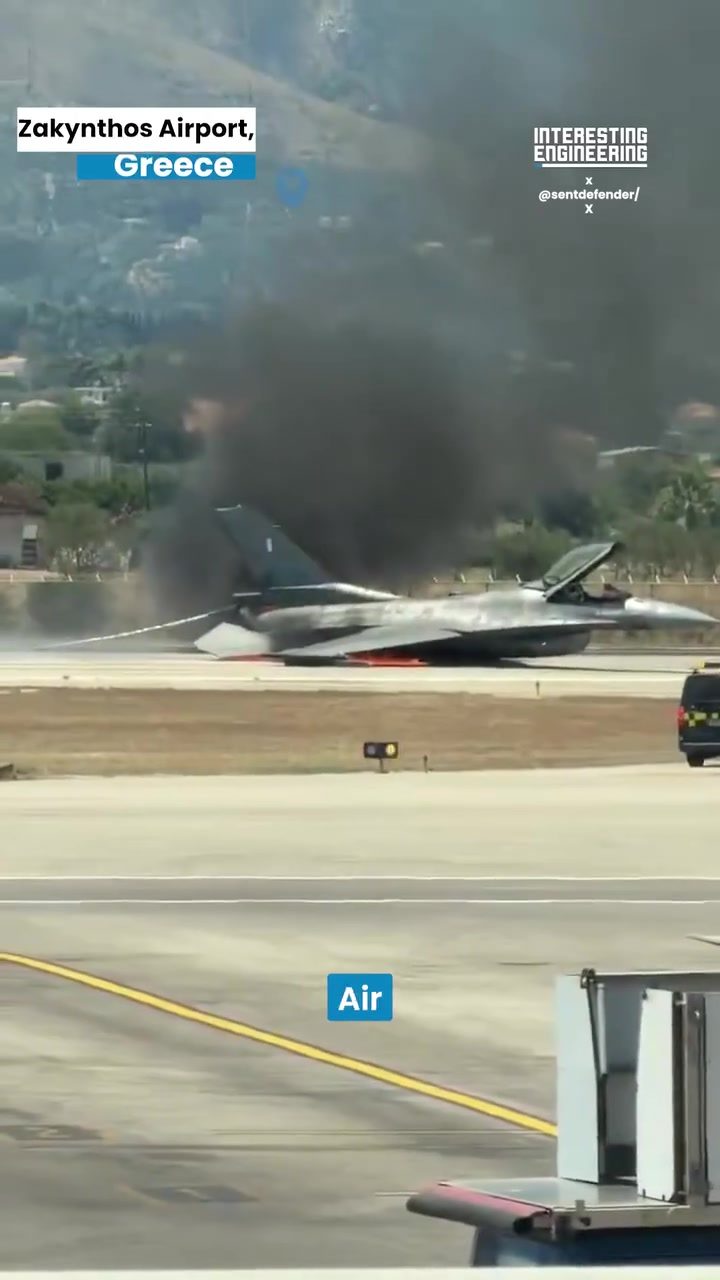
Emergency Landing of F-16 at Zakynthos Airport
An emergency landing of an F-16 fighter jet at Zakynthos International Airport in Greece highlights the critical importance of pilot training and airport emergency protocols.
The Incident
A Hellenic Air Force F-16C fighter jet, an iconic variant known as the Fighting Falcon, executed an emergency belly landing at Zakynthos International Airport. The incident involved a technical malfunction that likely affected the landing gear or the hydraulic system, it’s uncertain yet. On touchdown, flames ignited beneath the aircraft, but they were swiftly extinguished by airport firefighters using foam. The skillful pilot managed to escape unharmed, and the authorities promptly initiated an investigation to determine the exact cause of the malfunction.
Why This Matters
Emergency landings, especially those involving military aircraft, are rare but underscore the significance of robust safety measures and prompt emergency responses. The incident at Zakynthos Airport showcased the effectiveness of well-trained personnel and the importance of having advanced firefighting equipment readily available.
Safety Protocols and Emergency Responses
Military aircraft are designed with multiple redundancies to ensure safety. However, when a malfunction occurs, the pilot's training and the ground crew's preparedness are paramount. In this case, the pilot executed a belly landing—a manoeuvre that requires precision and quick decision-making to prevent further damage to the aircraft and ensure the pilot's safety.
Emergency services at Zakynthos Airport responded swiftly, using specialized foam to extinguish the flames. This quick response is crucial in preventing the fire from spreading and causing further damage to the aircraft. The airport's firefighters demonstrated a high level of preparedness and expertise.
Main Discussion
How Emergency Landings Work
An emergency belly landing involves the aircraft touching down on its underside rather than on its landing gear. This manoeuvre is risky but sometimes necessary to avoid a catastrophic crash. The key to a successful belly landing is maintaining control of the aircraft and ensuring a smooth touchdown.
Steps Involved in an Emergency Belly Landing
- Assessment: The pilot quickly assesses the situation and confirms the need for a belly landing.
- Preparation: The pilot lowers the flaps to reduce landing speed and stabilizes the aircraft.
- Touchdown: The aircraft touches down on its underside, and the pilot maintains control to minimize damage.
- Post-Landing: Once on the ground, the pilot deploys the emergency brakes to stop the aircraft and engages any remaining safety protocols.
The Role of Pilot Training
Military pilots undergo rigorous training to handle emergencies, including emergency landings. This training involves simulation exercises and real-world scenarios designed to prepare pilots for unexpected situations. The success of the belly landing at Zakynthos Airport underscores the effectiveness of this training and the pilot's skill in executing the manoeuvre.
Airport Emergency Protocols
Airports, especially those that handle military aircraft, must have comprehensive emergency protocols in place. These protocols include:
- Rapid Response Teams: Specialized teams are on standby to respond to emergencies. These teams are equipped with the necessary tools and training to handle a variety of situations, from fires to medical emergencies.
- Advanced Firefighting Equipment: Modern airports are equipped with advanced firefighting tools, including foam systems that can quickly extinguish fires and prevent them from spreading.
- Coordination and Communication: Effective communication between the pilot, air traffic control, and ground crews is essential for a successful emergency response. Clear and concise communication ensures that everyone is aware of the situation and can take appropriate action.
Practical Tips for Handling Aviation Emergencies
While the average person may never encounter an aviation emergency, understanding the basics of emergency procedures can be beneficial. Here are some practical tips:
For Pilots
- Stay Calm and Assess: In an emergency, staying calm and assessing the situation is the first step. This allows the pilot to make informed decisions and take the necessary actions.
- Follow Protocols: Military and commercial pilots are trained to follow specific protocols in case of an emergency. Adhering to these protocols ensures the best possible outcome.
- Communicate Effectively: Clear and concise communication with air traffic control and ground crews is essential. This ensures that everyone is on the same page and can respond appropriately.
- Maintain Control: Maintaining control of the aircraft is crucial during an emergency. This involves following proper procedures and using the aircraft's systems effectively.
For Ground Crews
- Prepare for the Worst: Ground crews should be prepared for any situation. This includes having the necessary equipment and training to handle emergencies.
- Rapid Response: In the event of an emergency, a rapid response is crucial. Ground crews should be ready to act quickly and effectively.
- Coordinate with Pilots: Effective communication with the pilot and air traffic control ensures that everyone is aware of the situation and can take appropriate action.
- Safety First: The safety of the pilot and passengers is the top priority. Ground crews should prioritize safety in all their actions.
Important Takeaways
Emergency landings are rare but highlight the importance of pilot training, robust safety measures, and effective emergency protocols at airports. The incident at Zakynthos Airport underscores the critical role of well-trained personnel and advanced firefighting equipment in managing such emergencies.
Airport safety is a multifaceted issue that involves coordination between pilots, air traffic control, and ground crews. Effective communication, clear protocols, and a focus on safety are essential for managing aviation emergencies.
Conclusion
The emergency belly landing of an F-16 at Zakynthos International Airport serves as a reminder of the importance of safety measures and emergency protocols in aviation. The successful execution of the landing and the rapid response of emergency services underscore the effectiveness of training and preparedness in managing such incidents. By prioritizing safety and preparedness, we can ensure that emergencies are handled effectively and minimize the risks associated with aviation.
Watch the Reel
Questions readers ask
What is an F-16 belly landing and why did it happen at Zakynthos Airport?
A belly landing occurs when an aircraft lands without its landing gear extended, instead sliding onto its belly. At Zakynthos Airport, the F-16C Fighting Falcon was forced to perform a belly landing due to a technical malfunction that likely impacted the landing gear or hydraulic system. This incident highlights the critical importance of pilot training and emergency procedures.
How did the airport firefighters respond to the emergency landing?
The airport firefighters at Zakynthos International Airport responded swiftly and effectively. Upon the F-16's touchdown, flames ignited beneath the aircraft, but the firefighters used foam to extinguish the flames promptly, ensuring the safety of the pilot and minimizing any potential damage.
What are the typical emergency protocols for an aircraft belly landing?
When an aircraft performs a belly landing, emergency protocols involve the pilot following specific procedures, including reducing speed, maintaining control, and avoiding hard impacts. On the ground, airport response teams, such as firefighters and emergency medical personnel, are immediately deployed to manage any resulting fires or injuries.
What can be learned from the successful emergency landing and response at Zakynthos Airport?
The successful emergency landing and response at Zakynthos Airport emphasizes the significance of thorough pilot training and well-established emergency protocols. The pilot’s ability to handle the situation and the rapid action of airport firefighters showcase the importance of preparedness and practice in managing aircraft incidents.
What is the role of the pilot in an emergency landing?
In an emergency landing, the pilot plays a crucial role in managing the situation. This includes identifying the issue, communicating with air traffic control, and executing the landing safely. The pilot’s training and quick decision-making are vital in ensuring a successful outcome, as demonstrated by the F-16 pilot at Zakynthos International Airport.
Recent articles
Fresh deep dives from the latest Reels we unpacked.




Comments
Be the first to comment.