The Current Landscape of Growing and Shrinking Industries
Amid a cooling U.S. labor market, it is crucial to identify which industries are expanding and shrinking. The Federal Reserve highlights significant shifts in employment across various industries from August 2024 to August 2025. Understanding these trends can help professionals and investors navigate the job market effectively. This report synthesizes key findings and offers practical insights into the current employment landscape.
Why This Matters
The U.S. job market's evolution affects everyone, from job seekers to employers and policymakers. Knowing which industries are thriving and which are struggling can guide career decisions, investment strategies, and economic policies. As the labor market adjusts, staying informed about industry trends becomes essential for strategic planning and long-term success.
Main Discussion
Industries with Significant Job Growth
Several industries are experiencing notable job growth, driven by various factors such as increased demand, technological advancements, and economic developments.
Healthcare and Education
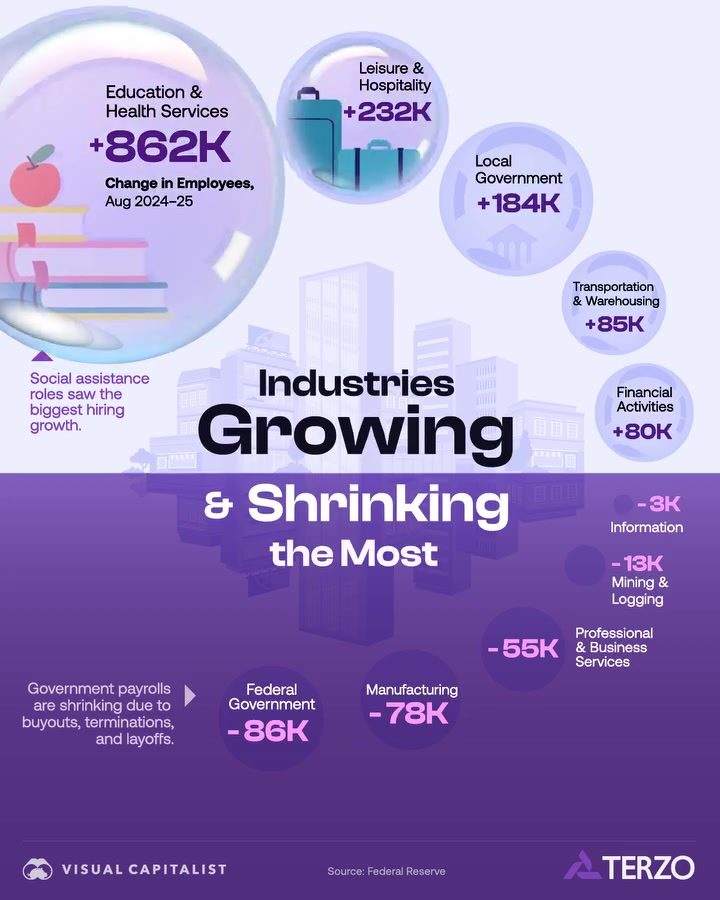
Education and Health Services leads the way with a substantial increase of 862,000 jobs. This growth can be attributed to an aging population, increased focus on healthcare access, and the rising demand for educational services. Social assistance roles, a subset of this sector, saw the biggest hiring growth, reflecting the growing need for supportive services. Government payrolls are shrinking due to budget constraints, terminations, and layoffs, but sectors like Local Government and Warehousing are adding 184,000 jobs, indicating a shift in employment opportunities.
Hospitality and Transportation
Leisure and Hospitality is another industry on the rise, adding 232,000 jobs. This sector's recovery and expansion are likely due to the return of tourism and leisure travel post-pandemic. Meanwhile, Transportation and Financial Activities are each adding 80,000 jobs, reflecting the ongoing need for logistics and financial services in a growing economy.
Industries Facing Job Decline
Several industries are experiencing job losses, often due to automation, economic downturns, or shifts in consumer behavior.
Federal Government and Manufacturing
The Federal Government is facing a significant job decline, with 86,000 fewer jobs. This reduction is attributed to budget cuts, terminations, and layoffs. Also, Manufacturing is shedding 78,000 jobs, likely due to automation and outsourcing. Professional and Business Services are also shrinking by 78,000 jobs, which may indicate a consolidation in the sector or a shift towards more specialized roles.
Information and Mining
The Information sector is losing 3,000 jobs, which could be due to mergers, acquisitions, or a shift in digital services. Mining and Logging are also declining, with 55,000 fewer jobs, possibly due to reduced demand for natural resources or increased environmental regulations.
Practical Tips for Job Seekers and Professionals
Navigating a Cooling Labor Market
Understanding the current job market trends can help professionals make informed decisions. Here are some practical tips for navigating this landscape:
- Focus on Growing Sectors: Prioritize industries with significant job growth, such as Education and Health Services, Leisure and Hospitality, and Transportation. These sectors offer more opportunities for employment and career advancement.
- Upskill and Reskill: Continuously update your skills to remain competitive. Focus on areas where demand is increasing, such as digital literacy, healthcare technologies, and logistics management.
- Stay Informed: Keep up with industry trends and economic forecasts to anticipate shifts in the job market. This proactive approach can help you adapt quickly to changes and seize new opportunities.
- Consider Government and Manufacturing: While these sectors are experiencing job losses, there may still be opportunities for skilled workers, especially in niche areas or regions.
Important Takeaways
The U.S. labor market is undergoing significant changes, with some industries thriving while others face challenges. Key takeaways from the current trends include:
- Healthcare and Education: These sectors are leading the way in job growth, driven by an aging population and increased demand for services.
- Leisure and Hospitality: This industry is on the rise, benefiting from the post-pandemic recovery and increased travel.
- Government and Manufacturing: These sectors are facing job losses due to budget cuts, automation, and other economic factors.
- Proactive Adaptation: Job seekers and professionals should stay informed, continuously update their skills, and focus on growing sectors to navigate the cooling labor market effectively.
Conclusion
The U.S. labor market is dynamic, with industries experiencing varying degrees of job growth and decline. Understanding these trends is essential for making informed career decisions and staying competitive in a changing job landscape. By focusing on growing sectors, continuously updating skills, and staying informed, professionals can thrive in this evolving market. As the employment landscape continues to evolve, being proactive and adaptable will be key to long-term success.
Watch the Reel
Questions readers ask
What are the top growing industries in the U.S. job market for 2024?
Healthcare, hospitality, and leisure industries are among the top growing sectors. These industries are experiencing significant job growth, with healthcare, in particular, leading the way due to an aging population and increased demand for services. Leisure and hospitality has seen a resurgence in job opportunities, driven by a rebound in travel and tourism.
Which job sectors are currently shrinking in the U.S.?
Federal government sectors are notably shrinking, reflecting broader economic changes and shifts in policy. Other sectors experiencing job cuts include traditional manufacturing and retail, which are being impacted by automation and shifting consumer behaviors.
Why is it important to know about these industry shifts?
Understanding which industries are expanding and which are contracting can guide career decisions. Professionals can strategically position themselves in growing sectors like healthcare, while investors can make informed decisions about where to allocate resources. For employers, this information is crucial for workforce planning and staying competitive.
What are some of the best industries to invest in during 2024?
Investing in healthcare and hospitality sectors is advisable given the job growth in these areas. Additionally, sectors like technology and renewable energy show promise due to ongoing innovation and increasing demand. These sectors offer robust employment opportunities and are likely to continue thriving in the near future.
How can job seekers benefit from knowing current labor market trends?
Job seekers can target industries with high job growth, such as healthcare and hospitality, to increase their chances of employment. Staying informed about the job market allows job seekers to tailor their skills and qualifications, ensuring they are well-prepared for the evolving labor market and the types of roles in demand.
What are the key employment opportunities in the healthcare sector?
The healthcare sector is offering abundant opportunities, including roles in nursing, medical technology, and healthcare administration. Telehealth and home healthcare services are also on the rise, presenting new avenues for employment. These opportunities are driven by an aging population and the increasing need for specialized care.
How have economic changes influenced the job market in 2024?
Economic changes have led to a notable shift in the job market, with sectors like healthcare and hospitality expanding due to increased demand. Conversely, federal government sectors and traditional manufacturing are experiencing job cuts, reflecting broader economic adjustments and policy shifts. These changes underscore the dynamic nature of the U.S. job market.
Recent articles
Fresh deep dives from the latest Reels we unpacked.




Comments
Be the first to comment.