Pancreas Anatomy: Functional Layers, Cells, and Support Structures
Pancreas anatomy is a fascinating study due to the organ's essential roles in digestion and hormone regulation. The pancreas is organized into distinct, functional layers that enable it to perform these critical tasks. Understanding these layers and their components provides insight into how the pancreas maintains overall health and supports vital bodily functions.
Context: Why This Matters
The pancreas is a dual-purpose organ, acting as both an endocrine and exocrine gland. Its exocrine function involves producing and transporting digestive enzymes, while its endocrine function regulates hormone secretion. When these functions are compromised, conditions such as diabetes, pancreatitis, and pancreatic cancer can arise. Therefore, a clear understanding of the pancreas's anatomy, including its layers, cells, and support structures, is crucial for both medical professionals and individuals seeking to maintain their health.
Main Discussion
Functional Layers of the Pancreas
The pancreas is composed of multiple layers, each with a specific role in supporting digestion and hormone regulation.
-
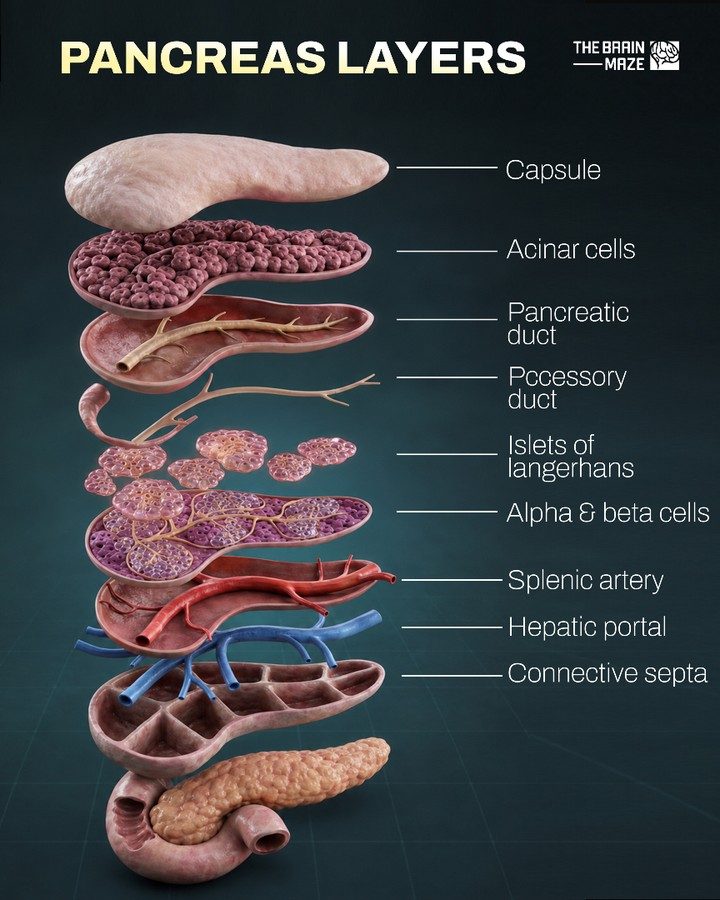
The outermost layer is the capsule, a dense connective tissue that encloses and protects the entire organ. This layer provides structural integrity and helps maintain the pancreas’s shape and position within the abdomen.
-
Just beneath the capsule lies the acinar cells, which are responsible for producing digestive enzymes essential for breaking down food. These enzymes are transported through a network of ducts to the small intestine, where they facilitate the digestion of proteins, fats, and carbohydrates.
Transporting Digestive Enzymes
The pancreatic duct and accessory duct form a crucial network for transporting the enzymes produced by the acinar cells. The main pancreatic duct runs through the length of the pancreas, collecting digestive enzymes and delivering them to the duodenum— the first part of the small intestine. The accessory duct acts as a backup, providing an alternative pathway for enzyme transport in case the main duct is obstructed.
Hormone Regulation and Blood Sugar Control
Within the pancreas, there are specialized clusters of cells known as the islets of Langerhans. These islets contain alpha and beta cells, which are vital for hormone regulation and blood sugar control. Alpha cells produce glucagon, a hormone that raises blood sugar levels by stimulating the liver to release stored glucose. Beta cells, on the other hand, produce insulin, a hormone that lowers blood sugar levels by promoting the absorption of glucose into cells.
Blood Vessels, Connective Tissue, and Structural Support
The pancreas is richly supplied with blood vessels that provide a continuous flow of oxygen and nutrients. These vessels also help remove waste products from the organ. The splenic artery and hepatic portal vein are major blood vessels within the pancreas, ensuring that the organ receives an adequate blood supply.
The pancreas is supported by a network of connective septa, which are fibrous connective tissue bands that divide the organ into smaller lobes. These septa provide structural support and help maintain the pancreas’s shape and integrity. They also play a role in directing the flow of blood and lymphatic fluids through the organ.
Practical Tips
While understanding the pancreas's anatomy is valuable, it is also important to know how to support pancreatic health through lifestyle choices.
- Maintain a Balanced Diet: Consuming a diet rich in fruits, vegetables, whole grains, and lean proteins can help support pancreatic function. Reduce intake of processed foods, sugary beverages, and unhealthy fats.
- Stay Hydrated: Drinking plenty of water helps the pancreas produce digestive enzymes and maintain overall health.
- Limit Alcohol Consumption: Excessive alcohol intake can lead to pancreatitis, a condition characterized by inflammation of the pancreas. Moderate alcohol consumption or abstaining from it can help prevent this condition.
- Maintain a Healthy Weight: Being overweight or obese can increase the risk of developing pancreatic cancer. Maintaining a healthy weight through regular exercise and a balanced diet can help reduce this risk.
Important Takeaways
The pancreas is a complex organ with multiple layers and structures that work together to support digestion and hormone regulation. The capsule, acinar cells, pancreatic ducts, islets of Langerhans, and blood vessels are all essential components that contribute to the pancreas's overall function. Each of these components plays a critical role in maintaining health and preventing disease. When these components are compromised, conditions such as diabetes, pancreatitis, and pancreatic cancer can arise.
Conclusion
Understanding the anatomical layers, cells, and structures of the pancreas is crucial for maintaining overall health and identifying potential issues early. By adopting a healthy lifestyle, including a balanced diet, regular exercise, and limiting alcohol consumption, individuals can support pancreatic function and reduce the risk of developing related conditions.
Watch the Reel
Questions readers ask
What are the primary layers of the pancreas and their roles?
The pancreas is composed of several functional layers. The outer layer is a protective capsule, which is surrounded by a layer of connective tissue. Beneath these layers, you'll find the endocrine and exocrine components, which include the acinar cells responsible for producing digestive enzymes and the islets of Langerhans, which regulate hormone secretion. The pancreatic duct system transports these enzymes to the small intestine for digestive processes.
What are acinar cells and what is their function?
Acinar cells are a type of exocrine cell found in the pancreas. Their primary function is to produce and secrete digestive enzymes, such as amylase, lipase, and trypsin. These enzymes are crucial for breaking down carbohydrates, fats, and proteins in the digestive system, enabling the body to absorb nutrients effectively.
What are the islets of Langerhans and what do they do?
The islets of Langerhans are clusters of endocrine cells scattered throughout the pancreas. They play a crucial role in regulating blood sugar levels by producing and secreting hormones like insulin and glucagon. Insulin helps cells absorb glucose from the bloodstream, while glucagon triggers the liver to release stored glucose, maintaining balanced blood sugar levels.
What is the role of the pancreatic duct in the organ’s structure?
The pancreatic duct is a vital component of the pancreas structure. It acts as a transport system, carrying digestive enzymes produced by the acinar cells from the pancreas to the small intestine. This duct system ensures that these enzymes are delivered to the digestive tract, where they can effectively break down food and aid in nutrient absorption.
What are the key blood vessels associated with the pancreas?
The pancreas receives its blood supply from several key arteries. These include the pancreatic artery, which directly supplies blood to the organ, and the splenic and accessory arteries which also play a role in providing essential nutrients and oxygen to the pancreas. Proper blood flow is crucial for the pancreas to carry out its digestive and hormonal functions effectively.
Recent articles
Fresh deep dives from the latest Reels we unpacked.




Comments
Be the first to comment.