U.S. Lithium Projects
Lithium is a critical component in the production of lithium-ion batteries, which are essential for powering electric vehicles (EVs) and other technologies. With the U.S. doubling its imports of lithium-ion batteries for the third consecutive year in 2022, the demand for lithium is on the rise. This surge in demand is largely driven by the growing EV market, making it imperative for U.S. lithium mines to ramp up production. ENERGYX is one of the companies at the forefront of this effort, exploring the size and location of U.S. lithium projects to meet the increasing demand.
Why This Matters
The U.S. relies heavily on imported lithium-ion batteries, and this dependence has significant implications for the country's energy security and economic stability. By understanding the size and location of U.S. lithium projects, stakeholders can make informed decisions about domestic production and reduce reliance on foreign suppliers. Additionally, the growing demand for EVs requires a steady supply of lithium, making it crucial to develop and expand domestic lithium mining operations. ENERGYX's mission to extract U.S. lithium using groundbreaking technology could play a pivotal role in achieving this goal.
U.S. Lithium Projects by Size
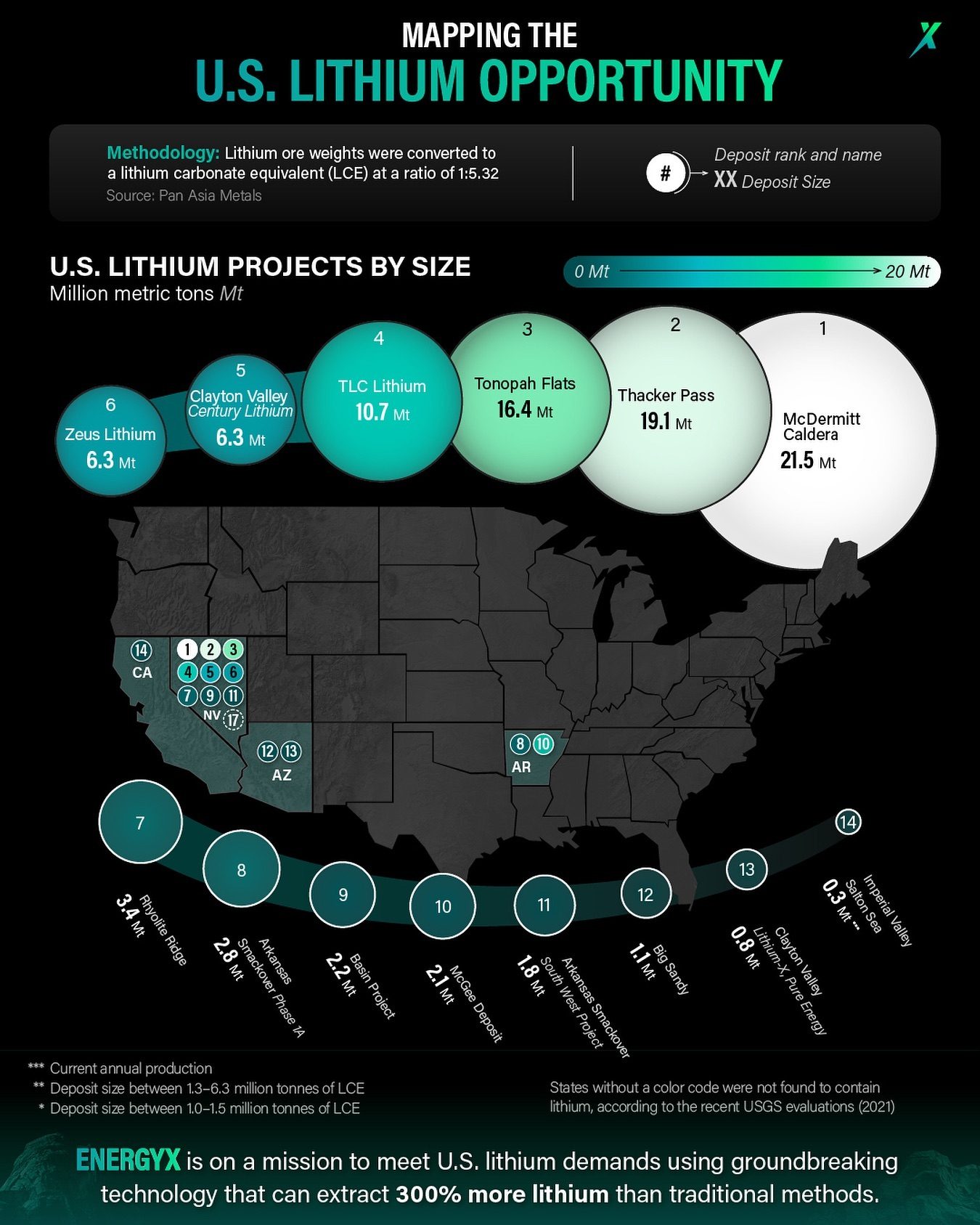
To better understand the lithium landscape in the U.S., it's essential to look at the size and location of key lithium projects. The infographic presented by ENERGYX provides valuable insights into this topic. The sizes of the projects are given in million metric tons (Mt) of lithium carbonate equivalent (LCE), which is a standard metric for measuring lithium resources.
Major Lithium Projects
-
McDermitt (21.5 Mt)
- Located in Nevada, McDermitt is one of the largest lithium projects in the U.S. This project is significant due to its size and potential to contribute substantially to the domestic lithium supply.
-
Caldera (16.4 Mt)
- Another major project in Nevada, Caldera is notable for its size and strategic location, which could facilitate efficient extraction and processing.
-
Clayton Valley (19.1 Mt)
- Also known as the Silver Peak project, Clayton Valley is one of the most well-known lithium projects in the U.S. It has been producing lithium since the 1960s and is a key player in the domestic lithium market.
-
Tonopah Flats (10.7 Mt)
- Located in Nevada, Tonopah Flats is another significant project with considerable potential. Its size and strategic location make it an important asset in the U.S. lithium landscape.
-
Thacker Pass (10.6 Mt)
- Situated in Nevada, Thacker Pass is a key lithium project with substantial reserves. The project is part of the broader effort to increase domestic lithium production.
Smaller but Important Projects
While the larger projects garner much attention, smaller projects also play a crucial role in meeting the growing demand for lithium. Some notable smaller projects include:
-
Zeus Lithium (6.3 Mt)
- Located in Nevada, Zeus Lithium is a significant project despite its smaller size compared to some of the larger ones.
-
LithiumFuze Energy (2.2 Mt and 1.8 Mt)
- LithiumFuze Energy has multiple projects, each contributing to the overall domestic lithium supply. These projects are essential for diversifying the supply chain and ensuring a steady supply of lithium.
-
Clayton Smokebox Lithium (1.1 Mt) and Bird Sentry (0.5 Mt)
- Both projects, located in Nevada, are smaller but still significant in the context of the overall U.S. lithium landscape. They contribute to the diversification of lithium sources and help meet local demand.
-
Imperial Valley (0.8 Mt and 1.8 Mt)
- Situated in California, the Imperial Valley projects are smaller in size but strategically important for their location. These projects help in diversifying the lithium supply and reducing reliance on a few major sources.
Methodology and Data Sources
The methodology used to determine the sizes of these projects involves converting lithium ore weights to a lithium carbonate equivalent (LCE) at a ratio of 1:5.32. This standard metric allows for a consistent comparison of lithium resources across different projects. The data for these projects is sourced from Pan Asia Metals, a reputable source in the industry. This ensures the accuracy and reliability of the information presented.
Importance of Lithium in the EV Market
The electric vehicle (EV) market is one of the primary drivers of lithium demand. EVs rely on lithium-ion batteries for their power, and as the EV market continues to grow, so does the need for lithium. Understanding the size and location of U.S. lithium projects is crucial for ensuring a stable and secure supply of lithium to meet this growing demand. By ramping up domestic production, the U.S. can reduce its dependence on foreign suppliers and enhance its energy security.
Practical Tips for Investors and Stakeholders
For investors and stakeholders interested in the lithium market, here are some practical tips to consider:
-
Diversify Investments
- Investing in multiple lithium projects can help mitigate risks associated with relying on a single source. This diversification can ensure a stable supply of lithium and protect against market fluctuations.
-
Stay Informed
- Keeping up-to-date with the latest developments in the lithium industry, including new projects and technological advancements, is essential. This information can help in making informed investment decisions.
-
Focus on Technology
- Companies like ENERGYX, which are developing groundbreaking technologies for lithium extraction, are worth considering. These technological advancements can significantly improve the efficiency and sustainability of lithium mining.
-
Evaluate Project Potential
- Assessing the size, location, and strategic importance of lithium projects can provide valuable insights. Projects with larger reserves and strategic locations are likely to have a greater impact on the market.
-
Engage with Industry Experts
- Collaborating with industry experts and engaging with organizations like ENERGYX can provide valuable insights and opportunities. This engagement can help in navigating the complex landscape of the lithium industry.
Important Takeaways
- The U.S. has a significant number of lithium projects, ranging from large-scale operations to smaller, strategically important ones.
- The lithium market is driven by the growing demand for EVs, making it crucial to ramp up domestic production.
- Companies like ENERGYX are at the forefront of developing groundbreaking technologies for lithium extraction.
- Diversifying investments, staying informed, and focusing on technology are key strategies for stakeholders in the lithium industry.
Conclusion
The U.S. lithium landscape is diverse and dynamic, with a range of projects contributing to the domestic supply. Understanding the size and location of these projects is essential for meeting the growing demand for lithium in the EV market. Companies like ENERGYX are playing a crucial role in this effort, developing innovative technologies to enhance lithium extraction. By staying informed and strategically investing in the lithium market, stakeholders can contribute to the growth and stability of the industry.
Watch the Reel
Questions readers ask
What role do U.S. lithium projects play in the electric vehicle industry?
U.S. lithium projects are crucial for the electric vehicle industry as they supply the lithium needed for lithium-ion batteries, which power EVs. With the increasing demand for EVs, domestic lithium production helps ensure a stable and secure supply of this essential mineral.
Why is domestic lithium production important for the U.S.?
Domestic lithium production is vital for the U.S. for several reasons. It reduces reliance on imported lithium-ion batteries, enhances energy security, and contributes to economic stability. By increasing domestic production, the U.S. can better meet the growing demand for lithium in various technologies, including EVs and energy storage systems.
What are some of the notable lithium projects in the USA?
There are several notable lithium projects in the USA, with one prominent example being the Clayton Valley lithium project. This project is significant due to its potential to provide a substantial amount of lithium, which is crucial for meeting the increasing demand for lithium-ion batteries in the U.S. and North America.
What methods are used for lithium mining in the U.S.?
Lithium mining methods in the U.S. vary depending on the type of deposit. Common methods include hard rock mining, which involves extracting lithium from minerals like spodumene, and brine extraction, where lithium is extracted from brine pools found in salt flats. Each method has its own set of environmental and economic considerations.
How does lithium mining in North America compare to other regions?
Lithium mining in North America is distinct due to its regulatory environment, technological advancements, and the specific types of lithium deposits found in the region. While other regions like South America and Australia have a long history of lithium production, North America benefits from robust infrastructure and a focus on sustainable practices to meet the growing demand for lithium-ion batteries.
What minerals are essential for electric vehicle batteries besides lithium?
Besides lithium, several other minerals are crucial for electric vehicle batteries. These include cobalt, nickel, and manganese, which are used in the cathode of lithium-ion batteries. Additionally, graphite is used in the anode. Ensuring a stable supply of these minerals is essential for the continued growth of the EV market.
How can U.S. lithium mining contribute to energy security?
U.S. lithium mining can significantly enhance energy security by reducing dependence on foreign supplies of lithium and lithium-ion batteries. By increasing domestic production, the U.S. can ensure a reliable and secure supply chain, which is essential for powering EVs and other critical technologies, as well as for energy storage solutions.
Related deep dives
Similar reads based on topic and creator.


Recent articles
Fresh deep dives from the latest Reels we unpacked.




Comments
Be the first to comment.