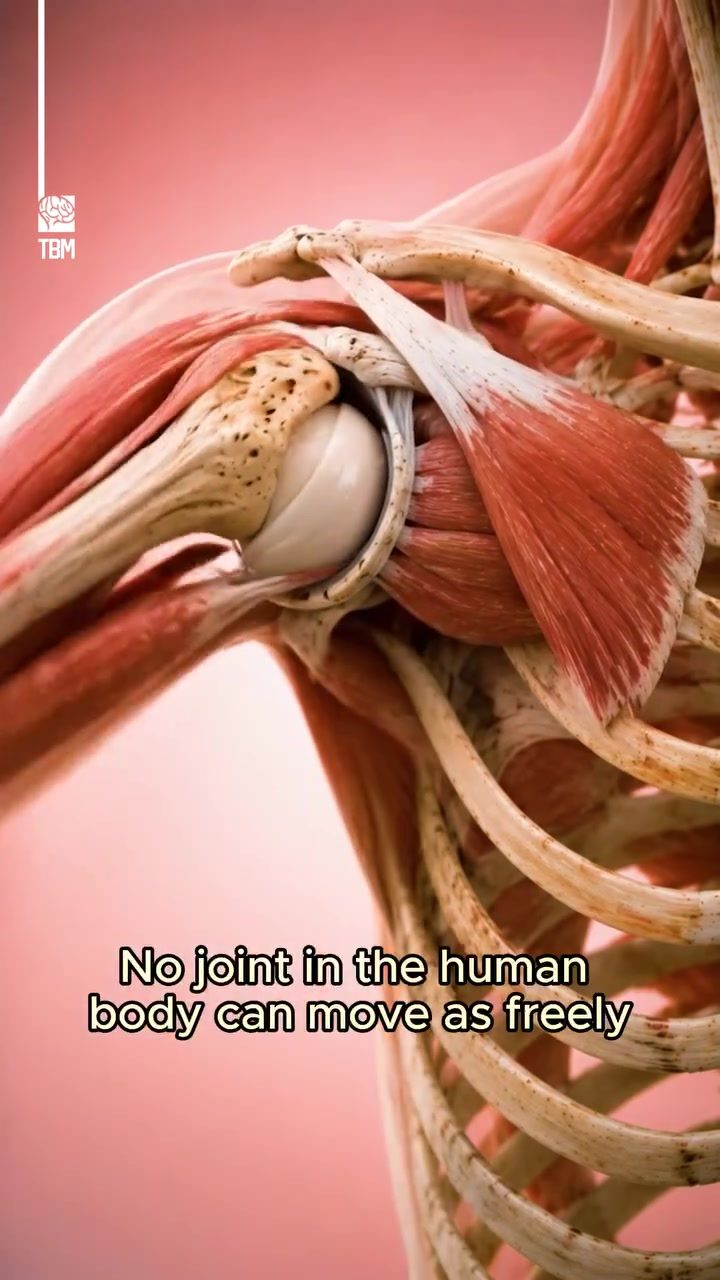
Human Shoulder Anatomy
The shoulder is the most mobile joint in the human body. It allows for a wide range of movements, including lifting, rotating, pushing, and reaching. This extraordinary flexibility is due to its unique ball-and-socket structure, where the rounded head of the upper arm bone fits into a shallow socket in the shoulder blade. Unlike the hip joint, which prioritizes stability, the shoulder sacrifices some stability for an impressive range of motion.
Why this Matters
Understanding the shoulder's anatomy and mechanics is crucial for appreciating its role in daily activities and sports. From throwing a ball to lifting a bag, the shoulder's mobility is essential. Its complex network of muscles, tendons, and ligaments work together constantly to stabilize and control motion, making it a highly intricate and versatile biomechanical system.
Main Discussion
The Ball-and-Socket Design
The shoulder's ball-and-socket design is key to its flexibility. The head of the humerus (upper arm bone) fits into a shallow socket called the glenoid cavity in the scapula (shoulder blade). This design allows for a wide range of motion but also makes the shoulder more susceptible to injury compared to other joints, such as the hip.
The Rotator Cuff
One of the most important components of the shoulder is the rotator cuff. This group of four muscles—supraspinatus, infraspinatus, teres minor, and subscapularis—stabilizes the joint and guides precise movements. The rotator cuff muscles work together to keep the head of the humerus firmly within the glenoid cavity, ensuring smooth and controlled motion.
Supporting Structures
In addition to the rotator cuff, various muscles, tendons, and ligaments support the shoulder joint. These structures include:
- Biceps Muscle and Tendon: Helps in flexing the elbow and stabilizing the shoulder.
- Deltoid Muscle: Provides the power for lifting the arm.
- Ligaments: Connect bones to bones, providing stability to the joint. Key ligaments in the shoulder include the coracohumeral ligament, coracoacromial ligament, and glenohumeral ligament.
The Complexity of Shoulder Mechanics
The shoulder's mechanical system is one of the most sophisticated in the human body. Every time you perform an action involving the shoulder, dozens of structures coordinate seamlessly. This intricate interplay of bones, muscles, and tendons allows for precise and controlled movements, whether you are throwing a ball, lifting a heavy object, or reaching for something above your head.
Practical Tips
Strengthening the Rotator Cuff
To maintain shoulder health and prevent injuries, it's essential to strengthen the rotator cuff muscles. Some effective exercises include:
- External Rotation: Using a resistance band, stand with your elbow bent at a 90-degree angle and rotate your forearm outward against the band's resistance.
- Internal Rotation: Standing with a resistance band, bend your elbow at a 90-degree angle and rotate your forearm inward, working against the band’s resistance.
- Scapular Retraction: Using a resistance band, stand with your arms extended and pull the band apart, focusing on squeezing your shoulder blades together.
Maintaining Shoulder Mobility
Regular stretching and mobility exercises can help maintain the shoulder's range of motion. Some recommended exercises include:
- Doorway Stretch: Stand in a doorway, place your forearms on the doorframe at shoulder height, and lean forward gently to stretch the chest and shoulders.
- Cross-Body Stretch: Use one arm to pull the other arm across your chest, holding the stretch for 20-30 seconds.
- Pendulum Stretch: Bend over slightly and let your arm hang down. Gently swing your arm in small circles, gradually increasing the size of the circles.
Important Takeaways
The shoulder's unique ball-and-socket design allows for an extraordinary range of motion, making it essential for various daily activities and sports. The rotator cuff and other supporting structures work together to stabilize and control shoulder movements. Regular exercise and stretching can help maintain shoulder health and prevent injuries.
- The rotator cuff consists of four muscles that stabilize the shoulder joint.
- Regular strengthening and mobility exercises are crucial for maintaining shoulder health.
- The shoulder's ball-and-socket design allows for a wide range of motion but also makes it more susceptible to injury.
Conclusion
The shoulder is a remarkable biomechanical system that enables a wide range of movements. Its intricate design, involving bones, muscles, tendons, and ligaments, works together to provide stability and control. By understanding the shoulder's anatomy and mechanics, and by incorporating regular exercises and stretches, you can maintain shoulder health and prevent injuries.
Watch the Reel
Questions readers ask
What are the main components of the shoulder joint?
The main components of the shoulder joint include the humerus (upper arm bone), the scapula (shoulder blade), and the clavicle (collarbone). Additionally, the joint is supported by a network of ligaments, tendons, and muscles, with the rotator cuff being particularly important for stability and movement.
Why is the shoulder joint more prone to injury than other joints?
The shoulder joint's design prioritizes mobility over stability, making it more susceptible to injuries. Its shallow socket allows for a wide range of motion but also means the arm bone can dislocate more easily. The rotator cuff and other stabilizing muscles have to work hard to keep the shoulder in place, but they can be strained or torn.
What is the role of the rotator cuff in the shoulder joint?
The rotator cuff is a group of four muscles and their tendons that stabilize and control the shoulder joint. It plays a crucial role in allowing the arm to rotate and lift, as well as in keeping the head of the humerus securely in the shoulder socket during movement.
How can I prevent shoulder injuries during physical activities?
To prevent shoulder injuries, it's important to warm up before exercising and cool down afterward. Strengthening the muscles around the shoulder, particularly the rotator cuff, can enhance stability. Maintain proper posture during exercises and avoid pushing through pain.
What are some common exercises for improving shoulder joint mobility and stability?
Exercises that target shoulder mobility and stability include external and internal rotation movements with resistance bands, shoulder blade squeezes, and planks. Exercises like push-ups, rows, and overhead presses can also help build strength in the shoulder muscle groups and improve overall joint health.
How does the ball-and-socket design of the shoulder joint affect its function?
The ball-and-socket design of the shoulder joint allows for a wide range of motion, including flexion, extension, abduction, adduction, and rotation. This design enables the arm to move in various directions, making the shoulder joint the most mobile in the body. However, this flexibility comes at the cost of reduced stability.
Recent articles
Fresh deep dives from the latest Reels we unpacked.




Comments
Be the first to comment.