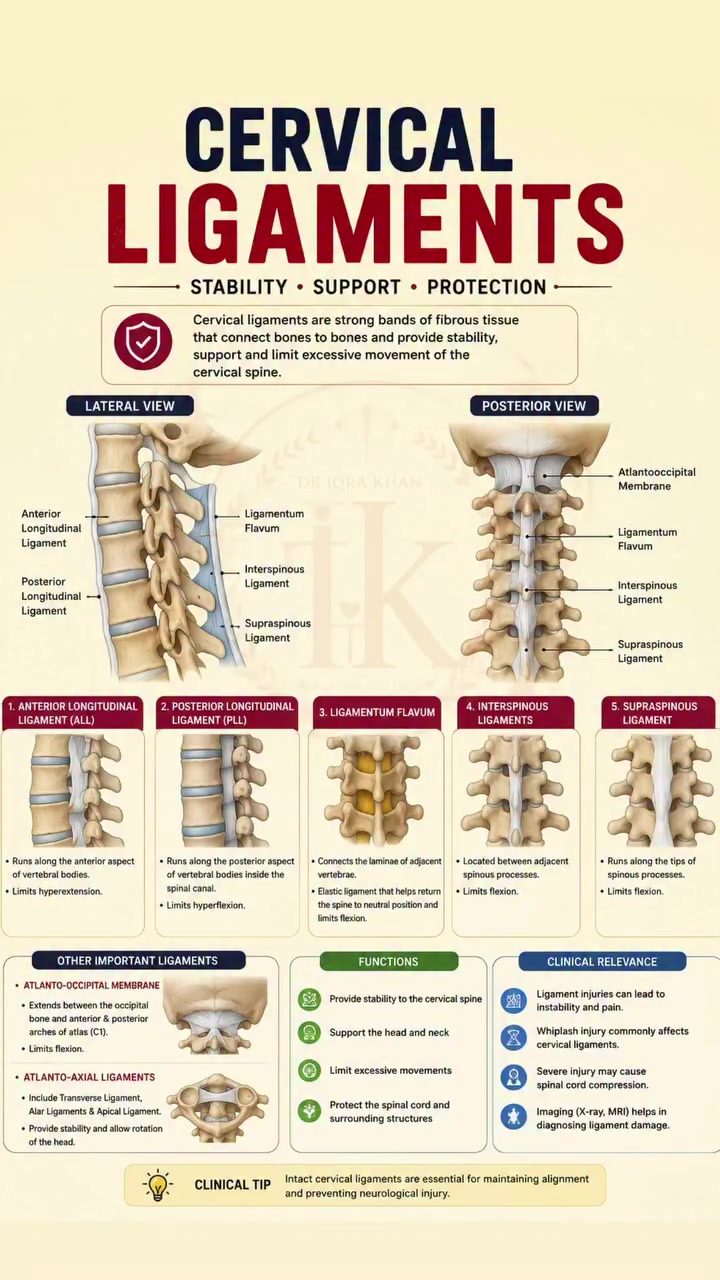
Cervical Ligaments
Cervical ligaments are crucial for the stability, support, and protection of the neck. They connect the bones of the cervical spine, limit excessive movement, and safeguard the spinal cord during daily activities. Understanding the anatomy and functions of these ligaments is vital for anyone looking to prevent injuries, improve posture, or manage neck pain effectively.
Why This Matters
The health of cervical ligaments directly impacts neck stability, posture, and overall spinal health. Injuries to these ligaments, often resulting from incidents like whiplash, can lead to significant problems such as neck pain, stiffness, instability, and even neurological symptoms. Recognizing the role of these ligaments and how to care for them can make a substantial difference in recovery and overall well-being.
Main Discussion
Anatomy of Cervical Ligaments
Cervical ligaments are divided into several key categories, each playing a unique role in maintaining the integrity of the neck. Here are the primary ligaments and their functions:
-
Anterior Longitudinal Ligament (ALL): This ligament runs along the anterior aspect of the vertebral bodies. It helps to stabilize the spine and prevent excessive flexion (forward bending).
-
Posterior Longitudinal Ligament (PLL): Located on the posterior aspect of the spinal canal, the PLL limits extension (backward bending) and provides additional stability to the spine.
-
Ligamentum Flavum (LF): Connecting the laminae of adjacent vertebrae, the LF helps to maintain the curvature of the spine and assists in flexion and extension movements.
-
Interspinous Ligament (ISL): Situated between the spinous processes of adjacent vertebrae, the ISL limits rotation and flexion, adding to the overall stability of the spine.
-
Supraspinous Ligament (SSL): Running along the tips of the spinous processes, the SSL provides stability during flexion and rotation, playing a key role in maintaining spinal alignment.
Clinical Relevance
Cervical ligaments are essential for maintaining the structural integrity of the neck. Intact ligaments prevent excessive movement, which can lead to misalignment and potential neurological harm. Early diagnosis and appropriate physiotherapy interventions are critical for managing ligament injuries and promoting recovery. Understanding the anatomy of these ligaments can help in recognizing the signs of injury and seeking timely intervention.
Practical Tips
Preventing Injuries
-
Maintain Good Posture: Proper posture helps to distribute the weight evenly across the spine, reducing the strain on cervical ligaments. Regularly practice correct sitting, standing, and lifting techniques to minimize stress on the neck.
-
Regular Exercise: Engage in exercises that strengthen the neck and shoulder muscles. Strong muscles provide better support for the cervical ligaments, reducing the risk of injury.
-
Avoid Sudden Movements: Be cautious with rapid, jerky movements, especially during activities that involve the neck, such as driving or sports. Gradually turn your head and avoid abrupt changes in direction.
Managing Neck Pain
-
Physiotherapy: If you experience neck pain, consider consulting a physiotherapist. They can provide targeted exercises and treatments to improve neck strength, flexibility, and stability.
-
Heat and Cold Therapy: Apply heat or cold packs to the affected area to reduce pain and inflammation. Heat can relax muscles and improve blood flow, while cold can numb the area and reduce swelling.
-
Gentle Stretching: Perform gentle neck stretches to alleviate tension and improve mobility. Be sure to stretch both sides of the neck to maintain balance and prevent further injury.
Important Takeaways
- Cervical ligaments are essential for maintaining neck stability and protecting the spinal cord.
- Injuries to these ligaments can lead to significant issues, including neck pain, stiffness, and neurological symptoms.
- Understanding the anatomy of cervical ligaments can aid in early diagnosis and effective treatment.
- Preventive measures, such as maintaining good posture and engaging in regular exercise, can help reduce the risk of ligament injuries.
- Early intervention and physiotherapy play a crucial role in managing neck pain and promoting recovery.
Conclusion
Cervical ligaments are the unsung heroes of neck stability and spinal health. By providing essential support and protection, they help to prevent injuries and maintain proper alignment. Whether you are a medical student, physiotherapist, or someone suffering from neck pain, understanding the anatomy and functions of these ligaments can make a significant difference in your approach to neck health. Take proactive steps to care for your cervical ligaments and enjoy the benefits of a healthy, pain-free neck.
Watch the Reel
Questions readers ask
What are the primary functions of cervical ligaments?
Cervical ligaments play a crucial role in maintaining neck stability and support. They connect the bones of the cervical spine, restrict excessive movement, and protect the spinal cord during daily activities and sudden impacts.
Which specific ligaments are important in the cervical spine?
Key ligaments in the cervical spine include the anterior and posterior longitudinal ligaments, ligamentum flavum, interspinous ligament, and supraspinous ligament. Each of these ligaments has a unique role in maintaining spinal alignment and limiting movement.
How do cervical ligament injuries commonly occur?
Injuries to cervical ligaments often result from sudden, forceful movements, such as those experienced in whiplash incidents. These injuries can lead to neck pain, stiffness, and even neurological symptoms if the spinal cord is affected.
What are some effective methods for managing neck pain related to cervical ligaments?
Managing neck pain related to cervical ligaments often involves a combination of physiotherapy, gentle exercises to improve posture, and pain management techniques. Consulting with a healthcare professional can provide a tailored approach to relief and recovery.
Can understanding cervical ligaments help in preventing neck injuries?
Yes, understanding the anatomy and functions of cervical ligaments can help individuals take preventive measures. This includes maintaining good posture, performing regular neck exercises, and being cautious during activities that could lead to impact or strain on the neck.
What is the role of the ligamentum flavum in the cervical spine?
The ligamentum flavum is a yellowish elastic ligament that connects the laminae of adjacent vertebrae. Its primary role is to provide stability and to prevent excessive flexion of the cervical spine. It also contributes to the maintenance of the spinal canal's integrity.
How does the anterior longitudinal ligament contribute to neck stability and preventing injury?
The anterior longitudinal ligament is located at the front of the vertebral bodies and intervertebral discs. It helps to limit extension of the cervical spine, thereby preventing hyperextension injuries and maintaining overall neck stability.
Recent articles
Fresh deep dives from the latest Reels we unpacked.




Comments
Be the first to comment.