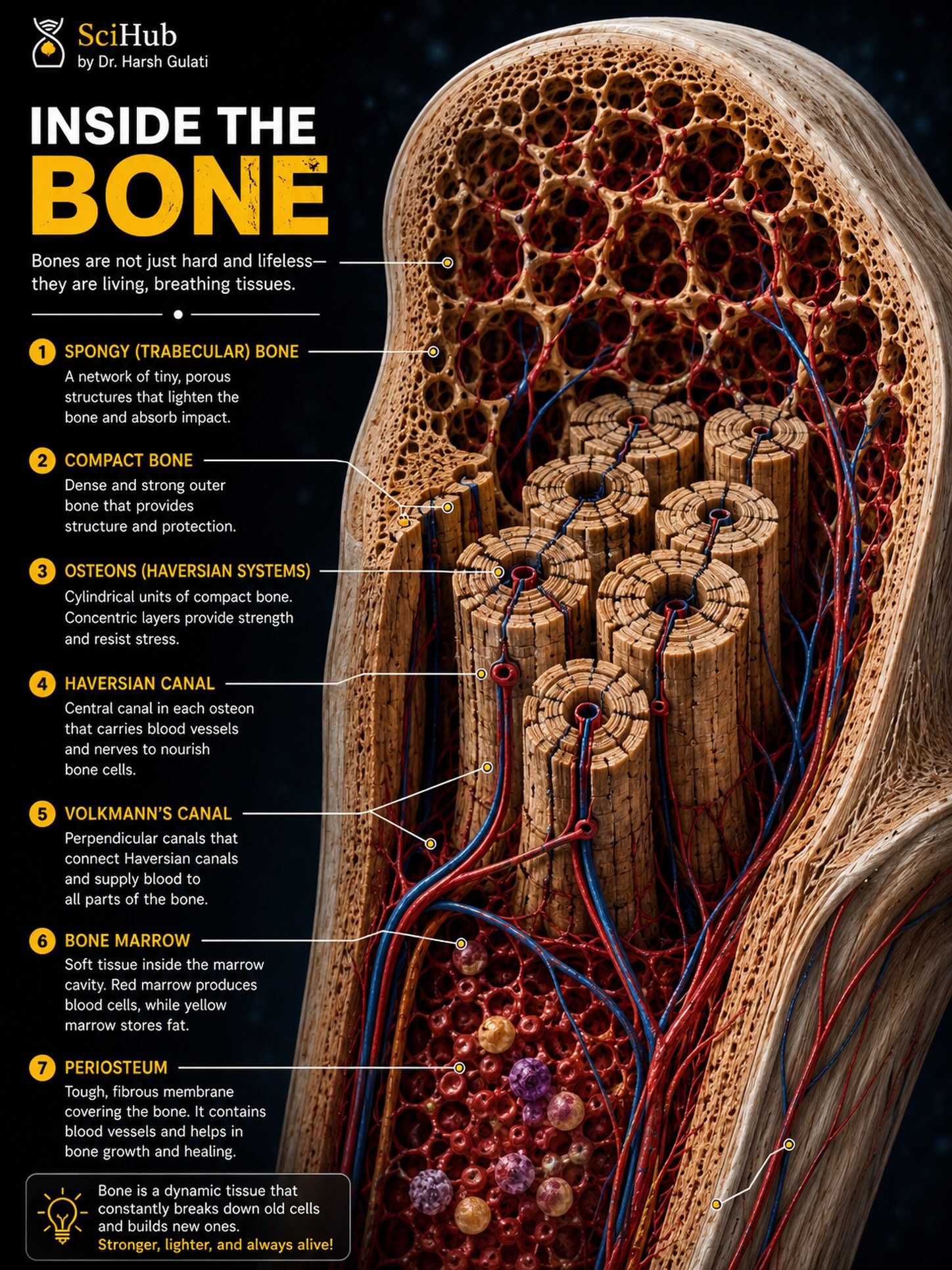
Inside the Bone: A Hidden World You Never See
Bones are often perceived as rigid, lifeless structures, but the reality is far more fascinating. Beneath the hard, solid exterior lies a dynamic network of living tissues, each with a crucial role in maintaining the body's structural integrity and overall health. Let's delve into the intricate world of bones, exploring their structure and the vital functions they perform.
Why This Matters
Understanding the internal structure of bones is essential for appreciating the complex processes that keep our bodies functioning. Whether you're a medical professional, a fitness enthusiast, or simply curious about the human body, knowing the components of bones can provide valuable insights into health and wellness.
The Structure of Bones
Bones are composed of several key components, each contributing to their strength, flexibility, and regenerative capabilities.
Compact Bone
Compact bone, also known as cortical bone, is the dense, outer layer that provides structural support and protection. Its concentric layers resist stress and contribute to the bone's overall strength. This type of bone is found in the shafts of long bones, such as the femur and humerus, and in the outer layers of other bones.
Spongy Bone
Inside the compact bone lies the spongy bone, or trabecular bone. This porous tissue forms a lightweight framework that absorbs impact and reduces the overall weight of the bone. Spongy bone is essential for Reducing shock and providing a surface for bone marrow. It is found in the ends of long bones and in the center of flat and irregular bones, like the vertebrae and pelvic bones.
Osteons
Osteons, also known as Haversian systems, are tiny cylindrical structures within the compact bone. Each osteon contains a central Haversian canal, which carries blood vessels and nerves to nourish the bone cells. This intricate network ensures that the bone tissue remains healthy and functional.
Haversian and Volkmann's Canals
Haversian canals run longitudinally through the osteons, providing a pathway for blood vessels and nerves. Volkmann's canals, on the other hand, connect the Haversian canals to the outer surface of the bone, ensuring that all parts of the bone receive adequate blood supply. This interconnected network of canals is crucial for maintaining the bone's vitality and ability to repair itself.
Bone Marrow
Deep within the bones lies the bone marrow, a soft, spongy tissue that produces red blood cells, white blood cells, and platelets. Every second, millions of new blood cells are generated, contributing to the body's immune system, blood clotting, and oxygen transport. Bone marrow also stores fat, providing a reserve of energy for the body.
The Periosteum
Covering the outer surface of the bone is the periosteum, a tough, fibrous membrane that supplies nutrients and plays a vital role in bone growth and healing. The periosteum contains blood vessels and nerves that nourish the bone and aid in its repair and regeneration. It also serves as an attachment site for muscles, tendons, and ligaments.
Bone Remodeling
One of the most remarkable aspects of bones is their ability to constantly remodel themselves. Throughout life, old bone tissue is broken down by osteoclasts and replaced by new bone tissue formed by osteoblasts. This process, known as bone remodeling, helps maintain the bone's strength and repair any microscopic damage. It ensures that the skeleton remains robust and functional, adapting to the body's changing needs.
Practical Tips for Bone Health
Maintaining strong, healthy bones is essential for overall well-being. Here are some practical tips to support bone health:
Nutrition
A balanced diet rich in calcium, vitamin D, and other essential nutrients is crucial for bone health. Foods like dairy products, leafy greens, and fortified cereals can provide the necessary nutrients for strong bones.
Exercise
Regular physical activity, particularly weight-bearing exercises, helps strengthen bones and muscles. Activities like walking, running, and weightlifting can improve bone density and reduce the risk of fractures.
Lifestyle
Avoiding smoking and limiting alcohol consumption can also benefit bone health. Regular check-ups and screenings, such as bone density tests, can help detect any issues early and ensure timely intervention.
Important Takeaways
Bones are dynamic, living tissues that play a vital role in the body's overall health. The intricate structure of bones, with their various layers and components, ensures that they are strong, flexible, and capable of regeneration. Understanding the anatomy and function of bones can provide valuable insights into maintaining bone health and preventing diseases like osteoporosis.
Conclusion
The hidden world inside our bones is a fascinating landscape of living tissues, each with a crucial role in maintaining our health. From the dense, protective compact bone to the porous, impact-absorbing spongy bone, and the intricate network of osteons and canals, every component contributes to the bone's strength and vitality. By understanding the internal structure of bones, we can better appreciate the complex processes that keep our bodies functioning and take steps to maintain optimal bone health.
Watch the Reel
Questions readers ask
What are the main types of bone tissue found in the human body?
The primary types of bone tissue are compact bone and spongy bone. Compact bone is dense and provides strength and support, while spongy bone is porous and lightweight, offering a good balance between weight and flexibility. These tissues work together to maintain the body's structural integrity.
What is the role of osteons in bone structure?
Osteons, also known as Haversian systems, are the basic functional units of compact bone. They consist of concentric layers of bone tissue, blood vessels, and nerve fibers. Osteons contribute to the bone's strength and its ability to regenerate by facilitating the movement of nutrients and waste products.
How does the periosteum contribute to bone health?
The periosteum is a dense, fibrous membrane that covers the outer surface of bones. It plays a crucial role in bone health by providing a pathway for blood vessels and nerves, which are essential for bone growth, regeneration, and healing. It also acts as an attachment site for muscles and tendons.
What is bone marrow and where is it located?
Bone marrow is a spongy tissue found in the inner cavities of bones. It is divided into red and yellow marrow. Red marrow produces blood cells, while yellow marrow stores fat. This tissue is vital for the body's immune system and overall health, making it an essential component of bone structure.
Why is understanding bone layers important for health?
Understanding the layers of bones provides insights into their strength, flexibility, and regenerative capabilities. This knowledge is crucial for diagnosing and treating bone-related conditions, as well as for maintaining overall bone health. It can also help in developing targeted treatments and therapies for bone injuries, diseases, and disorders.
Related deep dives
Similar reads based on topic and creator.



Recent articles
Fresh deep dives from the latest Reels we unpacked.




Comments
Be the first to comment.