Human Ear Anatomy
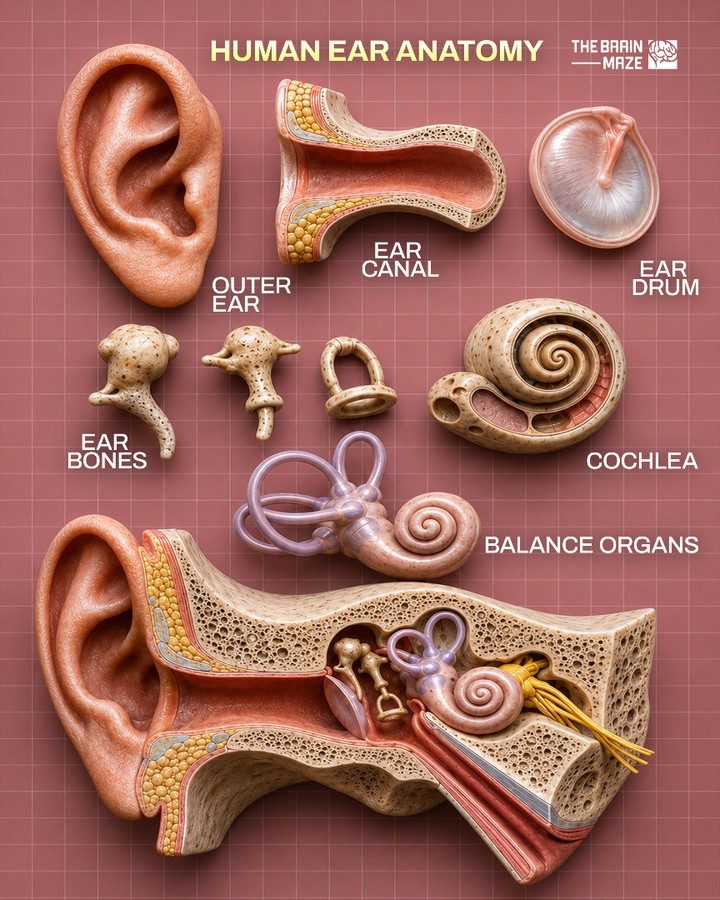
The human ear is an intricate sensory organ with a dual role: converting sound waves into electrical signals that the brain interprets as hearing and maintaining balance. This complex organ consists of three main parts: the outer ear, the middle ear, and the inner ear, each with its own vital components.
Why This Matters
Understanding the structure and function of the human ear is crucial for appreciating how we perceive sound and maintain balance. This knowledge is essential for healthcare professionals, audiologists, and anyone interested in the intricacies of the human body. By delving into the anatomy of the ear, we gain insights into common hearing and balance issues, their causes, and potential treatments.
Main Discussion
The Outer Ear
The outer ear, also known as the auricle, is the visible part of the ear. Its primary function is to collect sound waves and direct them into the ear canal. The ear canal, or external auditory meatus, is a tube-like structure that leads to the eardrum. This canal is lined with tiny hairs and wax-producing glands that help protect the ear from debris and infection. The outer ear, along with the ear canal, plays a crucial role in filtering and amplifying sound waves before they reach the middle ear.
The Middle Ear
The middle ear is an air-filled cavity behind the eardrum. This section consists of three small bones: the malleus (hammer), incus (anvil), and stapes (stirrup), collectively known as the ossicles. These bones transmit vibrations from the eardrum to the inner ear. The Eustachian tube, which connects the middle ear to the back of the throat, helps equalize pressure in the middle ear, ensuring optimal hearing function.
The Inner Ear
The inner ear is the most complex part of the ear, responsible for both hearing and balance. It consists of the cochlea and the vestibular system. The cochlea is a spiral-shaped structure filled with fluid and tiny hair cells. These hair cells convert mechanical vibrations from the middle ear into electrical signals that the brain interprets as sound. The vestibular system, which includes the semicircular canals and the otolith organs (utricle and saccule), plays a critical role in maintaining balance by detecting head movements and positions.
The Eustachian Tube
The Eustachian tube, connecting the middle ear to the nasopharynx, is crucial for equalizing pressure within the ear. It opens and closes to regulate air pressure, ensuring that the eardrum functions properly. This tube also helps drain fluid from the middle ear, preventing infections and maintaining overall ear health. Issues with the Eustachian tube, such as blockages or dysfunction, can lead to hearing problems and discomfort.
The Hearing Nerve
The hearing nerve, or auditory nerve, transmits electrical signals from the inner ear to the brain. This nerve is part of the vestibulocochlear nerve, which also plays a role in balance. Once the brain receives these signals, it interprets them as sound, allowing us to perceive and understand the auditory environment.
Practical Tips
For optimal ear health, consider the following practical tips:
- Regular Check-Ups: Schedule regular check-ups with an audiologist or healthcare provider to monitor your hearing health.
- Protect Your Ears: Use earplugs during loud events or when exposed to high noise levels to prevent hearing damage.
- Avoid Cotton Swabs: Using cotton swabs can push earwax further into the ear canal, leading to impaction and potential damage.
- Check Your Ears: Regularly check for signs of infection, such as pain, discomfort, or discharge. Consult a healthcare provider if you experience any of these symptoms.
- Maintain a Healthy Lifestyle: A balanced diet, regular exercise, and adequate sleep contribute to overall ear health. Avoid smoking and excessive alcohol consumption, as they can negatively impact hearing and balance.
Important Takeaways
- The human ear is a complex organ with three main parts: the outer ear, the middle ear, and the inner ear.
- Each section of the ear plays a crucial role in converting sound waves into electrical signals and maintaining balance.
- Key components, such as the ear canal, eardrum, ossicles, cochlea, and vestibular system, work together to ensure optimal hearing and balance.
- Regular check-ups, protecting your ears from loud noises, and maintaining a healthy lifestyle are essential for ear health.
Conclusion
The human ear is a remarkable sensory organ that facilitates both hearing and balance. By understanding its intricate structure and function, we can better appreciate the mechanisms behind these vital processes. This knowledge is invaluable for healthcare professionals, audiologists, and anyone interested in the intricacies of the human body. Maintaining ear health through regular check-ups, protection from loud noises, and a healthy lifestyle ensures that this vital organ continues to function optimally.
Watch the Reel
Questions readers ask
What are the primary functions of the outer ear?
The outer ear serves two main purposes: capturing sound waves from the environment and directing them into the ear canal. It also helps in localizing the source of sounds, enabling us to determine where a sound is coming from.
Which bones are involved in the middle ear and what is their role?
The middle ear contains three tiny bones called the malleus, incus, and stapes, collectively known as the ossicles. These bones vibrate in response to sound waves, amplifying and transmitting the vibrations to the inner ear, facilitating hearing.
How does the inner ear convert sound waves into signals the brain understands?
The inner ear, specifically the cochlea, is filled with fluid and lined with tiny hair cells. When sound waves reach the cochlea, the fluid moves, bending the hair cells and triggering electrical signals. These signals then travel along the auditory nerve to the brain, which interprets them as sound.
What role does the ear play in maintaining balance?
The inner ear also houses the vestibular system, which includes structures like the semicircular canals and otolith organs. These components detect changes in head position and movement, sending signals to the brain to help maintain balance and equilibrium.
What is the function of the eardrum in the hearing process?
The eardrum, or tympanic membrane, is a thin tissue that separates the outer and middle ear. It vibrates in response to sound waves, initiating the mechanical process that ultimately converts sound waves into electrical signals that the brain can interpret.
How do sound waves travel through the ear to be processed by the brain?
Sound waves enter the outer ear and travel down the ear canal, causing the eardrum to vibrate. These vibrations are then transmitted through the middle ear bones to the inner ear. There, they are converted into electrical signals by the cochlea, which are sent to the brain via the auditory nerve for interpretation as sound.
What happens if there is a blockage in the ear canal?
A blockage in the ear canal, such as earwax buildup, can obstruct sound waves from reaching the eardrum. This may result in muffled hearing, discomfort, or even temporary hearing loss. It is important to address such blockages carefully to avoid damage to the ear.
Related deep dives
Similar reads based on topic and creator.



Recent articles
Fresh deep dives from the latest Reels we unpacked.




Comments
Be the first to comment.