U.S. Wildfires and Their Financial Costs
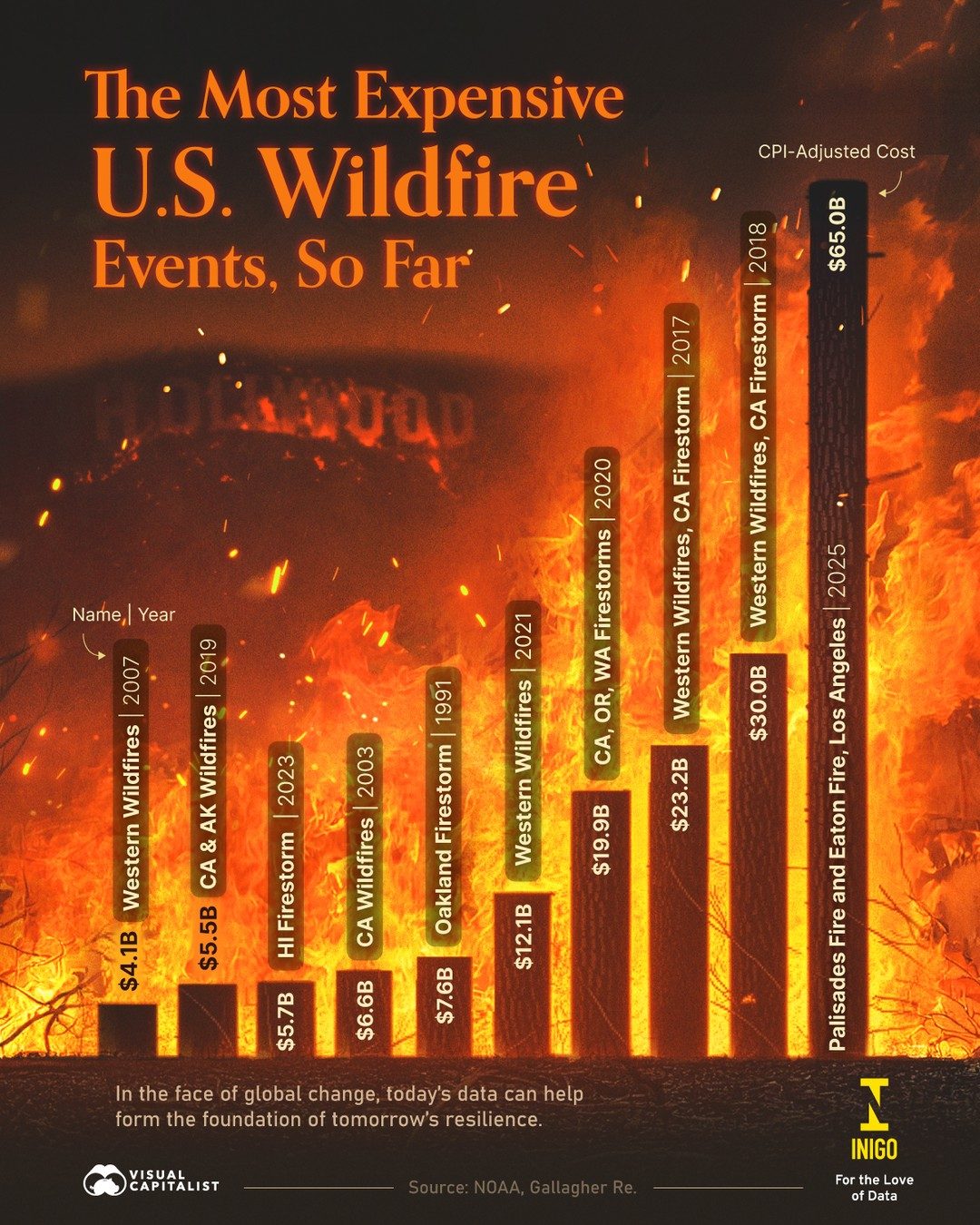
U.S. wildfires have historically caused significant economic damage, with costs rising dramatically over the decades. The Pacific Palisades and Eaton Fires stand out as the costliest wildfires in U.S. history, with a combined damage of $65 billion. These and other major wildfires have had a profound financial impact, not only on the regions immediately affected but also on the national economy as a whole.
The Rising Costs of U.S. Wildfires
The financial burden of wildfires has been steadily increasing, driven by various factors such as climate change, urban expansion, and the increasing frequency and intensity of wildfires. The data shows a clear upward trend in the costs associated with these events.
Key Historical Wildfires and Their Costs
- Oakland Firestorm (1991): One of the earlier notable wildfires, this event caused significant damage but pales in comparison to more recent fires.
- CA & AK Wildfires (2007): In 2007, California and Alaska both experienced severe wildfires, contributing significantly to the annual wildfire costs.
- Western Wildfires, CA Firestorm (2019): This event was particularly costly, highlighting the increasing trend in wildfire expenses.
- Western Wildfires (2017, 2020): Both years saw extensive wildfires in the Western United States, with 2020 being especially devastating. The Western Wildfires, CA Firestorm (2020), cost approximately $30 billion.
- WA Firestorms (2021): The Washington state wildfires in 2021 cost $19.9 billion, underscoring the widespread impact of wildfires across different regions.
The Pacific Palisades and Eaton Fires
The Pacific Palisades and Eaton Fires in 2023 stand as the single most expensive wildfire events in U.S. history, with a combined cost of $65.0 billion. These fires highlight the escalating costs associated with wildfires and the need for better preparedness and mitigation strategies.
Projected Future Costs
The trend of increasing wildfire costs is expected to continue. Projections for 2025 indicate that the financial impact of wildfires will remain high, emphasizing the need for proactive measures to mitigate these costs.
Why This Matters
The increasing costs of wildfires have far-reaching implications. These costs are not just financial; they also include the loss of lives, displacement of communities, and environmental degradation. The economic impact of wildfires affects various sectors, including insurance, construction, and tourism. Mitigating these costs requires a multi-faceted approach that includes better fire prevention, improved response strategies, and investment in resilience.
Preparedness and Mitigation Efforts
Preparing for and mitigating the impact of wildfires is crucial for reducing their financial burden. Several strategies can be employed to achieve this goal.
Fire Prevention
Effective fire prevention measures can significantly reduce the risk of wildfires. This includes public awareness campaigns, strict regulations on fire use in forested areas, and the implementation of controlled burns to reduce the buildup of combustible materials.
Improved Response Strategies
Early detection and rapid response are key to minimizing the damage caused by wildfires. Advanced technologies such as satellite imagery, drones, and real-time monitoring systems can help in detecting wildfires early. Improved coordination between firefighting agencies and the use of modern firefighting equipment can also enhance response efforts.
Investment in Resilience
Building resilience involves investing in infrastructure that can withstand wildfires and implementing land management practices that reduce wildfire risk. This includes constructing fire-resistant buildings, creating firebreaks, and managing forests to reduce the risk of wildfires.
Important Takeaways
- The cost of U.S. wildfires has been increasing steadily, driven by various factors.
- Historical data shows a clear trend of rising wildfire costs, with recent events being particularly costly.
- The Pacific Palisades and Eaton Fires in 2023 are the costliest wildfires in U.S. history, highlighting the escalating financial impact.
- Future projections indicate that wildfire costs will remain high, emphasizing the need for proactive measures.
- Effective fire prevention, improved response strategies, and investment in resilience are crucial for mitigating the financial impact of wildfires.
Conclusion
The financial costs of U.S. wildfires are a growing concern, with recent events like the Pacific Palisades and Eaton Fires highlighting the increasing economic burden. Understanding the historical context, current trends, and future projections is essential for developing effective strategies to mitigate these costs. By focusing on fire prevention, improved response strategies, and investment in resilience, it is possible to reduce the financial impact of wildfires and build a more resilient future.
Watch the Reel
Questions readers ask
Which were the most expensive wildfires in U.S. history?
The Pacific Palisades and Eaton Fires of 2023 are the costliest wildfires in U.S. history, with a combined damage of $65 billion. These fires set a new benchmark for wildfire expenditures in the United States.
What factors contribute to the increasing costs of U.S. wildfires?
Several factors contribute to the rising costs of wildfires, including climate change, which intensifies fire conditions, and urban expansion, which increases the value of properties at risk. Additionally, the frequency and intensity of these wildfires have been increasing.
How do wildfires impact local communities and the national economy?
Wildfires have a profound financial impact on both local communities and the broader national economy due to direct damages to infrastructure and property, as well as indirect and long-lasting economic effects.
What is the trend in the costs associated with wildfires?
The costs associated with wildfires have shown a clear upward trend over the decades. This trend is driven by the increasing frequency and intensity of wildfires, as well as the growing value of assets in fire-prone areas.
How have the 2023 wildfire events, such as the Pacific Palisades and Eaton Fires, affected fire damage records?
The 2023 wildfire events, particularly the Pacific Palisades and Eaton Fires, have significantly affected fire damage records by setting new standards for financial impact due to their unprecedented costs.
What are some of the most significant wildfires in the western U.S.?
Some of the most significant wildfires in the western U.S. include the Pacific Palisades and Eaton Fires of 2023, which have caused unprecedented financial damage. Other notable wildfires have also contributed to the increasing costs and impact of these events.
How do wildfires affect insurance costs?
Wildfires can significantly impact insurance costs due to the high risk of property damage. With the increasing frequency and intensity of wildfires, insurance companies may raise premiums or even limit coverage in high-risk areas, further exacerbating the financial burden on homeowners.
Related deep dives
Similar reads based on topic and creator.


Recent articles
Fresh deep dives from the latest Reels we unpacked.




Comments
Be the first to comment.