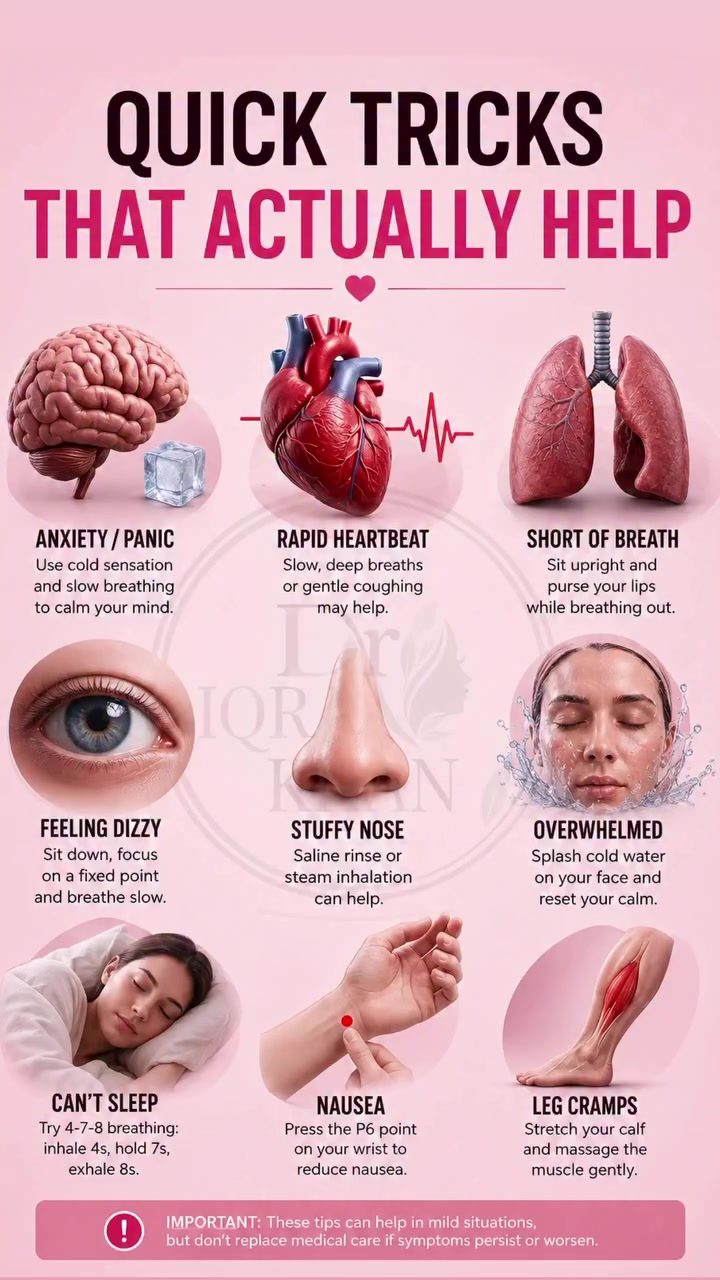
Quick Tricks for Mild Symptoms
Mild symptoms can be disruptive, but there are simple tricks that can help alleviate common issues. These evidence-based tips are designed for everyday situations and can make a noticeable difference in your comfort and well-being.
Why This Matters
Everyone experiences mild symptoms from time to time, whether it's anxiety, a stuffy nose, or trouble sleeping. Having a few quick tricks up your sleeve can help you manage these issues effectively. These tips are grounded in practical techniques that can be used in various situations, making them valuable for anyone looking to improve their daily well-being.
Dealing with Anxiety and Panic
Anxiety and panic can be overwhelming, but there are simple techniques to help calm your mind. One effective method is to use a cold sensation. Applying a cold compress to your face or taking a cold shower can help reduce anxiety by stimulating the cold receptors in your skin, which can trigger a relaxation response.
Slow breathing is another powerful tool. Focus on taking slow, deep breaths, inhaling through your nose and exhaling through your mouth. This technique helps to regulate your heart rate and can immediately reduce feelings of panic.
Managing Rapid Heartbeat
A rapid heartbeat can be alarming, but there are straightforward ways to manage it. Slow, deep breaths are particularly effective. Try inhaling deeply through your nose, holding the breath for a few seconds, and then exhaling slowly through your mouth. This technique helps to slow down your heart rate and promote a sense of calm.
Gentle coughing can also help. By stimulating the vagus nerve, which connects the brain to many essential organs, gentle coughing can slow down your heart rate and alleviate symptoms of a rapid heartbeat.
Addressing Shortness of Breath
Shortness of breath can be uncomfortable and even frightening. One effective strategy is to sit upright and purse your lips while breathing out. This technique, known as pursed-lip breathing, helps to slow down your breathing and improve oxygen intake. It can be particularly helpful for those with mild respiratory issues or anxiety-related shortness of breath.
Coping with Dizziness
Feeling dizzy can be disorienting, but there are simple steps to take. If you start to feel dizzy, sit down immediately and focus on a fixed point in front of you. Breathe slowly and deeply to stabilize your balance and reduce the sensation of dizziness. Avoid standing up too quickly, as this can exacerbate the feeling.
Clearing a Stuffy Nose
A stuffy nose can be bothersome, but there are effective remedies. A saline rinse can help clear out any congestion and reduce inflammation. Alternatively, steam inhalation is a natural and soothing method. Boil water, pour it into a bowl, and lean over the steam, covering your head with a towel to trap the moisture. This can help loosen mucus and provide relief from nasal congestion.
Regaining Calm When Overwhelmed
Feeling overwhelmed can be overwhelming, but there are quick tricks to help you reset. Splashing cold water on your face is a simple yet effective technique. The cold sensation can help ground you and refocus your mind, allowing you to regain a sense of calm and control.
Improving Sleep
Trouble sleeping can be frustrating, but a breathing technique can help. Try the 4-7-8 method: inhale for 4 seconds, hold your breath for 7 seconds, and exhale for 8 seconds. This technique helps to slow your heart rate and promote relaxation, making it easier to fall asleep.
Reducing Nausea
Nausea can be uncomfortable, but there's a simple acupressure point that can help. The P6 point, also known as the Neiguan point, is located about three finger widths below the wrist on the inner forearm. Pressing this point gently can help reduce nausea and promote a sense of wellness.
Relieving Leg Cramps
Leg cramps can be painful, but gentle stretching and massage can provide relief. If you experience a cramp, stretch your calf muscle by pulling your toes toward your shin while keeping your leg straight. Gently massage the muscle to help release the tension and alleviate the cramp.
Practical Tips
When using these tips, remember that they are best suited for mild symptoms. If your symptoms are severe, persistent, or worsen, it's important to seek medical care. These techniques can be a helpful addition to your self-care routine, but they are not a substitute for professional medical advice.
Important Takeaways
- Anxiety and panic can be managed with cold sensations and slow breathing.
- Rapid heartbeat can be alleviated through deep, slow breaths or gentle coughing.
- Shortness of breath can be relieved with pursed-lip breathing.
- Dizziness can be addressed by sitting down, focusing on a fixed point, and breathing slowly.
- A stuffy nose can be cleared with a saline rinse or steam inhalation.
- Feeling overwhelmed can be managed by splashing cold water on your face.
- Sleep can be improved with the 4-7-8 breathing technique.
- Nausea can be reduced by pressing the P6 acupressure point.
- Leg cramps can be relieved with calf stretches and gentle massage.
Conclusion
These simple yet effective tips can help manage a variety of mild symptoms, making daily life a little more comfortable. From anxiety and rapid heartbeat to trouble sleeping and nausea, these tricks can provide quick relief and promote overall well-being. Keep these tips in mind and use them as needed to enhance your self-care routine.
Watch the Reel
Questions readers ask
What are some immediate techniques to manage anxiety and panic?
To manage anxiety and panic, try the 4-7-8 breathing exercise. Inhale for 4 seconds, hold your breath for 7 seconds, and exhale for 8 seconds. Additionally, progressive muscle relaxation can help by tensing and then releasing different muscle groups in your body. These techniques are portable and can be done anywhere to calm your mind.
How can I quickly relieve a rapid heartbeat?
To slow a rapid heartbeat, try the Valsalva maneuver. Breathe out forcefully as if blowing up a balloon, then bear down as if having a bowel movement. This can help stimulate your vagus nerve and slow your heart rate. Alternatively, try splashing cold water on your face or immersing your face in cold water, which can also help regulate your heartbeat.
What are effective breathing exercises for shortness of breath?
For shortness of breath, practice pursed-lip breathing. Inhale slowly through your nose, then exhale through pursed lips as if whistling. This technique can help clear your airways and improve oxygen intake. Also, try diaphragmatic breathing, which involves breathing deeply into your belly. Count slowly to 4 as you inhale, hold briefly, and then exhale slowly for 6-8 seconds.
How can I ease the feeling of nausea at home?
To ease nausea, try the pressure point method. Apply gentle pressure to the P6 acupressure point, located on the inner wrist about three finger widths below the base of your palm. Additionally, sip ginger tea or suck on ginger candies, as ginger is known for its anti-nausea properties. You can also try deep, slow breathing to help calm your stomach.
What are some evidence-based tips for dealing with a common cold?
To manage common cold symptoms, stay hydrated by drinking plenty of fluids. Use a humidifier to keep your nasal passages moist, and consider using a saline nasal spray to relieve congestion. Gargle with warm salt water to soothe a sore throat, and get plenty of rest to help your body fight the virus.
How can I improve my well-being with simple techniques?
To improve your well-being, incorporate regular physical activity into your routine, such as walking or stretching. Make sure to get adequate sleep each night, and maintain a balanced diet. Additionally, practice mindfulness and stress reduction techniques, like meditation or deep breathing, to enhance your overall well-being. These simple techniques can significantly improve your daily comfort and quality of life.
What are some evidence-based tips for managing mild symptoms at home?
For managing mild symptoms, start by identifying the specific issue and choose the appropriate technique. For example, use heat or cold therapy for muscle aches, or try over-the-counter remedies for headaches. Always consult with a healthcare provider if symptoms are severe or persistent. For general well-being, ensure you're staying hydrated, getting enough rest, and maintaining a healthy lifestyle.
Recent articles
Fresh deep dives from the latest Reels we unpacked.




Comments
Be the first to comment.