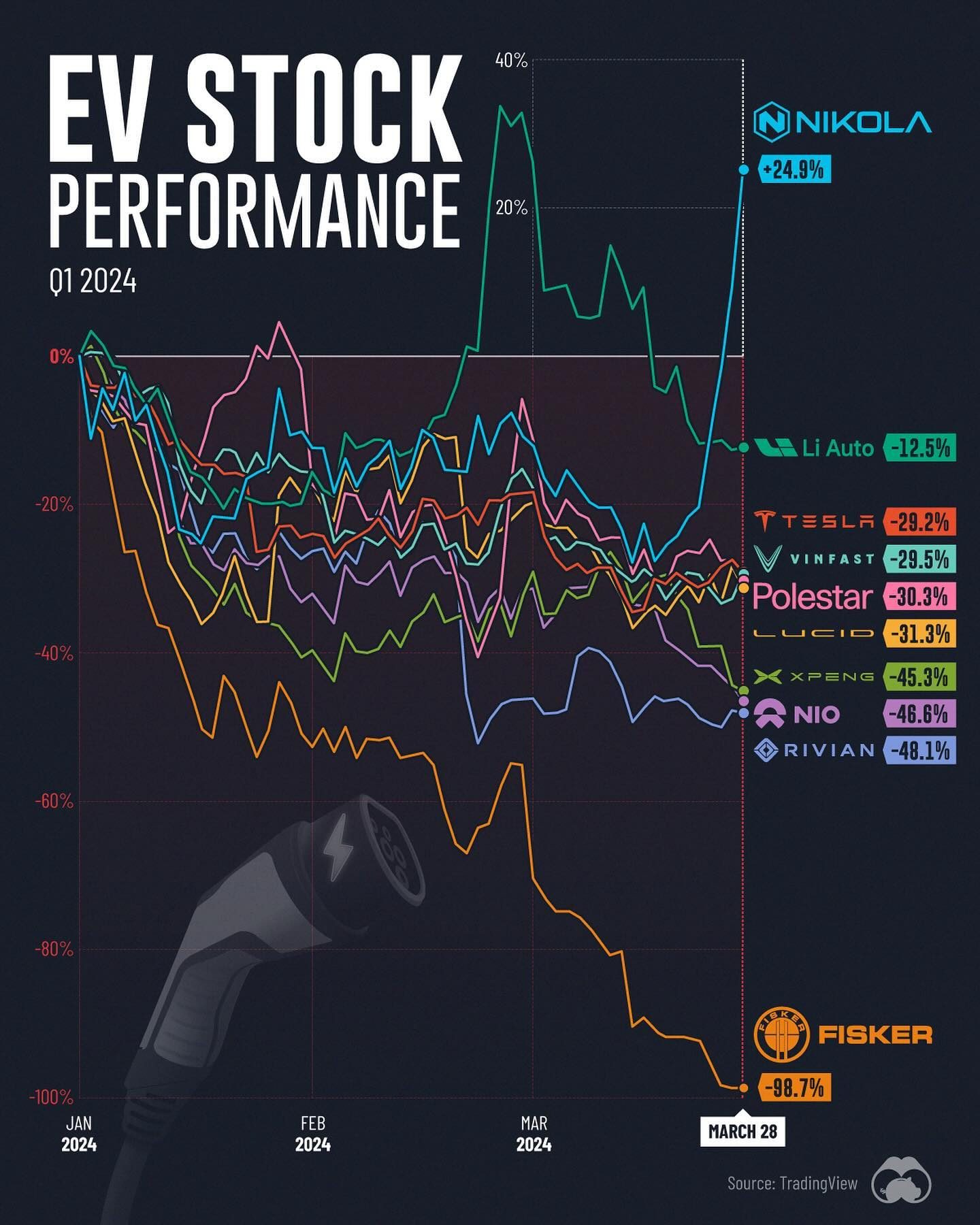
Electric Vehicle Stock Performance in Q1 2024
The electric vehicle (EV) sector faced a tumultuous first quarter in 2024, with many stocks experiencing significant declines. This downturn was marked by double-digit percentage drops, affecting major players in the industry. Understanding the factors behind this performance is crucial for investors and enthusiasts alike.
Why This Matters
The performance of EV stocks in the first quarter of 2024 is a critical indicator of the broader market trends and consumer sentiment towards electric vehicles. The sector's volatility can influence investment decisions, technological advancements, and regulatory policies. Given the rapid evolution of the EV market, staying informed about these trends is essential for stakeholders.
Stock Performance Overview
Significant Declines Across Major Players
Several leading EV companies experienced notable declines in their stock values. Tesla, Nio, Rivian, and Fisker were among those that saw significant drops. Here’s a breakdown of how some of the key players performed:
- Tesla: Tesla's stock saw a decline of -29.2%, reflecting broader market sentiments and internal challenges.
- Nio: Nio experienced a decline of -31.3%, possibly due to slowing demand in key markets and increased competition.
- Rivian: Rivian's stock dropped by -45.3%, indicating potential production issues and market saturation concerns.
- Fisker: Fisker faced the most significant decline at -98.7%, suggesting severe internal issues or market withdrawals.
Notable Outliers
While many EV stocks declined, Nikola stood out with a positive performance of +24.8%. This performance can be attributed to strategic partnerships, technological innovations, or effective marketing campaigns.
Market Factors Influencing EV Stocks
Slowing Demand in Major Markets
One of the primary factors contributing to the downturn in EV stocks is the slowdown in demand in major markets, particularly the U.S. and China. These markets are crucial for EV sales, and any dip in consumer interest can have a ripple effect across the industry. Factors like economic uncertainty, changes in consumer preferences, and regulatory policies play a significant role in this slowdown.
Technological Trends and AI Integration
Emerging trends in the technology sector, such as the integration of artificial intelligence (AI) and advanced battery technologies, are also influencing the EV market. Companies that can leverage these advancements effectively may see better long-term performance. Conversely, those that lag behind could face significant setbacks.
Regulatory and Policy Changes
Government policies and regulations can also impact the EV sector. Incentives for EV adoption, emission standards, and trade policies can all affect the performance of EV stocks. Changes in these areas can either boost or hinder the growth of EV companies, making it essential for investors to stay updated on policy developments.
Detailed Performance of Key Players
Tesla
Tesla's performance in Q1 2024 was marked by a decline of -29.2%. Factors contributing to this drop include increased competition, production challenges, and market saturation in key regions. Despite these challenges, Tesla's long-term strategy and innovation capabilities remain strong points for the company.
Nio
Nio's stock experienced a decline of -31.3%. This can be attributed to slowing demand in China, increased competition, and internal operational challenges. Nio's focus on high-end EVs and innovative battery technologies could be key factors in its future performance, depending on how well the company can navigate market dynamics.
Rivian
Rivian's stock performance in Q1 2024 was particularly challenging, with a decline of -45.3%. This can be linked to production delays, rising costs, and market saturation concerns. Rivian's ability to address these issues and leverage its partnerships with major players like Amazon will be crucial for its future success.
Fisker
Fisker faced the most significant decline at -98.7%. This substantial drop suggests severe internal issues, such as production delays, management changes, or market withdrawal. Fisker will need to address these challenges and focus on strategic partnerships and innovative technologies to regain market traction.
Nikola
Nikola's positive performance of +24.8% is a standout in the EV market. This can be attributed to strategic partnerships, technological innovations, and effective marketing campaigns. Nikola's focus on hydrogen fuel cell technology and long-term sustainability could position it well for future growth.
Practical Tips for Investors
Stay Informed
Keeping up with the latest developments in the EV sector is crucial. Regularly monitor stock performance, company announcements, and market trends to make informed investment decisions.
Diversify Your Portfolio
Investing in a diversified portfolio can help mitigate risks. Consider including a mix of established players and emerging companies to balance risk and potential returns.
Focus on Long-Term Trends
Long-term trends, such as technological advancements and regulatory changes, can significantly impact the EV sector. Investing in companies that are well-positioned to leverage these trends can be a smart strategy.
Monitor Market Sentiment
Market sentiment plays a significant role in stock performance. Staying aware of broader economic indicators, consumer sentiment, and industry news can provide valuable insights into potential market movements.
Important Takeaways
- The EV sector experienced significant declines in Q1 2024, with many major players facing double-digit percentage drops.
- Factors like slowing demand in key markets, technological trends, and regulatory changes influenced stock performance.
- Companies that can innovate and adapt to market dynamics are likely to see better long-term performance.
- Investors should stay informed, diversify their portfolios, and focus on long-term trends to navigate the volatile EV market effectively.
Conclusion
The performance of EV stocks in Q1 2024 highlights the dynamic and challenging nature of the electric vehicle sector. While many companies faced declines, there were outliers like Nikola that showed positive performance. Understanding the factors influencing these trends and staying informed about market developments is crucial for investors and industry stakeholders. By focusing on long-term trends, diversifying portfolios, and staying adaptable, investors can navigate the complexities of the EV market more effectively.
Watch the Reel
Questions readers ask
Why did many EV stocks experience significant declines in Q1 2024?
The significant declines in many EV stocks during Q1 2024 can be attributed to several factors, including increased competition, regulatory uncertainties, and shifts in consumer preferences. Additionally, broader economic conditions and investor sentiment towards the tech sector played a role in this downturn.
How did Tesla stock perform in Q1 2024?
Tesla stock experienced notable volatility in Q1 2024, with significant fluctuations that reflected broader market trends and company-specific developments. While Tesla remains a dominant player, its stock performance was influenced by factors such as production challenges, regulatory issues, and competitive pressures.
What insights can be gained from the performance of NIO's stock in Q1 2024?
The performance of NIO's stock in Q1 2024 offers valuable insights into the challenges faced by Chinese EV manufacturers. NIO's stock experienced fluctuations due to factors like supply chain disruptions, changes in government policies, and increased competition from both domestic and international rivals.
How did Rivian and Fisker stocks fare in the first quarter of 2024?
Rivian and Fisker stocks both faced challenges in Q1 2024, with declines that mirrored the broader trend in the EV sector. Rivian's stock was affected by production delays and rising costs, while Fisker's performance was influenced by delivery schedules and market competition.
What are the key market trends identified in the 2024 EV sector analysis?
Key market trends in the 2024 EV sector analysis include increased competition, evolving consumer preferences, and the impact of regulatory changes. Additionally, technological advancements and innovations in battery technology are shaping the market landscape, making it crucial for stakeholders to stay informed about these developments.
How does the EV market performance in Q1 2024 reflect consumer sentiment?
The performance of the EV market in Q1 2024 reflects a mix of cautious optimism and uncertainty among consumers. While there is growing interest in electric vehicles, concerns about charging infrastructure, range anxiety, and the overall cost of ownership have influenced consumer sentiment and market trends.
What should investors consider when evaluating EV stocks based on Q1 2024 performance?
Investors should consider a range of factors when evaluating EV stocks based on Q1 2024 performance, including company-specific developments, broader market trends, and regulatory changes. Additionally, it's important to assess the company's financial health, production capabilities, and long-term growth prospects to make informed investment decisions.
Related deep dives
Similar reads based on topic and creator.


Recent articles
Fresh deep dives from the latest Reels we unpacked.




Comments
Be the first to comment.