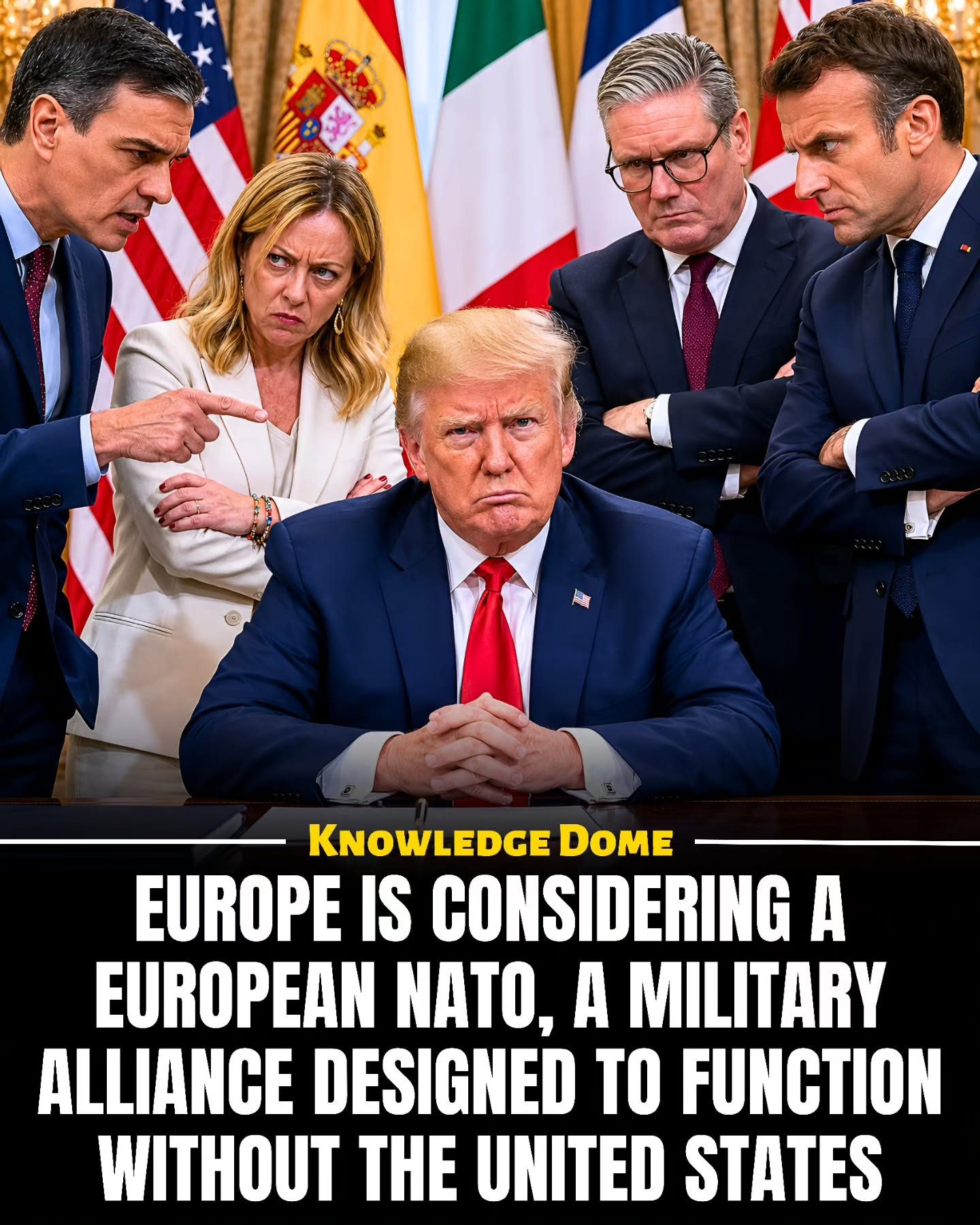
European NATO: Building a Military Alliance Independent of the United States
Europe is quietly advancing a significant geopolitical initiative: the creation of a "European NATO." This proposed military alliance aims to ensure European security even if the United States' role in the region changes. The primary drivers behind this effort are concerns about shifts in U.S. political support and the desire for greater European independence in defense matters. Let's explore the key aspects of this initiative, its goals, and the implications for European and global security.
Context / Why this matters
The idea of a "European NATO" is not about replacing the existing NATO alliance but rather about enhancing Europe's self-sufficiency and preparedness in the face of potential changes in transatlantic relations. This initiative comes at a time when many European leaders are re-evaluating their reliance on U.S. military support, particularly in light of recent political developments. By bolstering European defense capabilities, leaders hope to create a more resilient and independent security framework that can operate effectively with or without significant U.S. involvement.
Main discussion
The Role of European Leadership
One of the primary goals of the proposed European NATO is to gradually replace American staff in key NATO roles with European leaders. This shift is intended to strengthen European leadership within the alliance and ensure that European interests are more directly represented in decision-making processes. By increasing the presence of European leaders in critical positions, the continent aims to foster a more cohesive and unified defense strategy.
Key Military Equipment Production
Another critical aspect of the plan is to boost Europe’s production of essential military equipment. This includes technologies such as anti-submarine systems, space and spy technologies, and air-to-air refueling planes. By enhancing Europe's domestic defense production, the continent seeks to reduce its dependence on Washington and build a more self-sufficient defense infrastructure. This domestic production push is not just about economic independence; it's also about ensuring that European nations have the necessary tools to respond to security threats promptly and effectively.
Enhancing Nuclear Protection
Nuclear protection is a major focus of the discussions surrounding the European NATO. European leaders are considering whether France's nuclear arsenal could be expanded to provide a broader protective umbrella for the rest of Europe. France currently possesses a robust nuclear deterrent, and there is ongoing dialogue about how this capability could be leveraged to enhance the collective security of the European continent. This aspect of the initiative is particularly sensitive and involves complex diplomatic and strategic considerations.
The European Union's Defense Plans
Simultaneously, the European Union is advancing its own defense plans, which complement the European NATO concept. These plans include initiatives such as faster military movement, shared weapon buying, and a stronger air and missile shield for Europe's eastern border. By streamlining military operations and enhancing collective defense capabilities, the EU aims to create a more integrated and responsive security framework. These initiatives are part of a broader effort to ensure that Europe can protect its borders and citizens effectively in an increasingly uncertain global environment.
Practical Tips
For those following these developments, it's important to stay informed about the evolving geopolitical landscape and the specific steps being taken by European leaders. Here are some practical tips for staying updated:
-
Follow Key Officials and Institutions: Keep an eye on statements and press releases from European Union officials, NATO leadership, and key national defense ministers. These sources will provide the most direct and current information on the progress of these initiatives.
-
Read Defense and Security Journals: Publications focused on defense and security issues often provide in-depth analysis and expert commentary on developments like the European NATO.
-
Attend Security Conferences: Events such as the Munich Security Conference and the NATO Public Diplomacy Division's annual meetings are excellent platforms for gaining insights from experts and policymakers in the field.
-
Engage with Think Tanks: Organizations like the European Council on Foreign Relations, the International Institute for Strategic Studies, and the Atlantic Council offer detailed reports and policy papers on European defense and security matters.
Important takeaways
The initiative to create a European NATO underscores Europe's determination to bolster its defense capabilities and strengthen its security framework. Here are the key takeaways from this evolving situation:
- The European NATO is designed to operate independently of the United States, ensuring European security in a changing geopolitical landscape.
- The plan involves replacing American staff with European leaders in key NATO roles and increasing Europe's production of critical military equipment.
- Nuclear protection, particularly leveraging France's capabilities, is a significant part of the discussion.
- The European Union is simultaneously advancing its own defense plans, focusing on faster military movement, shared weapon buying, and stronger defensive measures.
Conclusion
The concept of a European NATO represents a significant shift in European defense strategy. By enhancing its self-sufficiency and preparedness, Europe aims to navigate the complexities of global security with greater confidence and independence. This initiative not only strengthens Europe's defense capabilities but also underscores the continent's commitment to ensuring its security and stability in an ever-changing world.
Watch the Reel
Questions readers ask
What is the 'European NATO' initiative?
The 'European NATO' initiative is a European-led effort to create a military alliance focused on European security. It aims to bolster the continent's defense capabilities and independence, ensuring Europe can maintain its security even if U.S. involvement in the region decreases.
Why is Europe pushing for a 'European NATO'?
Europe is driving this initiative due to concerns about potential shifts in U.S. political support and a desire for greater autonomy in defense matters. By enhancing European defense capabilities, the continent aims to foster a more resilient security framework.
Will a 'European NATO' replace the existing NATO alliance?
No, the 'European NATO' is not intended to replace the existing NATO alliance. Instead, it complements NATO by enhancing Europe's self-sufficiency and preparedness, providing an additional layer of security in case of changes in U.S. involvement.
Which country is leading the 'European NATO' initiative?
France is one of the key drivers behind the 'European NATO' initiative. France has been a vocal advocate for increasing European defense independence and has been actively pushing for greater European military integration and capabilities.
How will a 'European NATO' impact European military planning?
A 'European NATO' will likely lead to more coordinated and integrated military planning among European countries. This could include joint exercises, shared defense strategies, and increased investment in European military capabilities, ultimately strengthening Europe's defense independence.
What are the implications of a 'European NATO' for global security?
The creation of a 'European NATO' could have significant implications for global security. It may encourage other regions to enhance their own defense capabilities, leading to a more multipolar world. Additionally, it could alter the dynamics within NATO, potentially leading to a more balanced alliance.
Recent articles
Fresh deep dives from the latest Reels we unpacked.




Comments
Be the first to comment.