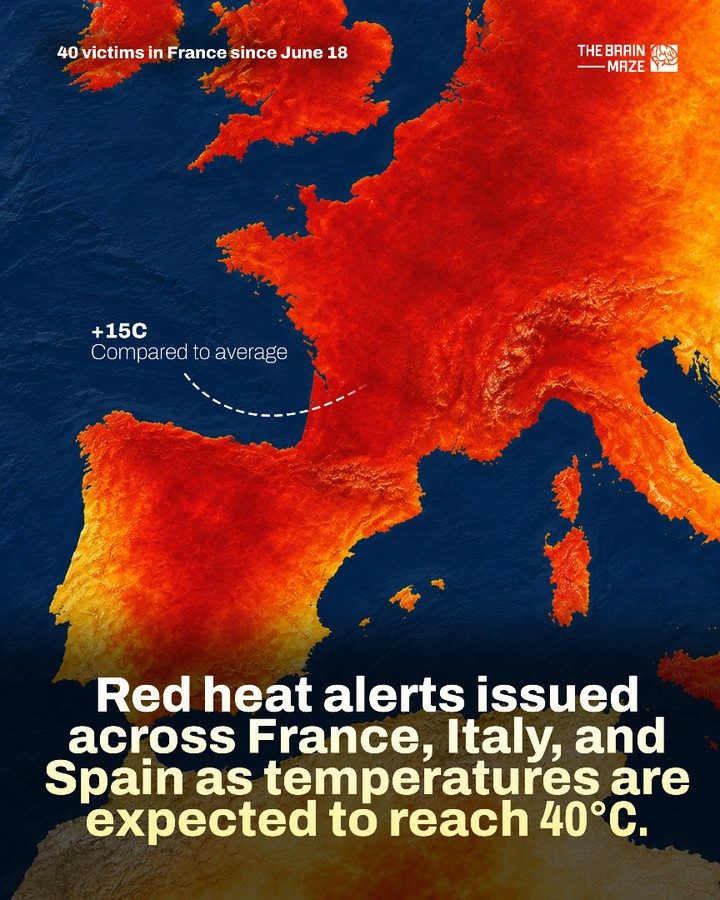
Heatwave in Europe
Europe is currently enduring a severe heatwave, with red alerts issued across France, Spain, Italy, and several other countries as temperatures climb above 40°C. This extreme weather event has had significant impacts, particularly in France, where around 40 heat-related victims have been reported since 18 June. The heatwave has led to the closure of hundreds of schools, disruption of transport services, and warnings from authorities that the extreme conditions could persist for days.
Context / Why this matters
Understanding the severity and impact of this heatwave is crucial for residents and travelers in affected regions. The extreme temperatures pose significant health risks, especially to vulnerable populations such as the elderly, young children, and those with pre-existing health conditions. Additionally, the disruption of daily life, including school closures and transport issues, highlights the broader societal impacts of such weather events.
Main discussion
Affected Regions
Several European countries, including France, Spain, and Italy, are experiencing extreme heat. France has been particularly affected, with temperatures soaring to levels that are 15°C above the average. This dramatic increase in temperature has placed a significant strain on infrastructure and public services.
Health Impacts
The heatwave has already claimed around 40 lives in France since 18 June. These heat-related deaths underscore the dangers of prolonged exposure to high temperatures. Symptoms of heat exhaustion and heatstroke, such as dizziness, fatigue, and confusion, can escalate rapidly, leading to severe health complications. It is essential for everyone to stay hydrated, avoid prolonged outdoor activities during peak hours, and seek cool environments.
Disruptions to Daily Life
In response to the heatwave, hundreds of schools have been closed to ensure the safety of students and staff. Transport services have also been disrupted, causing delays and cancellations. Authorities have issued red heat alerts, advising residents to take precautions and be prepared for possible power outages and water shortages. These disruptions highlight the need for robust emergency management plans to mitigate the impact of extreme weather events.
Temperature Projections
Temperatures are expected to remain extremely high, with forecasts indicating that they could reach 40°C in Spain. This prolonged period of intense heat poses continued risks to public health and safety. Emergency services are on high alert, ready to respond to any incidents related to the heatwave. Residents are urged to stay informed about the latest weather updates and follow the advice of local authorities.
Environmental Factors
The prolonged heatwave has exacerbated existing environmental issues, such as drought and wildfires. The combination of high temperatures and dry conditions creates a perfect storm for wildfires, posing a significant threat to forests and rural areas. Authorities are urging residents to be vigilant and report any signs of wildfires immediately. The environmental impact of the heatwave is a reminder of the broader effects of climate change and the need for sustainable practices.
Practical tips
Staying Cool and Hydrated
Staying hydrated is crucial during a heatwave. Drink plenty of water, even if you do not feel thirsty. Avoid alcoholic and caffeinated beverages, as they can increase dehydration. If possible, stay indoors during the hottest part of the day and use air conditioning or fans to keep cool. Wear lightweight, breathable clothing and use sunscreen to protect your skin from the sun.
Checking on Vulnerable Individuals
Check on elderly neighbors, family members, or friends who may be more susceptible to the effects of high temperatures. Ensure they have access to cool environments and are staying hydrated. If you are responsible for caring for young children, be aware of the signs of heat exhaustion and take immediate action if symptoms arise.
Monitoring Weather Updates
Stay informed about the latest weather updates and alerts. Local authorities often provide real-time information and advice on how to stay safe during extreme weather events. Utilize reliable sources of information, such as government websites or trusted news outlets, to stay informed.
Preparing for Power Outages
Extreme heat can cause power outages, so it is essential to be prepared. Keep a supply of non-perishable food, water, and medications on hand. Consider using a battery backup for essential medical equipment. Have a plan in place for alternative cooling methods, such as using a portable fan or seeking a cool public space.
Avoiding Outdoor Activities
Avoid strenuous outdoor activities during the peak hours of the day, typically between 11 AM and 3 PM. If you must be outdoors, take frequent breaks in shaded areas and stay hydrated. Be mindful of the signs of heat exhaustion, such as dizziness, fatigue, and confusion, and seek medical attention if symptoms worsen.
Important takeaways
The severe heatwave affecting Europe underscores the need for preparedness and resilience in the face of extreme weather events. Extreme temperatures pose significant risks to public health and safety, and it is essential to take proactive measures to stay safe. By staying informed, following local advice, and being mindful of the risks, residents can navigate the challenges posed by the heatwave.
Conclusion
The current heatwave in Europe, with red alerts issued across France, Spain, Italy, and other countries, is a stark reminder of the impact of extreme weather events. The closure of schools, disruption of transport services, and the tragic loss of lives highlight the urgent need for preparedness and resilience. As the heatwave continues, it is crucial to stay informed, take precautions, and support vulnerable individuals. By working together, communities can mitigate the impact of the heatwave and safeguard public health and safety.
Watch the Reel
Questions readers ask
What are heatwave red alerts and why are they issued?
Red alerts are the highest level of warning indicating extreme weather conditions pose a significant risk to life. They are issued when temperatures are forecast to reach or exceed 40°C, as is the case in France.
Which countries in Europe are most affected by the current heatwave?
The current heatwave is most severe in France, Spain, and Italy, with all three countries experiencing temperatures above 40°C. However, red alerts have been issued to other countries in Europe as well.
How does the current heatwave in France compare to average temperatures?
The current heatwave in France is exceptional, with temperatures exceeding 40°C in many areas, which is significantly higher than the average June temperatures in France, which typically range between 15°C to 25°C.
Who are the most at-risk individuals during a heatwave?
Vulnerable populations, such as the elderly, young children, and individuals with pre-existing health conditions, are most at-risk during a heatwave.
What actions are authorities taking in response to the heatwave?
Authorities in affected regions have implemented several measures, including issuing red alerts, closing schools, and disrupting transport services to ensure public safety.
What can individuals do to stay safe during a prolonged heatwave?
Stay hydrated, avoid prolonged exposure to the sun, especially during peak hours, and seek cool or air-conditioned spaces. Regularly check on vulnerable neighbors, friends, and family members.
Recent articles
Fresh deep dives from the latest Reels we unpacked.




Comments
Be the first to comment.