Europe's Energy Crisis
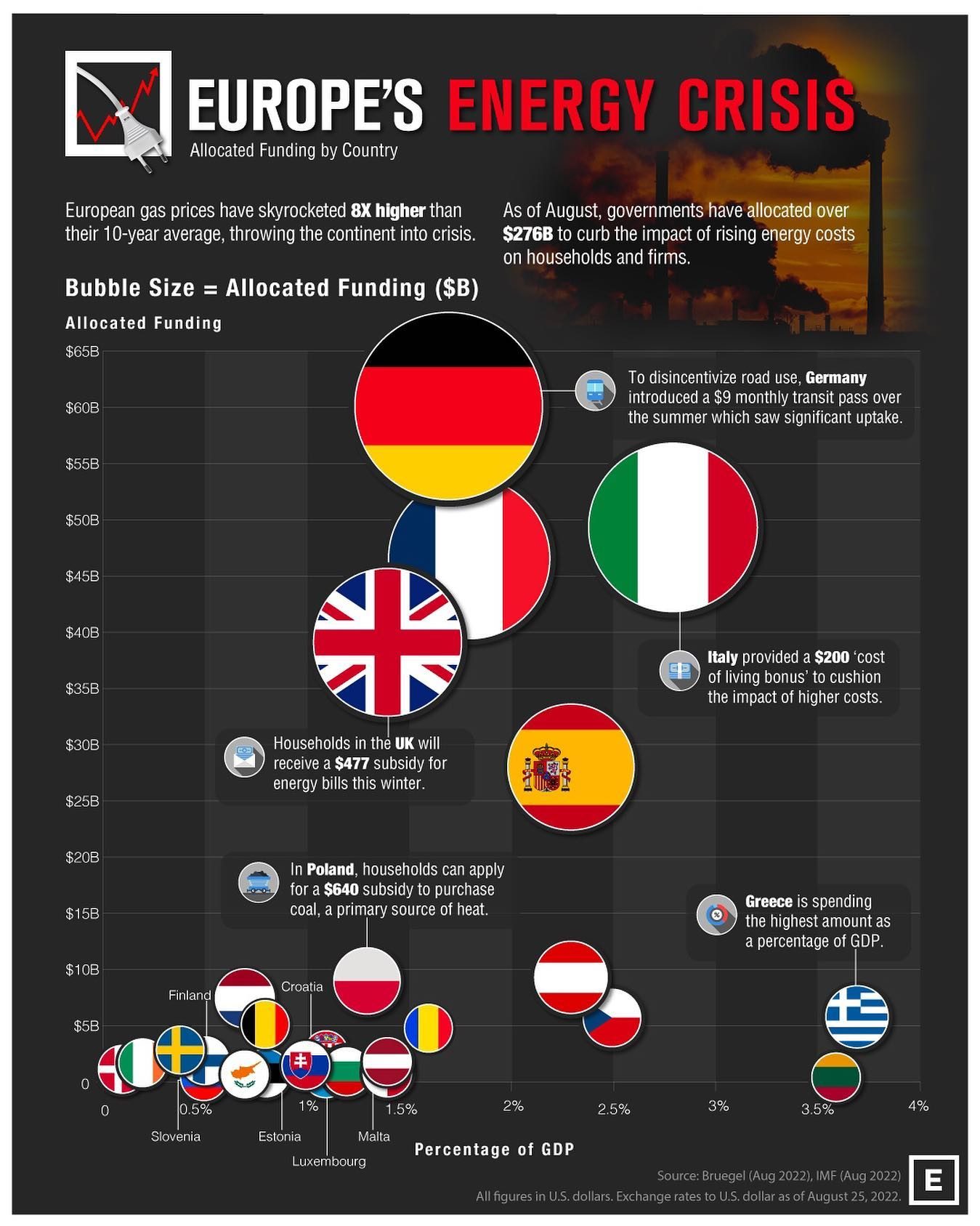
Europe is grappling with an unprecedented energy crisis, driven by skyrocketing gas prices and the urgent need to reduce dependence on Russian fossil fuels. As of August, European gas prices have surged to eight times their 10-year average, prompting governments to implement a range of measures to mitigate the impact on households and businesses.
Context / Why This Matters
The energy crisis in Europe is a multifaceted issue that affects not only individual consumers but also the broader economic landscape. Rising gas prices have far-reaching implications, from increased costs of living to disrupted supply chains. As European Union (EU) countries scramble to address these challenges, understanding the various responses and initiatives becomes crucial for navigating the current landscape and anticipating future developments.
Main Discussion
The Scale of the Crisis
The energy crisis in Europe is unprecedented in its scale and impact. With gas prices soaring to eight times their 10-year average, the continent is facing a severe economic and social challenge. The crisis has been exacerbated by the need to reduce reliance on Russian fossil fuels, adding a layer of geopolitical complexity to an already difficult situation. As of August, the total funding allocated by European countries to curb the impact of rising energy costs has reached a staggering $276 billion. This funding is directed towards various initiatives aimed at supporting households and businesses through the crisis.
Allocated Funding by Country
The funding allocated by different European countries varies widely, reflecting the diverse economic and political contexts in which these nations operate. For instance, Greece is spending the highest percentage of its GDP on energy relief measures, indicating a significant commitment to supporting its citizens during this challenging period. Other countries, such as Germany and Italy, have introduced specific initiatives to cushion the impact of higher energy costs. Germany, for example, introduced a $9 monthly transit pass over the summer, which saw significant uptake. Similarly, Italy provided a $200 "cost of living bonus" to help its citizens manage the increased costs.
Specific Initiatives and Their Impact
The initiatives implemented by European countries to address the energy crisis are varied and tailored to meet the specific needs of their populations. Germany's $9 monthly transit pass is a notable example of a policy aimed at reducing the financial burden on individuals while promoting sustainable transportation. In Italy, the $200 cost-of-living bonus provides direct financial support to households, helping to offset the increased costs associated with rising energy prices. These initiatives reflect a broader trend of governments intervening to support their citizens during a period of economic uncertainty.
Household Support
Households across Europe are bearing the brunt of the energy crisis, with rising energy bills adding to an already challenging economic environment. To mitigate the impact, various countries have introduced subsidies and bonuses aimed at easing the financial burden. For example, households in the UK will receive a $477 subsidy for energy bills this winter, providing much-needed relief during the colder months. These subsidies are crucial for ensuring that vulnerable populations are not disproportionately affected by the crisis.
Practical Tips
For Households
If you're a household struggling with rising energy costs, consider the following steps to manage your energy usage more efficiently:
- Insulation: Improve the insulation of your home to reduce energy loss. This can include adding insulation to walls, attics, and floors, as well as sealing windows and doors.
- Efficient Appliances: Invest in energy-efficient appliances. While the upfront cost may be higher, the long-term savings can be significant.
- Renewable Energy: Explore the possibility of switching to renewable energy sources, such as solar or wind power. Many countries offer incentives and subsidies for making this transition.
- Energy-Saving Habits: Develop energy-saving habits, such as turning off lights when not in use, using energy-efficient light bulbs, and unplugging electronics when not in use.
For Businesses
Businesses can also take several steps to mitigate the impact of rising energy costs:
- Energy Audits: Conduct energy audits to identify areas where energy usage can be reduced. This can include optimizing manufacturing processes, improving insulation, and upgrading to energy-efficient equipment.
- Renewable Energy: Invest in renewable energy sources to reduce dependence on fossil fuels. This can include installing solar panels or wind turbines, as well as exploring other renewable energy options.
- Energy Management Systems: Implement energy management systems to monitor and control energy usage more effectively. These systems can help identify inefficiencies and optimize energy consumption.
- Government Incentives: Take advantage of government incentives and subsidies for energy efficiency and renewable energy. This can include tax credits, grants, and other forms of financial support.
Important Takeaways
- Scale of the Crisis: The energy crisis in Europe is severe, with gas prices soaring to eight times their 10-year average. This has prompted governments to allocate significant funding to support households and businesses.
- Diverse Responses: European countries are implementing a range of initiatives to address the crisis, from subsidies and bonuses to wholesale price regulation. These responses reflect the diverse economic and political contexts in which these nations operate.
- Household Support: Households are receiving much-needed support through subsidies and bonuses, helping to mitigate the impact of rising energy costs.
- Business Support: Businesses are also being supported through various initiatives, including incentives for energy efficiency and renewable energy.
Conclusion
The energy crisis in Europe is a complex and multifaceted issue that requires a comprehensive and coordinated response. As countries continue to implement various initiatives to address the crisis, it is essential to stay informed about the latest developments and understand the broader implications for households and businesses. By taking proactive steps to manage energy usage and explore renewable energy options, individuals and organizations can navigate this challenging period and contribute to a more sustainable future.
Watch the Reel
Questions readers ask
What are the primary causes of Europe's current energy crisis?
The primary causes are the significant increase in gas prices and Europe's efforts to reduce its reliance on Russian fossil fuels. These factors have led to a severe economic and social impact across the continent, affecting both households and businesses.
How have European governments responded to the energy crisis?
European governments have responded by committing substantial funds to support households and businesses. These funds are used to subsidize energy costs and implement initiatives to mitigate the impact of rising prices.
What are energy subsidies and how do they help during the crisis?
Energy subsidies are financial aids provided by governments to reduce the cost of energy for consumers. During the crisis, these subsidies help lower energy bills, making it more affordable for households and businesses to manage their expenses.
Which European countries have implemented significant energy subsidies in 2022?
Several countries have implemented significant energy subsidies in 2022. The UK has provided a range of support, including a £400 energy bill subsidy. Spain has introduced a windfall tax on energy companies to fund subsidies. Italy has also allocated funds to lower energy costs for consumers.
How does the energy crisis impact the overall economy and GDP in Europe?
The energy crisis impacts the economy and GDP by increasing the cost of living and production. Businesses face higher operational costs, which can lead to reduced productivity and job losses. Additionally, higher energy prices can erode consumer spending power, further slowing economic growth.
What initiatives are being taken to reduce Europe's dependence on Russian fossil fuels?
Europe's initiatives include increasing renewable energy production, investing in energy efficiency, and accelerating the development of infrastructure for alternative energy sources. The aim is to make the energy sector more resilient to supply disruptions.
Recent articles
Fresh deep dives from the latest Reels we unpacked.




Comments
Be the first to comment.