European Union Economy: An Overview of the $16 Trillion Powerhouse
The European Union (EU) is home to the world's third-largest economy, contributing approximately one-sixth of global trade. This economic powerhouse is composed of 27 member countries, which together form an internal market that facilitates the free movement of goods, services, capital, and people.
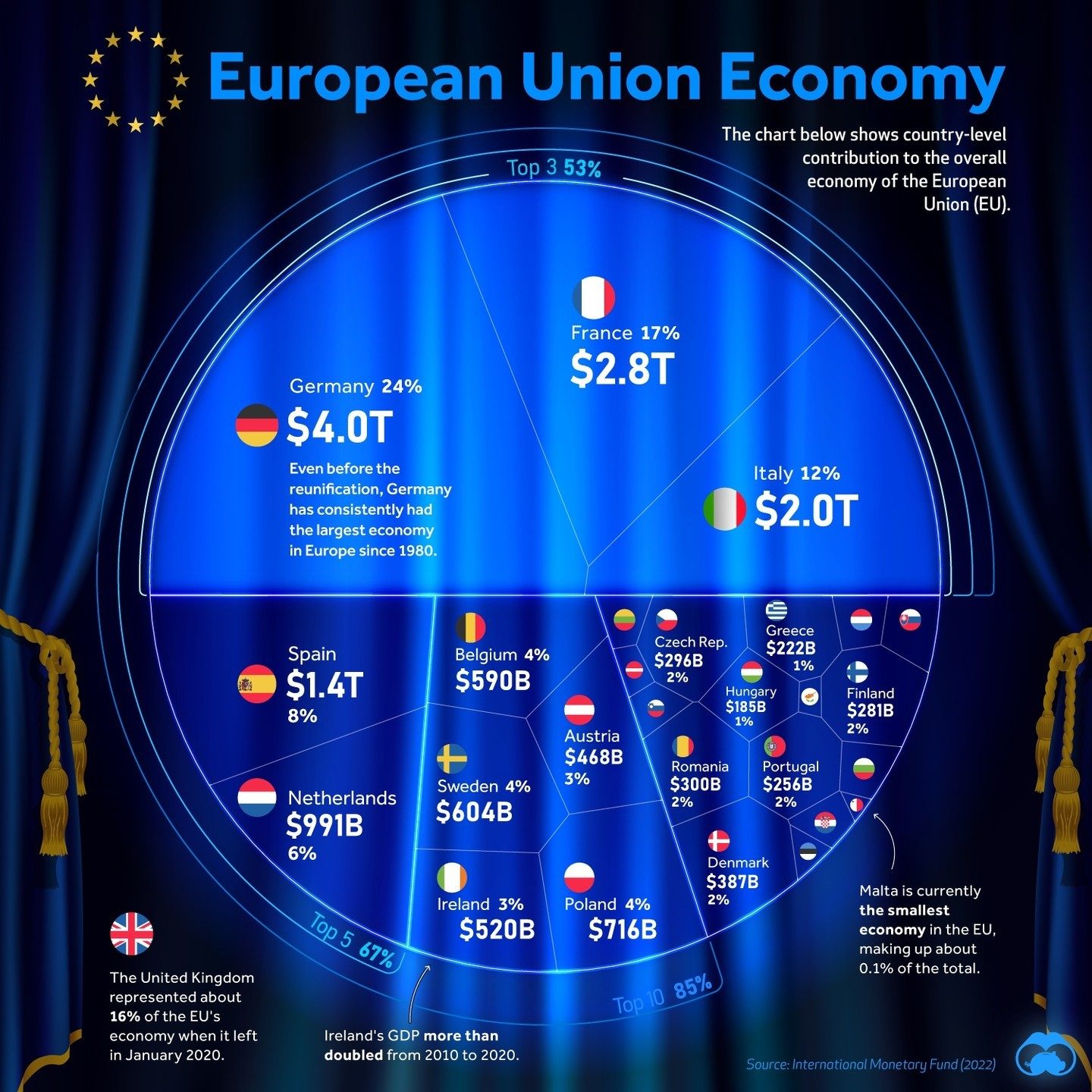
The EU's economy is incredibly diverse, with each member state contributing uniquely to the overall economic output. Germany, for instance, has been the economic powerhouse of Europe since 1980, consistently leading the pack with a robust economy. France and Italy also play significant roles, along with other major contributors like Spain and the Netherlands. On the other end of the spectrum, Malta has the smallest economy within the EU, representing just 0.1% of the total.
Context: Why the EU Economy Matters
The EU's economic prowess is not just a matter of sheer size; it also profoundly influences the global economy. Its role as the world's largest trading bloc, coupled with its internal market, makes it a key player in international trade and investment.
The Internal Market
One of the cornerstones of the EU's economic success is its internal market. This single market allows for the free movement of goods, services, capital, and people, fostering an environment where businesses can operate seamlessly across borders. This integrated market has not only boosted trade but also facilitated economic growth and job creation.
Global Trade
The EU's economic strength is also evident in its significant role in global trade. It accounts for approximately one-sixth of global trade, making it a crucial player in international commerce. The EU's trade agreements with other countries and regions further enhance its economic influence, promoting economic cooperation and mutual growth.
Key Contributions of Member States
To understand the EU's economic landscape, it's essential to look at the contributions of its member states. Here's a closer look at some of the key players:
Germany
Germany's economic dominance is well-documented. With a GDP of $4.0 trillion, it accounts for nearly 24% of the EU's total economic output. Germany's robust manufacturing sector, coupled with its technological advancements, has made it a leader in Europe.
France
France, with a GDP of $2.8 trillion, is another economic powerhouse within the EU. It accounts for 17% of the total economic output, contributing to various sectors, including technology, aerospace, and finance.
Italy
Italy, the third-largest contributor to the EU's economy, has a GDP of $2.0 trillion, making up 12% of the total. Italy is known for its strong manufacturing and tourism sectors, which significantly contribute to its economic output.
Contributions of Other Member States
While Germany, France, and Italy are the top contributors, other member states also play crucial roles in the EU's economic landscape. Spain, the Netherlands, and Poland, for example, each contribute significantly to the overall GDP. Spain, with a GDP of $991 billion, accounts for 8% of the total, while the Netherlands and Poland contribute 6% and 4%, respectively.
Economic Diversity
The diversity of the EU's economy is one of its strengths. Each member state has unique strengths, from the robust manufacturing sectors of Germany and Italy to the thriving tech industries in Ireland and the Netherlands. This diversity allows the EU to remain resilient and adaptable in the face of economic challenges.
Practical Tips for Understanding the EU Economy
Navigating the complexities of the EU economy can be daunting, but understanding a few key points can make it more manageable.
Stay Informed
Keeping up with the latest economic developments and trade agreements within the EU is essential. Regularly following economic news and reports can provide valuable insights.
Understand the Internal Market
Grasping the internal market's mechanics and how it facilitates the free movement of goods, services, capital, and people can offer a deeper understanding of the EU's economic dynamics.
Focus on Key Players
Paying attention to the economic contributions of key players like Germany, France, and Italy can provide a clearer picture of the overall economic landscape.
Important Takeaways
The EU's $16 trillion economy is a testament to its economic might and global influence. Its internal market and significant role in global trade make it a pivotal player in the world economy. Understanding the contributions of its member states, from Germany and France to Spain and Poland, offers a comprehensive view of its economic strength and diversity.
Conclusion
The European Union economy is a dynamic and complex entity, driven by the collective strength of its 27 member states. Its robust internal market and significant global trade presence make it a key player in the world economy. By understanding the contributions of key member states and staying informed about economic developments, one can gain a deeper appreciation for the EU's economic power and global influence. Whether you're an investor, a business owner, or simply curious about global economics, the EU's economic landscape is a fascinating and vital area of study.
Watch the Reel
Questions readers ask
Which EU country has the largest economy?
Germany has the largest economy among EU member countries. Known for its robust industrial sector and strong economic policies, Germany has been a consistent leader in the EU's economic power since 1980. It is the EU's largest contributor to the overall GDP.
What is the EU's role in global trade?
The EU is a significant player in global trade, contributing approximately one-sixth of the world's total trade. By providing a unified market and a shared trading policy, the EU facilitates the free movement of goods, services, capital, and people, enhancing its influence on the global economic stage.
How does France contribute to the EU's economy?
France is a key player in the EU economy, ranking second among EU member countries in terms of economic size. With a strong focus on finance, tourism, and manufacturing, France significantly contributes to the EU’s overall GDP and plays a crucial role in the EU's internal market.
What makes the EU's economy so diverse?
The EU's economy is diverse due to the unique contributions of its 27 member states. Each country brings something different to the table, from Germany and France's industrial and financial sectors to smaller economies like Malta's specialized services. This diversity strengthens the EU's internal market and global trade influence.
Which EU countries are the smallest economic contributors?
Malta is the smallest economic contributor within the EU. Its economy is relatively small, focusing on sectors like tourism, banking, and financial services. Other smaller economies, such as Luxembourg and Estonia, while still making significant contributions, also have smaller GDP compared to larger member states.
What is the EU's GDP and how does it rank globally?
The EU has a GDP of approximately $16 trillion, making it one of the largest economies in the world. It ranks third in terms of global economic power, a testament to the strength and diversity of its 27 member countries.
Related deep dives
Similar reads based on topic and creator.


Recent articles
Fresh deep dives from the latest Reels we unpacked.




Comments
Be the first to comment.