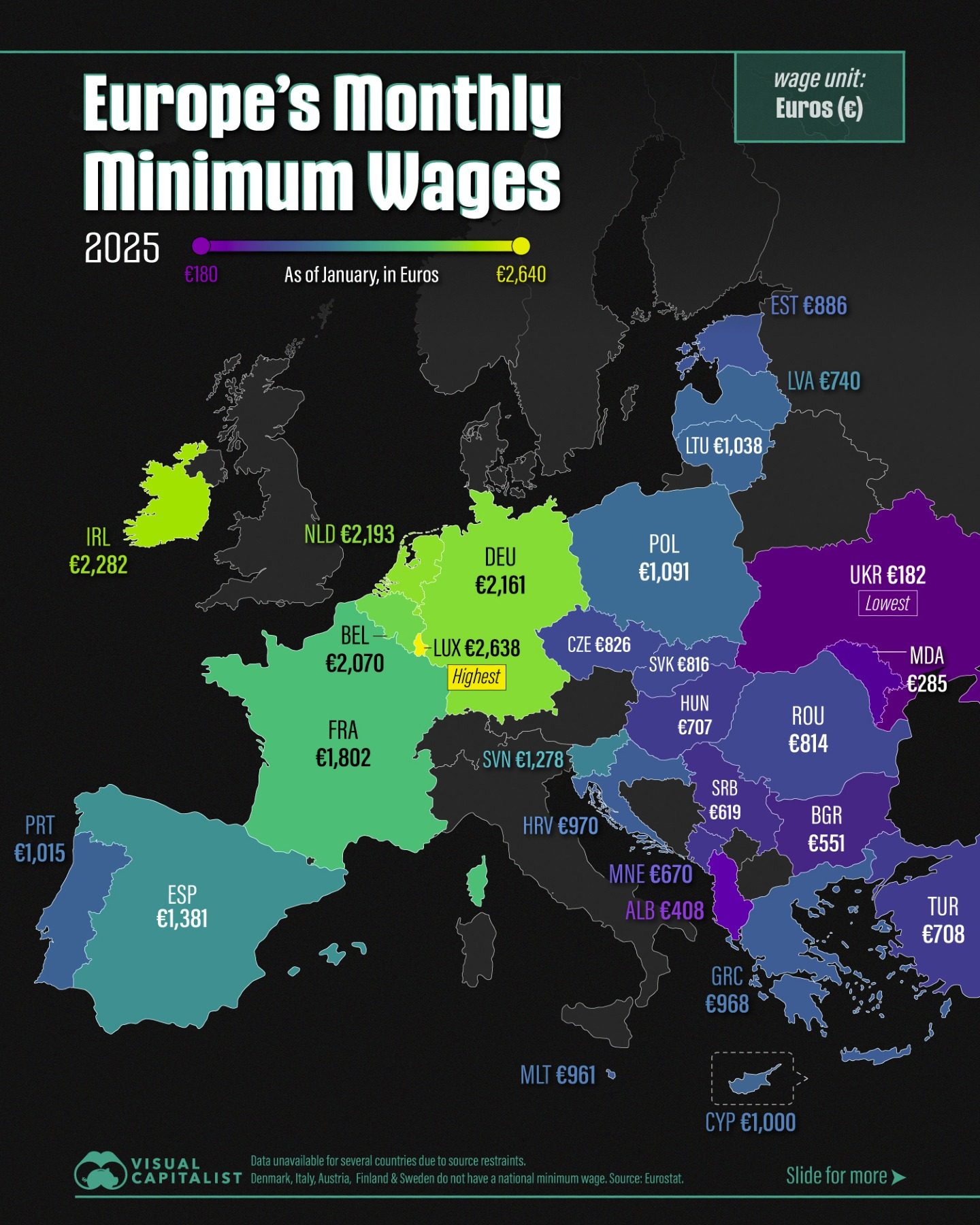
Europe's Minimum Wages: Comparing 2025 Data
Across Europe, minimum wages vary significantly from country to country. The figures are even more revealing when adjusted for local living costs. This comparison provides a detailed look at the current and projected minimum wages in Euros and Purchasing Power Standard (PPS) units, highlighting the differences between nominal and real buying power.
Why This Matters
Understanding the variations in minimum wages across Europe is crucial for several reasons. For workers, it directly impacts their standard of living. For policymakers, it provides insights into labor market conditions and the effectiveness of economic policies. For businesses, it influences hiring and operational costs. Additionally, comparing wages in both Euros and PPS units offers a more comprehensive view of how much workers can actually afford in their respective countries.
Main Discussion
Nominal Wages in Euros
When examining minimum wages in raw Euros, some countries stand out prominently. Ireland, for instance, has the highest nominal monthly minimum wage at €2,282. Following closely are Luxembourg at €2,070 and the Netherlands at €2,193. On the lower end, Ukraine has the lowest at €182, followed by Albania at €408 and Moldova at €285.
These nominal figures are straightforward but do not account for the cost of living, which can vary widely between countries. For example, while Ireland has the highest nominal wage, the cost of living in Ireland is also significantly higher compared to countries with lower nominal wages, such as Ukraine or Moldova.
Adjusted Wages in Purchasing Power Standard (PPS)
The Purchasing Power Standard (PPS) is an artificial currency invented by the European Union to compare living standards and economic conditions across different countries while accounting for local costs. In theory, 1 PPS unit buys the same goods and services everywhere, making it a valuable metric for understanding real buying power.
When adjusted for PPS, the rankings shift. Germany, with a PPS-adjusted wage of 1,992, tops the list, followed by the Netherlands at 1,875 and Belgium at 1,664. Ireland, which had the highest nominal wage, falls to a lower position in the PPS rankings, reflecting the higher cost of living in the country. The PPS-adjusted figures provide a more accurate reflection of real wages, showing how much workers can actually afford in their local markets.
Practical Tips
For those looking to understand or navigate Europe's minimum wage landscape, several practical steps can be taken:
For Workers
- Research Local Costs: Before moving to a new country, research the cost of living to get a better sense of how far your wages will go. Websites and forums dedicated to expatriates often provide detailed information on local prices.
- Negotiate Salaries: If you're in a position to negotiate, consider the PPS-adjusted wages in your negotiations. This can help ensure you're receiving a fair wage that reflects your cost of living.
- Understand Benefits: Minimum wages often don't include additional benefits like healthcare, housing, or transportation. Make sure to factor these into your overall compensation package.
For Employers
- Compare Wages Fairly: When hiring across different countries, use PPS-adjusted figures to ensure fairness and competitiveness in your compensation packages.
- Localize Benefits: Consider offering benefits that cater to local needs, such as housing allowances in high-cost cities or transportation subsidies.
- Stay Updated: Minimum wages and living costs are subject to change. Stay updated with the latest data from reliable sources like Eurostat to ensure your policies remain relevant.
For Policymakers
- Holistic Policies: Use PPS-adjusted figures to create policies that truly benefit workers, taking into account both nominal wages and real buying power.
- Cross-Country Comparisons: Compare data across countries to identify best practices and areas for improvement in labor market regulations.
Important Takeaways
- Ireland has the highest nominal minimum wage in Euros, while Germany tops the list when adjusted for PPS.
- Using PPS units provides a more accurate reflection of real buying power, accounting for local living costs.
- Nominational wages do not always reflect the true purchasing power in different countries.
- Workers, employers, and policymakers can benefit from understanding and utilizing PPS-adjusted wages in their decision-making processes.
Conclusion
Europe's minimum wage landscape is complex and multifaceted. Nominal wages in Euros provide a starting point, but they only tell part of the story. By adjusting for purchasing power, a more nuanced and accurate picture emerges, revealing the true buying power of workers across the continent. Whether you're a worker, employer, or policymaker, understanding these differences is essential for making informed decisions and creating fair, effective policies.
Watch the Reel
Questions readers ask
What is the highest minimum wage in Europe for 2025?
For 2025, Ireland is projected to have the highest nominal minimum wage in Europe, set at €2,282 per month. This figure represents the gross amount before taxes and other deductions.
Which country has the lowest minimum wage in Europe for 2025?
Ukraine is projected to have the lowest nominal minimum wage in Europe for 2025, at €182 per month. This figure can give a stark contrast to the amount of money workers receive in more affluent countries.
What is the Purchasing Power Standard (PPS) and why is it important for comparing wages?
PPS is a measure used to compare the actual buying power of wages across different countries, taking into account local living costs. Comparing wages with PPS provides a better understanding of the standard of living workers can afford in each country.
How does adjusting for PPS change the comparison of European minimum wages?
Adjusting for PPS changes the comparison by revealing the actual affordability of goods and services in each country. It shows that a higher nominal wage in a country with high living costs may not translate to a higher standard of living.
Which countries offer a higher standard of living based on PPS minimum wages?
Countries with higher nominal wages, such as Ireland, Luxembourg, and Germany, generally offer a higher standard of living based on PPS, as their wages are higher when adjusted for local living costs. However, comparing the PPS values provides a more accurate picture, as they account for localized expenses.
How can policymakers use this data?
Policymakers can use this data to assess labor market conditions, evaluate the effectiveness of economic policies, and make informed decisions about minimum wage adjustments. The data can also help in creating policies that support workers and businesses alike, particularly in times of economic uncertainty.
What is the impact of minimum wage variations on businesses in Europe?
Variations in minimum wages across Europe impact businesses by influencing hiring decisions, operational costs, and competitiveness. Businesses operating in countries with lower minimum wages may face lower labor costs, while those in countries with higher minimum wages may need to adjust their pricing strategies or operational models to remain profitable.
Related deep dives
Similar reads based on topic and creator.

Recent articles
Fresh deep dives from the latest Reels we unpacked.




Comments
Be the first to comment.