European Full-Time Salaries in 2024: A Comprehensive Look
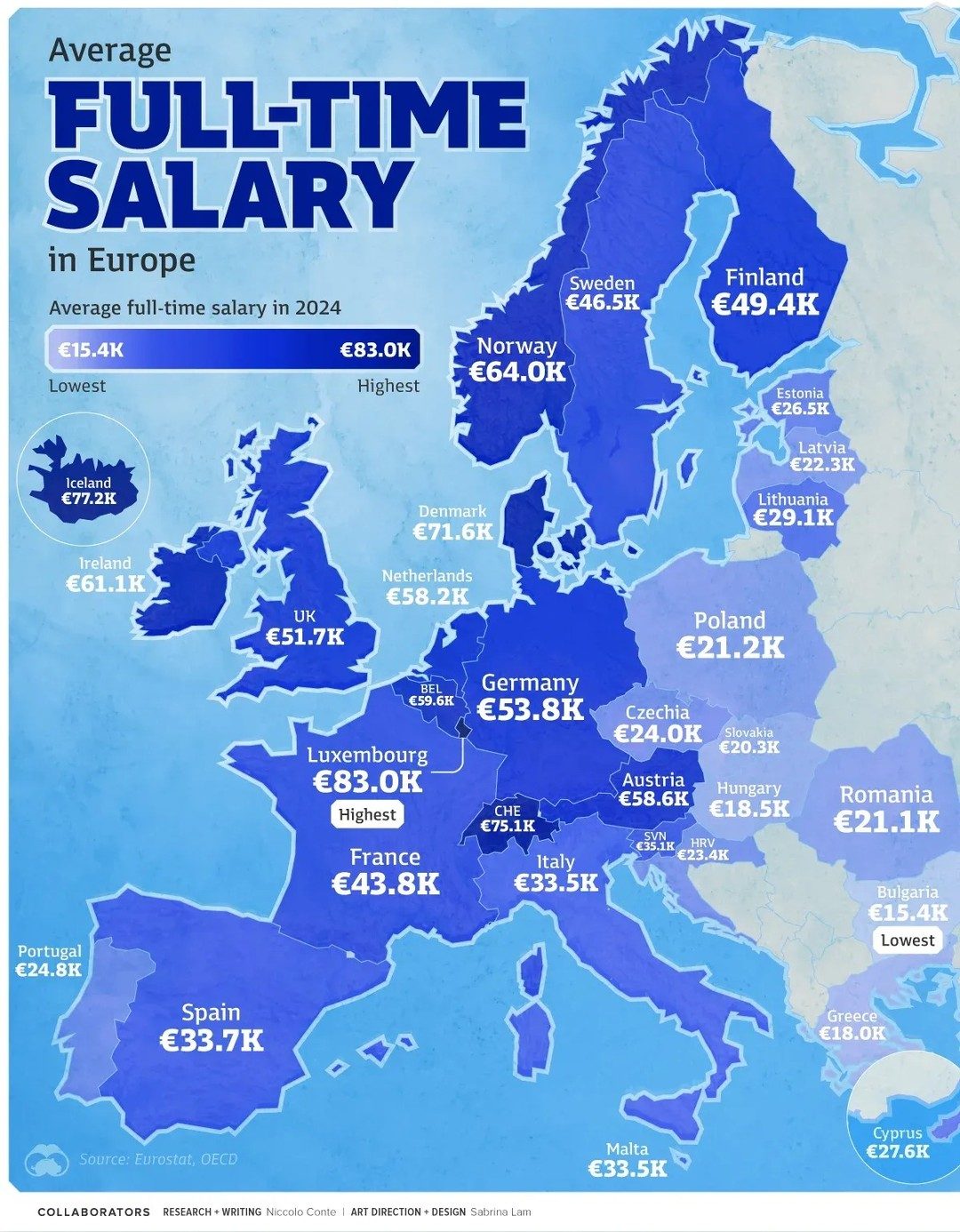
Luxembourg takes the top spot in Europe for average full-time salaries in 2024, with workers earning nearly €83,000 annually. This significant figure highlights the stark disparities in income across the continent. Nordic and Western European countries generally lead the pack, while many Eastern and Southern European nations lag far behind, often earning less than half of what their Western counterparts make.
To understand these income disparities, let's delve into the data and explore the key factors driving these differences across Europe.
Context / Why This Matters
Salaries in Europe are influenced by a multitude of factors, including economic policies, cost of living, and industry compositions. By examining these elements, we can gain a clearer picture of the economic landscape and potential areas for growth or improvement. This information is crucial for policymakers, job seekers, and businesses aiming to navigate the European job market.
Main Discussion
The Leading Countries
Luxembourg's high average salary can be attributed to its strong financial sector, which includes a significant number of international banking and investment firms. Additionally, Luxembourg's favorable tax policies and relatively low cost of living compared to other high-income countries make it an attractive destination for high-skilled workers.
Following closely are other Nordic and Western European countries. Sweden, for instance, boasts an average full-time salary of around €46,500. This is partly due to Sweden's robust welfare system, which supports a high standard of living, and a strong emphasis on technology and innovation. Similarly, Germany, with an average salary of €53,800, benefits from a robust industrial sector and a highly skilled workforce.
The Economic Divide
In contrast, many Eastern and Southern European countries struggle with much lower average salaries. For example, France, despite being a major economic player, has an average full-time salary of around €33,800, which is significantly lower than Luxembourg, Sweden, and Germany. This gap can be attributed to various factors, including less diversified economies, lower productivity levels, and less developed financial sectors.
Countries like Bulgaria and Romania, which have average salaries less than half of those in Luxembourg, face even greater economic challenges. Historical factors, such as the transition from communist economies to market-based systems, have left these countries with less developed infrastructure and fewer economic opportunities. Additionally, lower levels of investment in education and training can limit the skills and productivity of the workforce.
Factors Driving Salary Disparities
Economic Policies and Regulation
Government policies play a crucial role in shaping salary levels. Countries with strong regulatory frameworks and supportive economic policies often see higher wages. For instance, high minimum wages, strong labor unions, and comprehensive social security systems can drive up average salaries. Conversely, countries with weaker regulatory environments may see lower wages due to increased competition and less job security.
Cost of Living and Standard of Living
The cost of living varies significantly across Europe. In countries where the cost of living is high, salaries tend to be higher to compensate. For example, cities like London, Paris, and Zurich have higher costs of living, which necessitate higher salaries to maintain a reasonable standard of living. Conversely, in countries with lower costs of living, salaries may be lower, yet residents can still maintain a good standard of living.
Industry and Sector Composition
The types of industries that dominate a country’s economy can also influence salary levels. Countries with strong financial, technology, and manufacturing sectors often have higher average salaries. These sectors typically require highly skilled labor, which commands higher wages. In contrast, countries heavily reliant on agriculture, tourism, or lower-skilled manufacturing may have lower average salaries.
Practical Tips
For Job Seekers
If you are considering a move to a new country, it's essential to factor in the cost of living and salary expectations. Researching the job market and understanding the average salaries in your desired industry can help you make an informed decision. Additionally, consider the potential for career growth and development in the destination country.
For Businesses
Businesses looking to expand into Europe should carefully evaluate the labor market in their target countries. Understanding the average salary levels, cost of living, and regulatory environment can help in setting competitive wages and benefits. This can also aid in attracting and retaining top talent.
For Policymakers
To address salary disparities, policymakers can focus on several key areas. These include investing in education and training to enhance the skills of the workforce, fostering economic diversification, and implementing supportive economic policies. Additionally, strengthening the regulatory framework and promoting foreign investments can stimulate economic growth and create more job opportunities.
Important Takeaways
Luxembourg leads the way with the highest average full-time salary in Europe, while significant disparities exist across the continent. Nordic and Western European countries dominate the top of the ranking, driven by strong economic policies, robust industries, and favorable labor markets. In contrast, many Eastern and Southern European nations face lower average salaries due to economic challenges, less diversified industries, and lower levels of investment in education and training.
Understanding these disparities is crucial for job seekers, businesses, and policymakers, as it informs decisions related to career development, economic strategy, and regulatory policies.
Conclusion
The landscape of full-time salaries in Europe is diverse, with significant variations between countries. By examining the economic factors, industry compositions, and policies influencing these disparities, we gain insights that can guide decisions and strategies for a better economic outlook. Whether you are a job seeker, a business owner, or a policymaker, being informed about these trends can help navigate the European job market more effectively.
Watch the Reel
Questions readers ask
Why is Luxembourg's average salary so much higher than other European countries in 2024?
Luxembourg has a strong financial sector and high demand for specialized labor. Its strategic location, tax policies, and robust economy attract multinational companies, driving up salaries. Additionally, Luxembourg's cost of living is relatively high, contributing to increased wages.
Which countries typically have the lowest average full-time salaries in Europe in 2024?
Many Eastern and Southern European countries have the lowest average full-time salaries in 2024. This is due to a variety of factors, including lower productivity, less developed economies, and differing industry compositions compared to Western and Nordic countries. Examples include Bulgaria, Romania, and parts of the Balkans.
How do Nordic countries fare in terms of average full-time salaries in 2024?
Nordic countries, such as Sweden, Denmark, and Norway, are among the highest-paying countries in Europe in 2024. This is due to their robust economies, high productivity, and social welfare systems. They often rank closely behind Luxembourg and other Western European nations in salary comparisons.
What are the primary factors influencing the income disparity between Western and Eastern Europe in 2024?
The primary factors include economic policies, industry compositions, and productivity levels. Western European countries generally have more advanced economies, higher productivity, and stronger demand for skilled labor, which drives up salaries. In contrast, many Eastern European countries are still developing their economies and have lower productivity levels.
Where can I find reliable data on European salaries for 2024?
For reliable data on European salaries, you can refer to sources like the OECD European salary report 2024 and Eurostat salary data 2024. These organizations provide comprehensive and up-to-date statistics on wages and incomes across Europe.
What are the highest paying countries in Europe for full-time salaries in 2024?
The highest paying countries in Europe in 2024 include Luxembourg, Switzerland, Iceland, and several Nordic countries such as Norway, Sweden, and Denmark. These countries offer competitive salaries due to their strong economies, high demand for skilled labor, and robust social welfare systems.
How does the cost of living in a country affect its average salary?
The cost of living in a country directly influences its average salary. In countries with higher costs of living, salaries tend to be higher to maintain the same standard of living. Conversely, in countries with lower costs of living, salaries may be lower but still sufficient to meet daily expenses. This relationship helps explain some of the income disparities across Europe.
Related deep dives
Similar reads based on topic and creator.

Recent articles
Fresh deep dives from the latest Reels we unpacked.




Comments
Be the first to comment.