European Electricity Sources
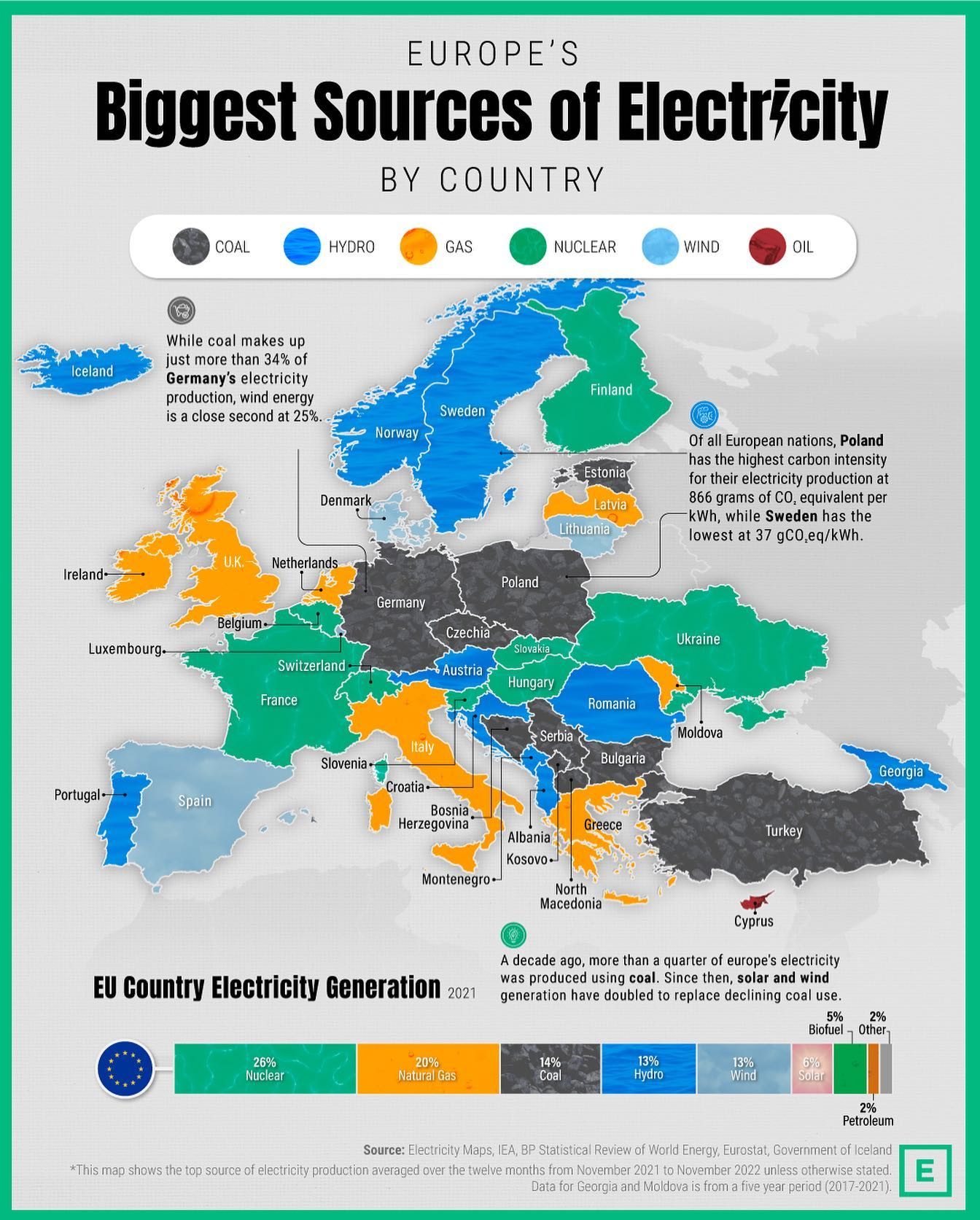
Despite significant strides in renewable energy, nearly half of Europe still relies on fossil fuels for electricity. Understanding the current energy landscape is crucial for grasping the challenges and opportunities that lie ahead. This article explores the main sources of electricity generation across Europe, highlighting the dominance of various energy sources by country and the overall trends in the EU.
Context / Why this matters
Energy production and consumption patterns significantly impact Europe’s economy, environment, and geopolitical landscape. The shift from fossil fuels to renewable sources is not just an environmental imperative but also an economic and strategic one. By examining the current electricity sources, we can better understand the progress made and the work that remains to achieve a more sustainable future.
Main discussion
The Current Energy Landscape
Europe’s energy mix is diverse, with different countries relying on various primary sources. This diversity is shaped by historical factors, geographical features, and policy choices. The major sources of electricity in Europe include coal, natural gas, nuclear, hydro, wind, and solar. While coal and natural gas have traditionally dominated, there is a growing shift towards renewable sources.
Coal and Natural Gas
Coal and natural gas are significant contributors to Europe’s electricity supply. Coal, in particular, has been a primary energy source for many countries, especially those with abundant domestic reserves. Germany, for instance, relies on coal for over 34% of its electricity production.
Natural gas, known for its lower emissions compared to coal, is also a major player. It provides a flexible and reliable energy source, making it a go-to for many countries during peak demand periods.
Renewable Energy
Renewable energy sources are making significant inroads into Europe’s energy mix. Wind and solar energy have seen substantial growth over the past decade. For example, wind energy is the second-largest source of electricity in Germany, contributing about 25% of its total production. This growth is attributed to favorable policies, technological advancements, and a strong commitment to reducing carbon emissions.
Hydroelectric power remains a vital renewable source, especially in countries with abundant water resources. Nuclear energy is another crucial player, providing a stable and low-carbon source of electricity. However, the use of nuclear energy is controversial due to safety concerns and waste management issues.
Carbon Intensity
The carbon intensity of electricity production varies significantly across Europe. Poland has the highest carbon intensity at 666 grams of CO2 equivalent per kWh, primarily due to its heavy reliance on coal. Sweden, on the other hand, has the lowest carbon intensity at 37 gCO2/kWh, thanks to its extensive use of hydro and wind energy.
Historical Trends and Future Outlook
A decade ago, more than a quarter of Europe’s electricity was generated using coal. Since then, solar and wind generation have doubled, effectively replacing declining coal use. This trend reflects a broader commitment to renewable energy and sustainable practices. The European Union has set ambitious targets to reduce greenhouse gas emissions, increase renewable energy share, and improve energy efficiency. These goals are driving investments in renewable energy infrastructure and technological innovations.
Country-Specific Insights
Germany, one of Europe’s largest economies, has been a leader in renewable energy adoption. Its energy mix is diverse, with coal and wind being the major contributors. Wind energy, in particular, has seen remarkable growth, driven by government policies and consumer demand for cleaner energy.
Poland, in contrast, remains heavily reliant on coal. The country is working towards reducing its carbon intensity, but the transition has been slow due to economic and political factors. Sweden, with its extensive use of hydro and wind power, serves as a model for sustainable energy production. The country’s low carbon intensity highlights the potential for other European nations to transition to cleaner energy sources.
Practical tips
Reducing reliance on fossil fuels and transitioning to renewable energy sources is a complex process. However, there are practical steps that individuals, businesses, and governments can take to support this transition.
For Individuals
- Energy Efficiency: Improving energy efficiency in homes and daily activities can significantly reduce electricity consumption. Simple steps like using energy-efficient appliances, insulating homes, and adopting smart energy management systems can make a difference.
- Renewable Energy: Consider installing renewable energy systems, such as solar panels, if feasible. This not only reduces your carbon footprint but also provides long-term cost savings.
- Advocacy: Support policies and initiatives that promote renewable energy and sustainable practices. Engage with local politicians, community groups, and advocacy organizations to push for greener policies.
For Businesses
- Invest in Renewables: Companies can invest in renewable energy projects, either by installing on-site systems or through Power Purchase Agreements (PPAs) with renewable energy providers.
- Sustainability Goals: Set ambitious sustainability goals and track progress towards them. This includes reducing carbon emissions, increasing the use of renewable energy, and improving overall energy efficiency.
- Innovation: Invest in research and development to drive innovation in renewable energy technologies. Collaboration with academic institutions and other businesses can foster new ideas and solutions.
For Governments
- Policy Support: Implement policies that incentivize the adoption of renewable energy, such as tax incentives, subsidies, and feed-in tariffs. These policies can make renewable energy more affordable and accessible.
- Infrastructure Investment: Invest in energy infrastructure, including grid modernization and storage technologies, to support the integration of renewable energy sources.
- Public Awareness: Raise public awareness about the benefits of renewable energy and the importance of sustainable practices. Educational campaigns and community engagement can drive behavior change and support for renewable energy initiatives.
Important takeaways
The energy transition in Europe is a multifaceted challenge that requires coordinated efforts from individuals, businesses, and governments. While progress has been made, there is still a significant reliance on fossil fuels, particularly coal and natural gas. Renewable energy, led by wind and solar, is making substantial gains, but further investments and policy support are necessary to accelerate the transition.
Understanding the current energy landscape and the specific challenges faced by different countries is crucial for developing effective strategies. Each country’s energy mix is unique, shaped by its geographical features, historical context, and policy choices. By learning from successful examples and addressing specific challenges, Europe can move closer to a sustainable energy future.
Conclusion
The energy transition in Europe is a critical and complex process that involves reducing dependence on fossil fuels and increasing the share of renewable energy sources. While there have been notable advancements, particularly in wind and solar energy, the journey is far from complete. By understanding the current energy landscape, historical trends, and country-specific insights, we can better navigate the challenges and opportunities that lie ahead. Through practical steps and collective efforts, Europe can achieve a more sustainable and resilient energy future.
Watch the Reel
Questions readers ask
Which countries in Europe still heavily rely on fossil fuels for electricity generation?
Several European countries still heavily depend on fossil fuels. For instance, Poland generates a significant portion of its electricity from coal, while countries like the Netherlands and the UK rely substantially on natural gas. Understanding these dependencies is crucial for developing targeted strategies to transition towards more sustainable energy sources.
What role does renewable energy play in Europe's electricity mix?
Renewable energy plays a growing role in Europe's electricity mix. Countries like Germany, Denmark, and Spain are leading the way with significant investments in wind and solar power. However, the overall contribution of renewable energy varies widely across the continent, with some countries still lagging behind in their adoption of green technologies.
How does hydroelectric power contribute to Europe's electricity generation?
Hydroelectric power is a significant contributor to Europe's electricity generation, particularly in countries with abundant water resources. Norway, for example, generates nearly all of its electricity from hydroelectric power, making it a key player in the European energy landscape. Other notable producers include Sweden, Switzerland, and France, which also rely heavily on hydroelectricity.
What is the current status of nuclear energy in Europe?
Nuclear energy remains a controversial but important component of Europe's electricity generation. Countries like France and Belgium obtain a substantial portion of their electricity from nuclear power, while others, such as Germany and Italy, are phasing out their nuclear programs. The future of nuclear energy in Europe is influenced by debates on safety, waste management, and the role of nuclear power in achieving climate goals.
Which European countries are leaders in wind energy production?
Several European countries are at the forefront of wind energy production. Denmark, for example, is renowned for its extensive use of wind turbines, both onshore and offshore. Germany and the UK are also major players in the wind energy sector, investing heavily in wind farms to meet their renewable energy targets. These countries serve as models for others seeking to expand their wind energy capabilities.
Why is it important to understand the diversity of Europe's energy landscape?
Understanding the diversity of Europe's energy landscape is crucial for several reasons. It helps in identifying the specific challenges and opportunities for each country in transitioning to renewable energy. This knowledge is essential for policymakers to design effective strategies, for investors to target profitable projects, and for the public to stay informed about the energy sources that power their daily lives.
What are the main challenges in transitioning from fossil fuels to renewable energy in Europe?
The main challenges include the intermittency of renewable energy sources, the need for significant infrastructure investments, and the political and social resistance to change. Additionally, ensuring a stable and affordable energy supply during the transition is a critical concern. Addressing these challenges requires coordinated efforts from governments, industries, and communities across Europe.
Related deep dives
Similar reads based on topic and creator.

Recent articles
Fresh deep dives from the latest Reels we unpacked.




Comments
Be the first to comment.