Europa's Ocean Discovery
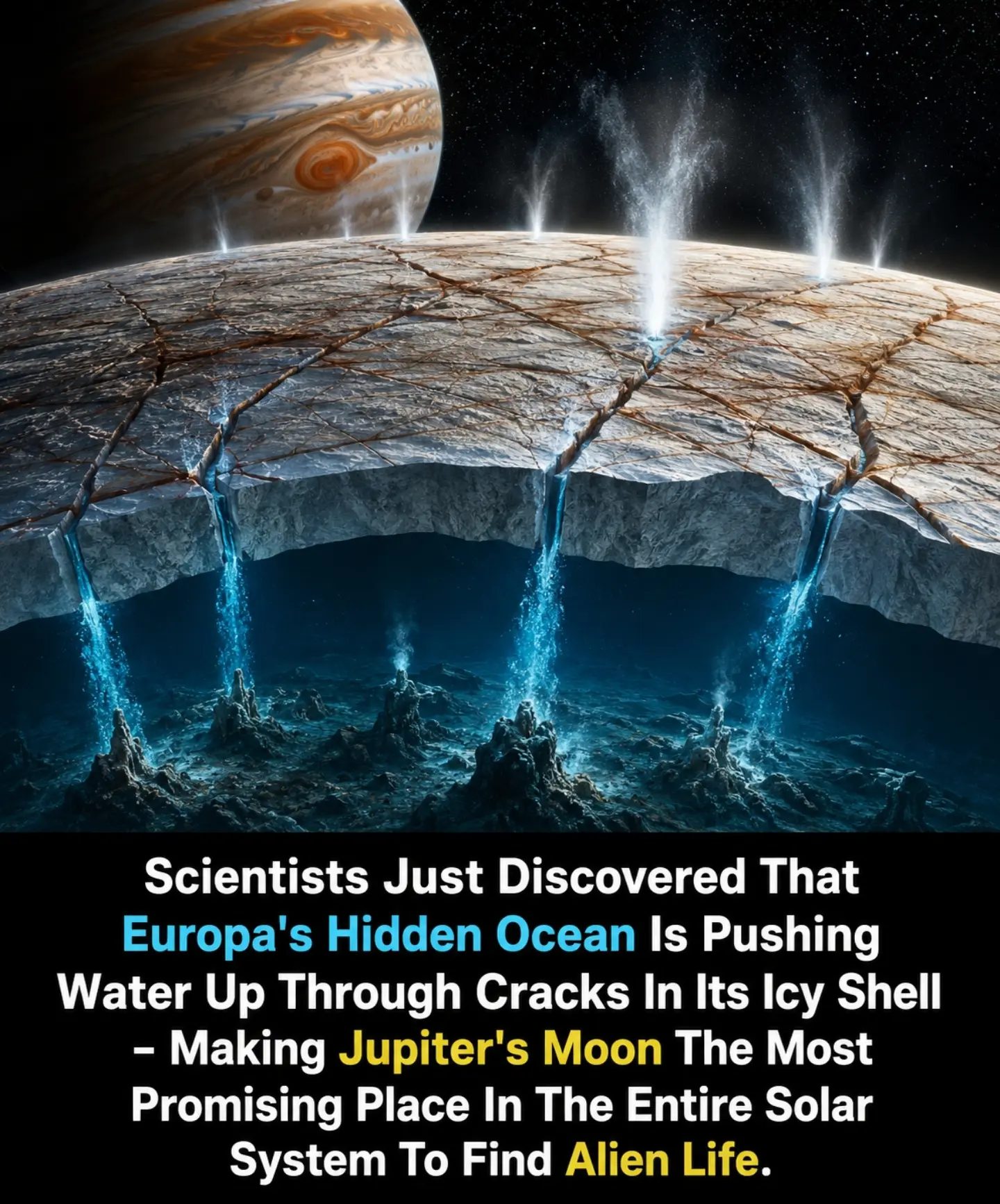
Europa, one of Jupiter's moons, has long captivated scientists and space enthusiasts alike. Recent discoveries have revealed that Europa's hidden ocean is pushing water up through cracks in its icy shell, making it the most promising place in the solar system to find alien life.
Context / Why this matters
Europa's ocean, hidden beneath its icy surface, has been a subject of intense study for decades. The discovery of water pushing through the moon's icy shell is significant because it indicates the presence of a liquid water ocean beneath the surface. This is crucial for the potential existence of extraterrestrial life, as liquid water is a key ingredient for life as we know it. Additionally, the dynamic nature of Europa's icy shell suggests that the ocean beneath is active, which further enhances the chances of finding life there.
Main discussion
The icy shell of Europa
Europa's surface is covered by a thick layer of ice, which is estimated to be tens of kilometers deep. This ice shell is not static but dynamic, with cracks and fractures that reveal the hidden ocean beneath. The discovery of water pushing through these cracks is a groundbreaking finding, as it provides direct evidence of the ocean's existence and activity.
The hidden ocean
The presence of a liquid water ocean beneath Europa's icy shell has been theorized for many years, but recent observations have provided strong evidence to support this theory. The water that is pushing through the cracks in the icy shell is thought to come from this hidden ocean, which is believed to be as vast as Earth's oceans. The dynamics of this ocean, including its interaction with the icy shell, are crucial for understanding the potential for life on Europa.
The potential for alien life
Europa's hidden ocean is considered the most promising place in the solar system to find alien life. The presence of liquid water, combined with the active nature of the ocean and the potential for hydrothermal vents on the seafloor, creates an environment that could support life. Hydrothermal vents on Earth's ocean floor are home to a diverse range of life forms, and similar vents on Europa could potentially support extraterrestrial life. The discovery of water pushing through the cracks in the icy shell further enhances the chances of finding life on Europa, as it indicates that the ocean is active and potentially habitable.
Practical tips
While the discovery of water pushing through Europa's icy shell is exciting, it's important to note that direct exploration of Europa's ocean is challenging due to the thickness of the ice. However, there are several practical tips for those interested in learning more about this fascinating moon:
Stay informed
Keep up-to-date with the latest news and research related to Europa and its hidden ocean. NASA and the European Space Agency (ESA) are both planning future missions to explore Europa, and these missions could provide even more insights into the potential for life on this moon.
Explore online resources
There are many online resources available for learning more about Europa and its hidden ocean. Websites like NASA's official website and the ESA's website offer a wealth of information, including images, videos, and articles about Europa and its potential for life.
Engage with the scientific community
Join online forums, discussion groups, and social media communities focused on space exploration and extraterrestrial life. These platforms offer opportunities to connect with other enthusiasts, ask questions, and learn from experts in the field.
Important takeaways
The discovery of water pushing through Europa's icy shell is a significant finding in the search for extraterrestrial life. It provides direct evidence of the existence and activity of a hidden ocean beneath the surface, which is crucial for the potential existence of life. The dynamic nature of Europa's icy shell and the potential for hydrothermal vents on the seafloor further enhance the chances of finding life on this moon. While direct exploration of Europa's ocean is challenging, staying informed, exploring online resources, and engaging with the scientific community can help deepen your understanding of this fascinating moon and its potential for life.
Conclusion
Europa's hidden ocean, pushing water through cracks in its icy shell, represents a groundbreaking discovery in the search for extraterrestrial life. The active nature of Europa's ocean and the potential for hydrothermal vents on the seafloor create an environment that could support life. While direct exploration of Europa's ocean is challenging, the potential for life on this moon makes it a priority for future space exploration missions. By staying informed, exploring online resources, and engaging with the scientific community, you can deepen your understanding of Europa and its potential for life, and join the ongoing conversation about the search for extraterrestrial life in our solar system.
Watch the Reel
Questions readers ask
What makes Europa a prime target in the search for alien life?
Europa is a prime target due to its vast ocean beneath the icy surface, which is crucial for the potential existence of life as we know it. This ocean is especially intriguing because it's been found to be active, with water pushing through cracks in the moon's icy shell.
How does the discovery of water vapor on Europa impact our understanding of potential alien life?
The discovery of water vapor coming from Europa’s icy shell provides strong evidence for the presence of a liquid ocean underneath. This is significant because it suggests that Europa’s ocean is not stagnant, but rather dynamic, potentially creating an environment favorable for alien life.
What does the activity of Europa's ocean suggest about its potential for harboring life?
The activity of Europa's ocean, as evidenced by water pushing through cracks, suggests a dynamic environment where liquid water interacts with the ocean floor. This interaction could provide energy and chemical exchanges necessary for life to thrive.
How do scientists determine that Europa’s ocean is active?
Scientists have gathered evidence from various sources, including the detection of water vapor plumes and the observation of cracks in Europa's icy shell. These observations suggest that the ocean is actively pushing water through the shell, indicating a dynamic and potentially habitable environment.
What are the key ingredients for life, and why is Europa's ocean considered a prime candidate for hosting these?
Key ingredients for life include liquid water, chemical elements, and energy sources. Europa's ocean provides liquid water and potentially the necessary chemical elements. The dynamic nature of Europa's ocean suggests that energy sources are available, making it a prime candidate for hosting alien life.
Why is liquid water so important in the search for alien life on Europa?
Liquid water is essential for life as we know it because it facilitates the chemical reactions necessary for biological processes. The discovery of a liquid water ocean beneath Europa's icy surface makes it a strong candidate for potentially harboring life.
What would be the significance of finding life signs on Europa?
Finding life signs on Europa would be monumental, as it would confirm that life can exist beyond Earth. This discovery would revolutionize our understanding of life in the universe, especially if it matches Earth's biology or exists in a completely different form.
Recent articles
Fresh deep dives from the latest Reels we unpacked.




Comments
Be the first to comment.