Immigration to the EU: Trends and Top Sources
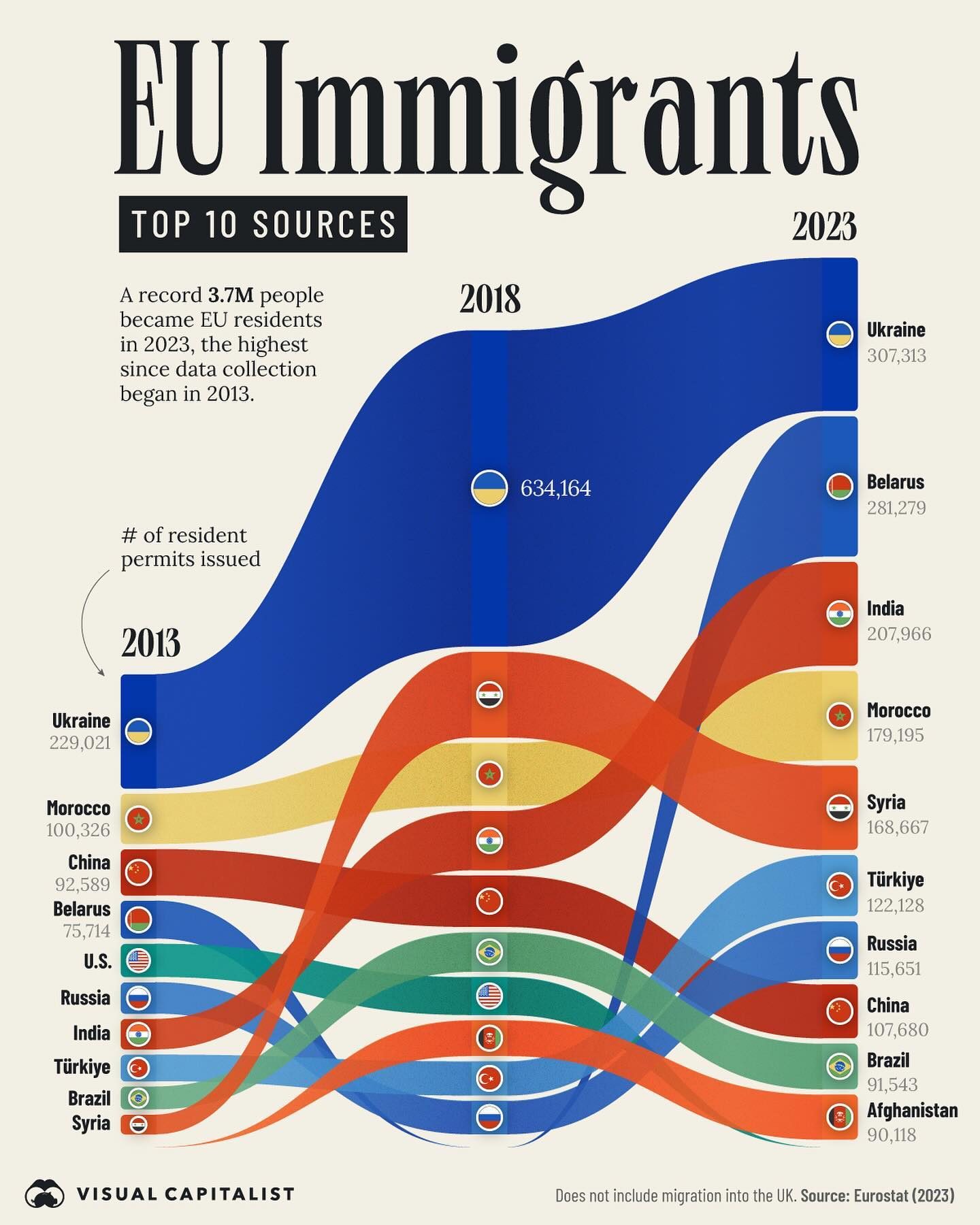
In 2023, a record 3.7 million people obtained residence permits in the European Union, marking the highest number since data collection began in 2013. This surge in immigration reflects significant shifts in global migration patterns, with notable changes in the top source countries.
Why This Matters
Understanding immigration trends is crucial for policymakers, economists, and societies grappling with the social, economic, and political impacts of these movements. The data from 2013, 2018, and 2023, as provided by Eurostat, offer valuable insights into how immigration patterns have evolved over the past decade. This information is essential for planning and implementation of immigration policies, resource allocation, and integration efforts.
Main Discussion
Top Source Countries
Ukraine
Since 2013, Ukraine has consistently been the top source of immigrants to the EU. In 2023, a staggering 307,313 Ukrainians received first-time residence permits. This dominance can be attributed to various factors, including political instability, economic hardships, and recent conflicts that have driven many Ukrainians to seek better opportunities and safety in the EU. The ongoing conflict has further exacerbated these trends, leading to a significant increase in the number of Ukrainian immigrants.
Belarus
Belarus is the second-largest source of immigrants to the EU, with 281,279 first-time residence permits issued in 2023. The political climate in Belarus, marked by authoritarian rule and human rights concerns, has led many citizens to seek opportunities elsewhere. The EU's open policies for Belarusian immigrants, especially students and professionals, have also played a role in this trend.
India
India has seen a remarkable surge in EU-bound nationals, rising from the 7th place in 2013 to the 3rd in 2023. In 2023, 207,966 Indians received first-time residence permits. This increase can be linked to India's growing middle class, which is increasingly seeking education and work opportunities abroad. The EU's attractive job market, especially in sectors like technology and healthcare, has made it a preferred destination for Indian migrants.
Asia's Surge
Asia, as a whole, has seen a notable increase in the number of EU-bound nationals. Countries like India, China, and Türkiye have seen significant rises in the number of immigrants over the past decade. This trend is driven by various factors, including economic opportunities, educational prospects, and political stability.
Other Major Sources
Morocco, Syria, Türkiye, Russia, and China also rank high among the top source countries. Morocco, with 179,195 immigrants, is driven by economic opportunities and family reunification. Syria, with 168,667 immigrants, reflects the ongoing conflict and instability in the region. Türkiye, with 107,680 immigrants, and Russia, with 115,651 immigrants, are influenced by economic and political factors. China, with 107,680 immigrants, is driven by educational and professional opportunities.
Practical Tips for Navigating EU Immigration
For Aspiring Immigrants
-
Research Visa Requirements: Understand the specific visa requirements for your country of origin. Different countries have different procedures and documentation needs.
-
Stay Updated with Policies: Immigration policies can change frequently. Stay informed about the latest updates and adjustments to visa regulations.
-
Seek Professional Help: Consider consulting with immigration lawyers or agencies that specialize in EU immigration to navigate the complexities of the process.
For Policymakers
-
Data-Driven Decisions: Utilize comprehensive data from sources like Eurostat to make informed policy decisions. This data can help in identifying trends, addressing challenges, and implementing effective policies.
-
Integration Programs: Develop robust integration programs to help new immigrants adapt to their new environments. This includes language courses, job training, and social support networks.
-
Collaboration with Source Countries: Foster partnerships with source countries to address the root causes of migration, such as economic hardships and political instability.
Important Takeaways
- Ukraine remains the top source of immigrants to the EU, driven by political instability and recent conflicts.
- India has seen a significant increase in EU-bound nationals, reflecting economic and educational opportunities.
- Asia as a whole has seen a surge in EU immigration, with countries like China and Türkiye contributing significantly.
- Data from Eurostat provides valuable insights into immigration trends, essential for policymaking and resource allocation.
Conclusion
The trends in immigration to the European Union highlight significant shifts in global migration patterns. Understanding these trends is crucial for effective policymaking, resource allocation, and integration efforts. As the EU continues to attract immigrants from various parts of the world, it is essential to stay informed about the evolving landscape and adapt policies accordingly. By doing so, the EU can effectively manage immigration, fostering a harmonious and productive society.
Watch the Reel
Questions readers ask
Which countries were the top sources of immigrants to the EU from 2013 to 2023?
The top sources of immigrants to the EU from 2013 to 2023 were Ukraine, Belarus, and India. These countries saw significant increases in the number of residence permits issued to their nationals.
Why did immigration from Ukraine, Belarus, and India to the EU increase significantly?
The increase in immigration from these countries can be attributed to several factors, including political instability, economic hardships, and the EU’s open immigration policies.
How many residence permits were issued in the EU in 2023?
In 2023, the EU issued a record 3.7 million residence permits, the highest number since data collection began in 2013.
What factors contribute to the shifts in global migration patterns to the EU?
Global migration patterns to the EU are influenced by a variety of factors, including political instability in countries of origin, economic hardships, and the EU’s immigration policies, which often prioritize open and inclusive practices.
What kind of information can be obtained from EU immigration data from 2013 to 2023?
The EU immigration data from 2013 to 2023 provides a breakdown of where immigrants are coming from, including the most prominent source countries. It also helps understand the evolving migration trends, impacts on EU countries, and informs policy decisions.
How can understanding immigration trends benefit policymakers and societies?
Understanding immigration trends is vital for policymakers to create effective immigration policies, allocate resources, and plan for integration efforts. For societies, it helps in preparing for demographic changes and the social and economic impacts of immigration.
Recent articles
Fresh deep dives from the latest Reels we unpacked.




Comments
Be the first to comment.