EU Emigrant Statistics
Emigration from the European Union (EU) hit significant numbers in 2022, with over a million citizens leaving countries like Germany and Spain. Malta and Luxembourg experienced the highest emigration rates, with over 2% of their populations moving abroad. This article delves into the detailed statistics and trends of EU emigration, based on comprehensive data from Eurostat.
Context / Why This Matters
Understanding emigration patterns within the EU is crucial for several reasons. It affects labor markets, demographic shifts, and social dynamics across member states. For policymakers, these statistics are essential for crafting effective migration policies and addressing the challenges and opportunities that come with population movements. For citizens, these insights provide a clearer picture of the demographic changes affecting their communities and the broader EU landscape.
Detailed Emigration Data
Top Source Countries
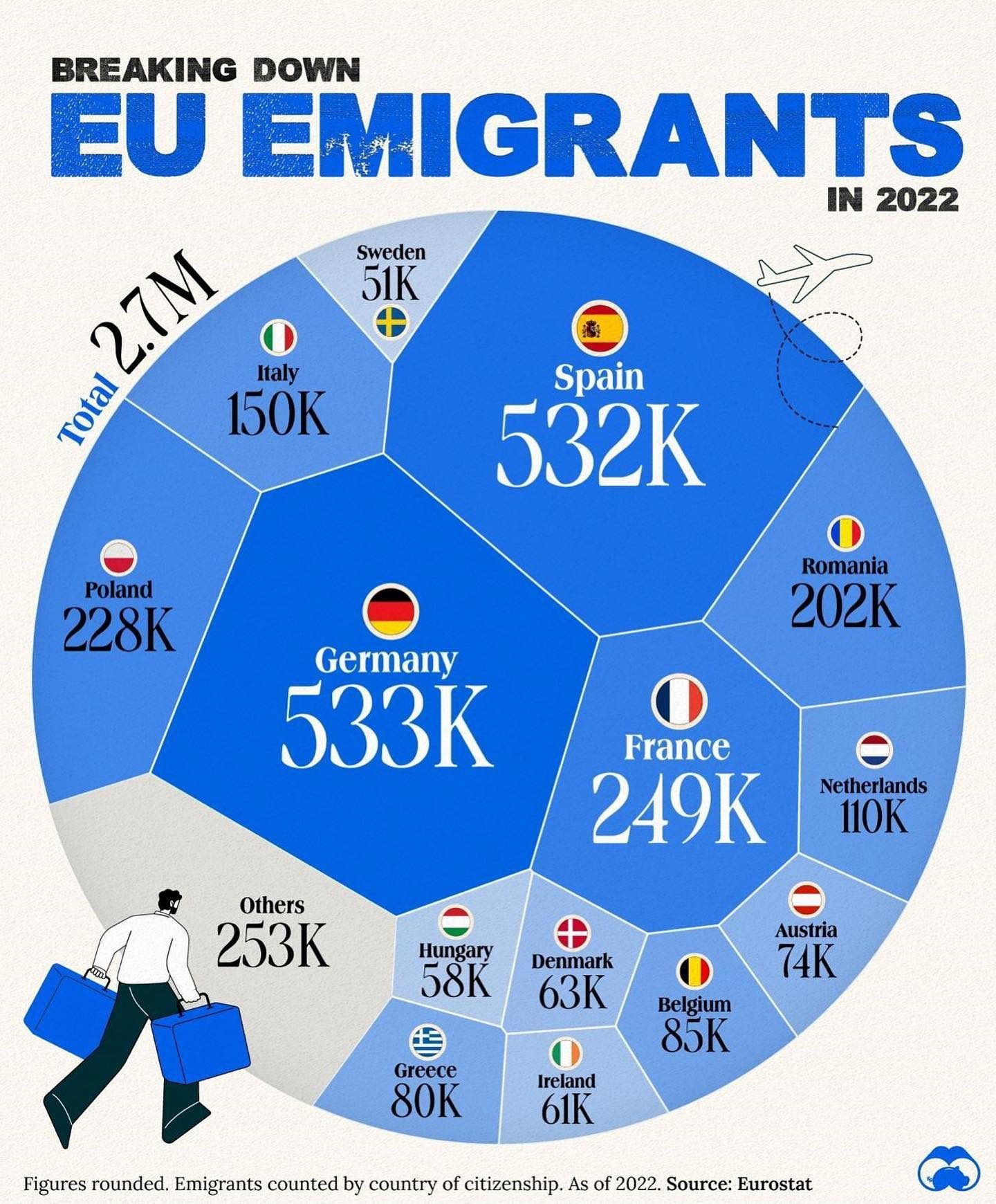
The data highlights the top source countries for EU emigrants in 2022. Spain leads the list with 532,000 emigrants, closely followed by Germany with 533,000. Other significant source countries include:
- Poland: 228,000
- France: 249,000
- Netherlands: 110,000
- Romania: 202,000
- Italy: 150,000
- Belgium: 85,000
- Hungary: 58,000
- Denmark: 63,000
- Ireland: 61,000
- Sweden: 51,000
- Greece: 80,000
Highest Emigration Rates
When looking at emigration rates (the percentage of the population that moved abroad), Malta and Luxembourg stand out. Both countries recorded over 2% of their populations leaving, indicating significant outflows relative to their smaller populations.
Total Emigrants
The total number of EU emigrants in 2022 reached a substantial 2.7 million. This figure includes citizens who left their EU countries of citizenship, highlighting the scale of mobility within and beyond the EU.
These statistics are sourced from Eurostat, ensuring reliability and accuracy in the data presented.
Factors Driving Emigration
Several factors contribute to the emigration trends observed in 2022. Economic opportunities, better living conditions, and family reunification are among the primary drivers. For instance, the post-pandemic economic recovery may have motivated individuals to seek better job prospects in different EU countries or beyond.
Economic Factors
Economic disparities within the EU play a significant role in emigration patterns. Individuals from countries with higher unemployment rates or lower economic growth may seek better opportunities elsewhere. Conversely, countries with robust economies and job markets, such as Germany and the Netherlands, may attract immigrants while also experiencing outflows due to internal mobility.
Social and Political Factors
Social and political stability are also crucial factors. Countries with political unrest or social issues may see higher emigration rates as citizens seek more stable environments. Meanwhile, countries known for their high quality of life and social welfare systems may attract immigrants, offsetting the emigration rate.
Educational and Professional Opportunities
Education and professional development are significant drivers for young adults. Many emigrants pursue higher education or professional training in other EU countries or seek international experience, contributing to the high mobility rates.
Practical Tips for Understanding Emigration Data
Analyze Trends Over Time
To gain a comprehensive understanding of emigration trends, it's essential to look at historical data. Comparing emigration rates and numbers over several years can reveal recurring patterns and shifts in migration flows. Eurostat provides extensive data that can help in this analysis.
Consider Regional Differences
Emigration patterns can vary significantly between different regions within the EU. Analyzing emigration data at a regional level can provide deeper insights into local factors influencing migration.
Evaluate Policy Impact
Government policies and regulations on migration can greatly impact emigration rates. Understanding the impact of visa policies, work permits, and integration programs can help in developing effective migration strategies.
Important Takeaways
- Significant Emigration: Over 2.7 million EU citizens emigrated in 2022.
- Top Source Countries: Spain and Germany led with the highest number of emigrants.
- High Emigration Rates: Malta and Luxembourg experienced the highest emigration rates relative to their populations.
- Economic and Social Factors: Economic opportunities, political stability, and social welfare systems significantly influence emigration.
- Data Reliability: The data from Eurostat provides a reliable foundation for understanding EU emigration trends.
In summary, the data on EU emigration in 2022 reveals a complex landscape of mobility driven by various economic, social, and political factors. Understanding these trends is essential for policymakers and citizens alike, as they navigate the challenges and opportunities that come with demographic shifts.
Watch the Reel
Questions readers ask
Which EU countries saw the most significant emigration in 2022?
Germany and Spain were among the EU countries that saw the most significant emigration in 2022. Over a million citizens from these countries left, contributing to the overall high emigration numbers in the EU.
Why did Malta and Luxembourg have the highest emigration rates in 2022?
Malta and Luxembourg had the highest emigration rates in 2022, with over 2% of their populations moving abroad. This is likely due to a combination of factors, including economic opportunities, quality of life, and personal circumstances driving their citizens to seek better prospects elsewhere.
How does emigration impact the labor markets in the EU?
Emigration can lead to labor shortages in certain sectors, as skilled and unskilled workers leave their home countries. This can create opportunities for those who remain, but also poses challenges for industries that rely heavily on emigration outflows.
What are some of the social dynamics influenced by EU emigration trends?
EU emigration trends can lead to changes in community structures, aging populations, and shifts in cultural landscapes. These dynamics can influence everything from local services to cultural identity in both the countries of origin and destination.
How can policymakers use EU emigration statistics?
Policymakers can use EU emigration statistics to develop targeted policies addressing labor market needs, population aging, and integration of newcomers. These statistics provide insights into the trends and patterns of migration, helping to create more effective strategies for managing migration-related challenges and opportunities.
What are some of the key factors driving EU emigration in 2022?
Key factors driving EU emigration in 2022 include economic prospects, better job opportunities, improved quality of life, and personal circumstances. These factors influence individuals' decisions to leave their home countries in search of improved living conditions and career advancements.
Related deep dives
Similar reads based on topic and creator.

Recent articles
Fresh deep dives from the latest Reels we unpacked.




Comments
Be the first to comment.