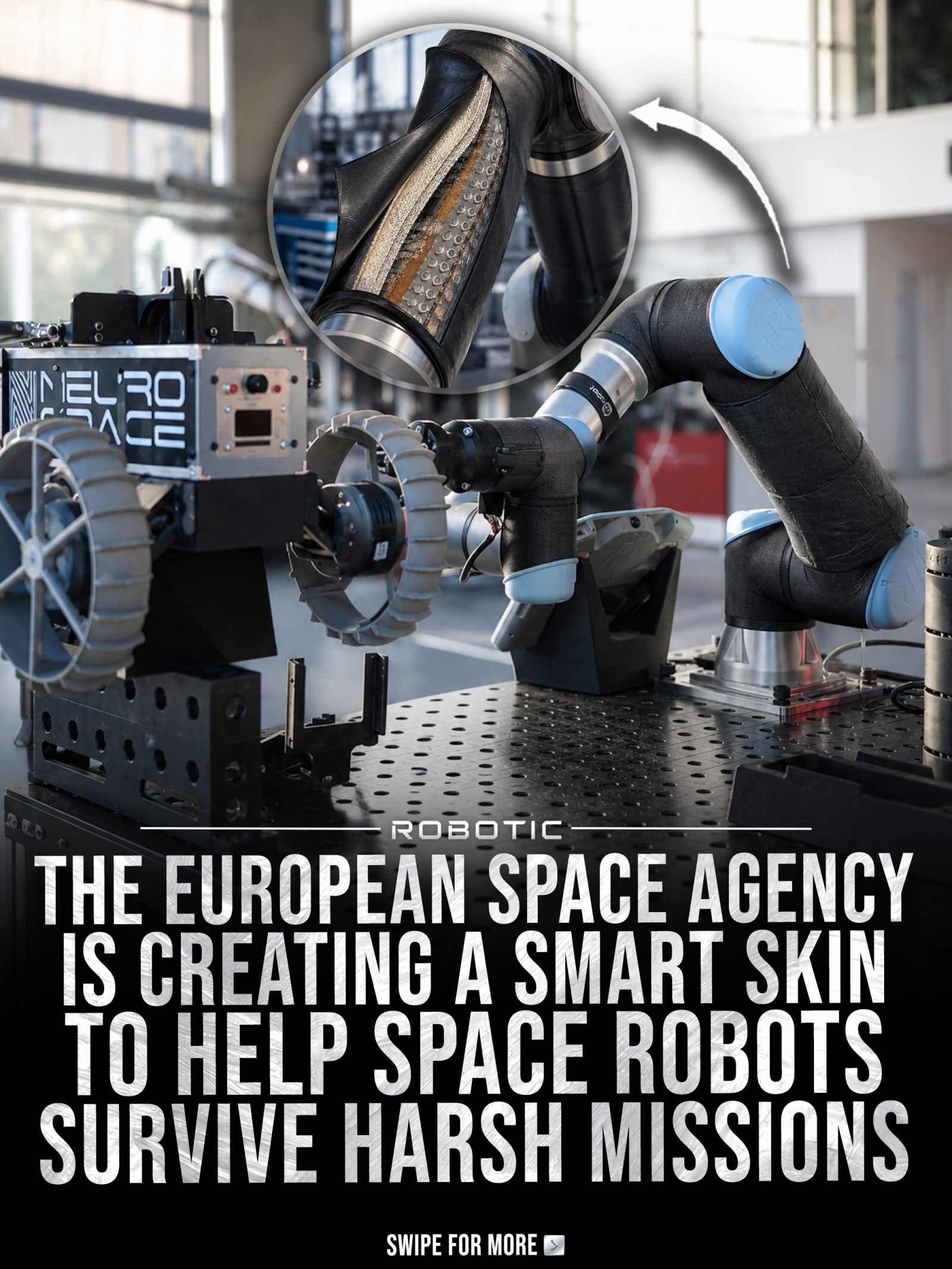
Smart Skin for Space Robots
Context / Why this matters
Space exploration is pushing the boundaries of technology, and one of the most significant challenges is developing robots that can withstand the harsh conditions of space. The European Space Agency (ESA) is tackling this issue head-on with the development of a Smart Skin designed to protect space robots during demanding missions. This innovative solution aims to make future robotic missions safer, smarter, and more reliable.
Development and Benefits of Smart Skin
Multifunctional Design
The Smart Skin is a 3D printed protective layer that integrates multiple functions into a single system. It provides thermal and dust protection, carries power and data, detects collisions, and improves human-robot interaction. This multifunctional design optimizes the space robot's performance and resilience. What makes this Smart Skin particularly remarkable is its ability to withstand extreme temperatures ranging from -150°C to +120°C. These temperature extremes are common in space, particularly on the Moon and Mars. In addition to temperature, space robots must endure harmful radiation and abrasive lunar and Martian dust, which can easily damage their systems. The Smart Skin is designed to protect against all these environmental threats.
Enhanced Robotic Capabilities
By making robotic systems more capable and cost-effective, Smart Skin supports a range of future missions. These include building Moon bases, servicing satellites, removing space debris, and assisting astronauts. The technology allows developers to use more commercial robotic components, which reduces the cost and complexity of building advanced space robots. This advancement could revolutionize how space missions are conducted, making them more efficient and reliable.
Practical Applications and Future Impact
Moon Bases and Satellite Servicing
One of the most exciting applications of Smart Skin is its potential to support the development of Moon bases. As space agencies around the world plan to return to the Moon, the ability to build and maintain structures in such a harsh environment will be crucial. Smart Skin can help ensure that robotic systems used in construction and maintenance tasks are resilient and long-lasting. Additionally, the technology can be used to repair and service satellites, extending their operational life and reducing the need for costly replacements.
Removing Space Debris
Space debris poses a significant threat to operational spacecraft and the overall sustainability of space exploration. With Smart Skin, robots can be more effectively deployed to remove debris, such as defunct satellites and spent rocket stages, from orbital paths. This capability is essential for maintaining a clean and safe space environment, which is vital for future missions.
Supporting Astronauts
Future space missions, including those to Mars, will require extensive support from robotic systems. Smart Skin can enhance the capabilities of these robots, making them more reliable and capable of assisting astronauts in various tasks. This support can range from conducting scientific experiments to building habitats and performing repairs.
Important Takeaways
The development of Smart Skin by the ESA represents a significant leap forward in space robotics. This innovative technology addresses some of the most challenging issues faced by space robots, including extreme temperatures, harmful radiation, and abrasive dust. By providing a multifunctional protective layer, Smart Skin makes robotic systems more capable, cost-effective, and reliable, supporting a wide range of future missions, including the construction of Moon bases, satellite servicing, space debris removal, and astronaut assistance. As space exploration continues to push the boundaries of what is possible, technologies like Smart Skin will be crucial in ensuring the success and sustainability of future endeavors.
Conclusion
The European Space Agency's development of Smart Skin for space robots is a testament to the ingenuity and innovation driving space exploration forward. By addressing the harsh conditions of space and enhancing the capabilities of robotic systems, this technology paves the way for more ambitious and successful missions. As we look to the future of space exploration, the potential applications of Smart Skin are vast, from building Moon bases to supporting astronauts on their journeys to Mars. This multifunctional, protective layer is set to revolutionize how we approach space missions, making them safer, smarter, and more reliable.
Watch the Reel
Questions readers ask
What is the primary purpose of ESA's Smart Skin technology?
The primary purpose of ESA's Smart Skin technology is to enhance the protection and functionality of space robots. It provides thermal and dust protection, detects collisions, and improves human-robot interaction, thereby ensuring safer and more reliable space missions.
How does the Smart Skin technology contribute to space mission safety?
Smart Skin contributes to space mission safety by offering a multifunctional protective layer. This layer not only shields robots from extreme temperatures and dust but also detects collisions, allowing for quicker responses to potential hazards. Additionally, it improves the interaction between humans and robots, ensuring smoother mission operations.
What are the key components integrated into the Smart Skin?
The Smart Skin integrates several key components, including thermal and dust protection, power and data transmission capabilities, and collision detection sensors. These components work together to create a durable and smart protective layer for space robots, ensuring their longevity and effectiveness in harsh space environments.
How is the Smart Skin technology manufactured?
The Smart Skin technology is manufactured using 3D printing, which allows for the creation of a intricate, multifunctional layer. This manufacturing method enables the integration of various protective and functional elements into a single, cohesive system, making it highly efficient and innovative.
What advantages does the Smart Skin offer for human-robot interaction in space missions?
The Smart Skin improves human-robot interaction by providing real-time data and feedback, allowing operators to better monitor and control the robots. This enhancement in communication and responsiveness ensures that humans can make informed decisions, improving the overall efficiency and success of the mission.
What specific challenges in space does the Smart Skin technology address?
The Smart Skin technology addresses several key challenges in space, including extreme thermal conditions, dust accumulation, and the risk of collisions. By providing comprehensive protection and detection capabilities, it ensures that space robots can operate effectively and safely in the harsh environment of space.
How does the Smart Skin technology enhance the durability of space robots?
The Smart Skin enhances the durability of space robots by providing a robust protective layer that withstands the rigors of space. Its thermal and dust protection capabilities, along with its collision detection features, help to mitigate potential damage, thereby extending the lifespan and reliability of the robots during missions.
Recent articles
Fresh deep dives from the latest Reels we unpacked.




Comments
Be the first to comment.