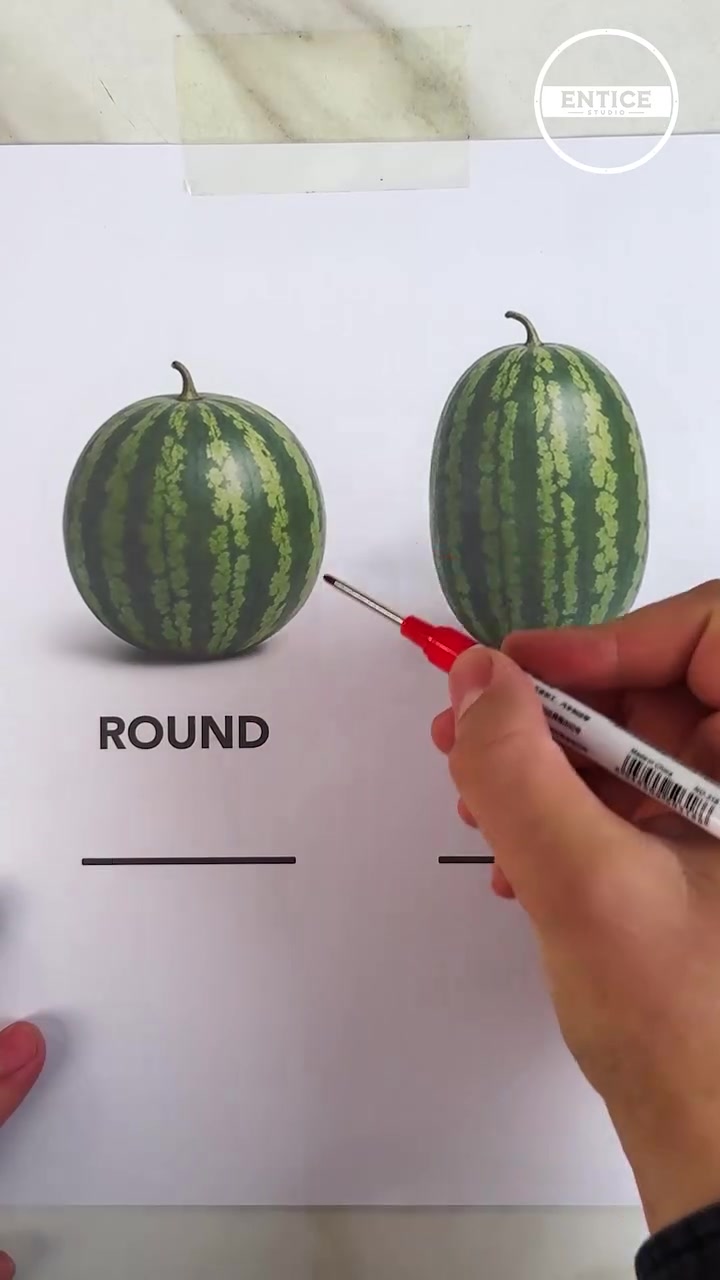
Watermelon Comparison
When buying watermelons, it's easy to feel overwhelmed by the variety available in markets and grocery stores. ENTICE brings us a useful comparison of two distinct watermelons, helping shoppers understand what to look for when choosing the perfect melon.
Why This Matters
Picking the perfect watermelon can be a challenge, especially for those unfamiliar with the subtle cues that indicate a sweet and juicy fruit. By understanding the visual and taste differences, you can make a more informed purchase, ensuring you get the most out of your watermelon.
Characteristics to Look For
Color
Watermelons can vary in color, but did you know that this can indicate ripeness and taste?
Outer Color
A watermelon’s outer color can range from light to dark green, and even yellow in some cases. ENTICE highlights that a watermelon with a more yellowish hue at the base (where it rests on the ground) is typically riper and sweeter. This yellowing is a sign that the melon has absorbed more sunlight, which aids in ripening and sugar development.
Inner Color
The inner flesh should be a vibrant red. If you cut into a watermelon and find pale pink or white flesh, it’s likely underripe. A good watermelon should have red flesh that is uniform and free from white streaks. This indicates that the watermelon has reached its peak ripeness.
Roundness
The shape of a watermelon can also offer clues about its taste. Typically, rounder watermelons are sweeter and more flavorful. This is because a more spherical shape often indicates even ripening and better sugar distribution throughout the fruit.
Distance from the Vine
The distance of the watermelon from the vine can also play a role. ENTICE notes that melons closer to the vine are generally sweeter. This is due to the fact that the plant continues to supply nutrients to the watermelon until it is fully ripe. Once the melon is picked, it no longer receives these nutrients, which can affect its sweetness.
Color of the Leaf
The color of the leaf attached to the stem can also provide insight. A dark green leaf indicates a fresher, more recently harvested watermelon. If the leaf is yellowing or dry, the watermelon might have been sitting around for a while and may not be as fresh.
Practical Tips
Tapping the Watermelon
A common trick is to tap the watermelon and listen for a hollow sound. This method, while not foolproof, can give you an idea of ripeness. A ripe watermelon will typically produce a deeper, more resonant sound. However, be cautious with this method as it can be unreliable.
Checking the Weight
A heavier watermelon for its size is often a better choice. Watermelons are mostly water, so a heavier one likely has more juice and fewer air pockets.
Looking for the Field Spot
The field spot is the area where the watermelon rested on the ground while growing. A creamy yellow or light-colored field spot is a sign of ripeness. A white or green field spot indicates that the watermelon was picked too early and may not be fully ripe.
Important Takeaways
Visual Cues
Visual cues are your best friend when it comes to picking a watermelon. Look for a dark green rind, a yellowish base, and a creamy field spot.
Texture and Sound
The texture of the rind and the sound it makes when tapped can also offer hints. A ripe watermelon should have a firm but yielding rind and produce a hollow sound when tapped.
Taste and Sweetness
A watermelon’s sweetness and taste are largely influenced by how ripe it is. Look for visual signs of ripeness, such as color and shape, to ensure you get a sweet, juicy watermelon.
Conclusion
By understanding the visual and tactile cues that indicate a ripe watermelon, you can make a more informed purchase. Remember to look for signs of ripeness, such as a yellow base, a creamy field spot, and a firm, yielding rind. The next time you’re at the market, you can confidently pick the perfect watermelon, knowing you’ve chosen the sweetest and most flavorful option available.
Watch the Reel
Questions readers ask
What does the color of a watermelon's underside indicate?
A yellowish spot on the underside of a watermelon, known as the field spot, suggests that the melon has been ripe on the vine for a while. This spot appears when the watermelon sits on the ground and ripens in the sun. The yellower the spot, the sweeter the watermelon. A white or green spot indicates that the melon was picked too early and may not be as sweet.
How can the shape of a watermelon help in selection?
A round, symmetrical watermelon is typically a good indicator of sweetness and juiciness. Watermelons that are misshapen may not have developed properly and could be less flavorful. Look for a watermelon that is evenly round and has a consistent shape.
What should I look for in the watermelon's flesh?
When you finally cut into your watermelon, you should see vibrant red flesh, which indicates ripeness and sweetness. Pink or pale red flesh may suggest that the watermelon is underripe. Make sure the seeds are healthy and fully developed as well, because they indicate maturity in the watermelon.
How can I use the watermelon's outer color to determine ripeness?
A watermelon’s outer color can vary, but generally, a dull or matte finish indicates ripeness. A glossy or shiny watermelon may be underripe. The darker the green, the riper it is. Avoid watermelons with bruises, dents, or mold, as these can indicate damage or decay.
Can I judge a watermelon's sweetness by its weight?
Yes, weight can be an indicator of a watermelon's sweetness. If two watermelons are the same size, the heavier one is likely to be juicier and sweeter. This is because a heavier watermelon has more water content, which contributes to its sweetness and juiciness. However, do not confuse weight with size, and always compare watermelons of the same size.
How do I perform a sweetness test on a watermelon?
To perform a sweetness test, gently tap on the watermelon. A ripe watermelon will have a deep, hollow sound, while an underripe one will sound dull. Make sure to tap near the stem end of the watermelon, as this area will give you the most accurate indication of ripeness. Additionally, gently press the watermelon with your thumb to check for a little give.
Related deep dives
Similar reads based on topic and creator.




Recent articles
Fresh deep dives from the latest Reels we unpacked.




Comments
Be the first to comment.